Can You Do Icefields Parkway In One Day?
Yes, the Icefields Parkway fits in one day. Here is the realistic timing, the stops worth making, and when a guided tour beats driving it yourself.
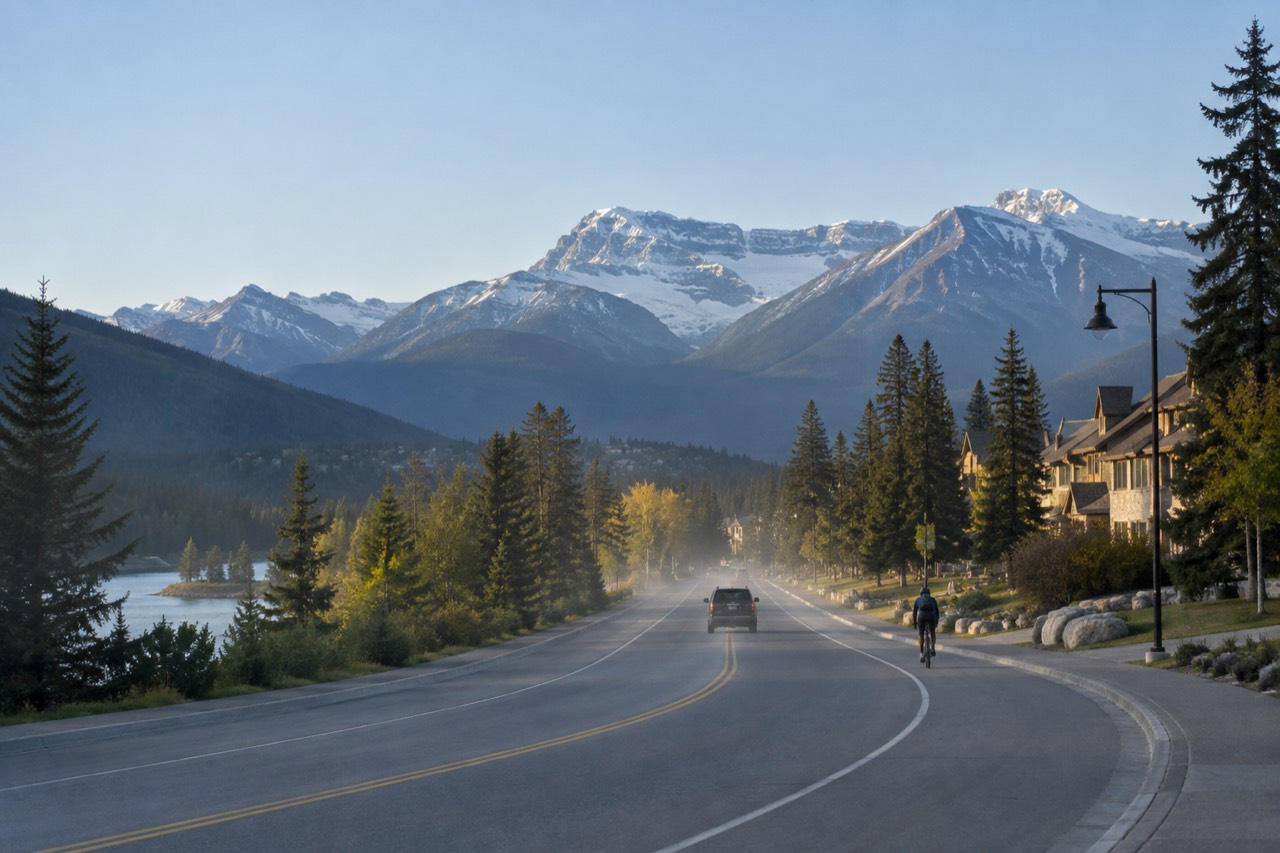
The Icefields Parkway, Highway 93 North, is a 232 km route connecting Lake Louise in Banff National Park with the Jasper townsite. It is regularly called one of the most scenic drives in the world, and the question almost every planner asks is whether it can be squeezed into a single day. The short answer is yes, and this page works through the honest version of that yes: what the distances allow, which stops earn their time, and where the arithmetic starts to break down. Parks Canada's own pages on the parkway, at Travelling the Icefields Parkway, are the source for the distances used here.
Can You Do Icefields Parkway In One Day?
Yes, comfortably, if you treat the day as a one-way drive rather than a return trip. The parkway is 232 km end to end, and a one-way run with stops at Athabasca Falls, Sunwapta Falls and the Columbia Icefield fits inside a long summer day. What does not fit is driving there and back in one day from either end. Pick three or four stops and protect the time for them.
The key planning fact is that the Icefields Parkway is a point-to-point route, not a loop. Almost everyone drives it one way between Banff or Lake Louise and Jasper, usually as the travel day between two bases. That is the natural shape of the day: you are not losing time by driving it, because the drive is the journey between where you were and where you are going. People who try to do the parkway as a day trip out of Jasper and back, or out of Banff and back, double the distance and spend most of the day inside the car.
The second key fact is where the stops actually sit. Parks Canada's own stop distances from Jasper are Sunwapta Falls at 54 km, Athabasca Falls at 30 km, and the Icefield Centre 103 km south on Highway 93. From Lake Louise, Athabasca Falls is 203 km and Sunwapta Falls is 179 km. So from the Banff side, almost the entire drive comes before the first major stop, and the last 100 km into Jasper is a chain of attractions. From the Jasper side, the headline stops come quickly and the long middle stretch is pure driving. Neither direction is wrong, but the rhythm of the day is completely different, and knowing that changes what you book.
If you are travelling without a car, or you would rather not spend your day watching the fuel gauge and the clock, there are guided options that cover the corridor in one structured day. The most useful ones pair the parkway with the things people actually come for: the glacier, the Skywalk, and time at the lake.
How long does the drive itself take?
The driving time depends entirely on season, traffic and how often you pull over, and no primary source publishes a figure, so plan on distances and stop budgets instead. The route is 232 km with a maximum speed limit of 90 km/h inside the national parks, lower in places for wildlife. Long steep grades of 8 to 11 percent occur near Bow Lake and on Sunwapta Pass. The driving alone eats half a day once stops are counted.
Parks Canada publishes the distances but not a driving time, and this site does not invent one. What can be said with confidence is the shape of the day. A 232 km mountain route with a 90 km/h ceiling, wildlife slowdowns, construction zones and a dozen legitimate photo stops is not a highway cruise. Anyone who has driven it will tell you the average speed is nowhere near the limit, because the road bends constantly and every second corner opens a view you will want five minutes with.
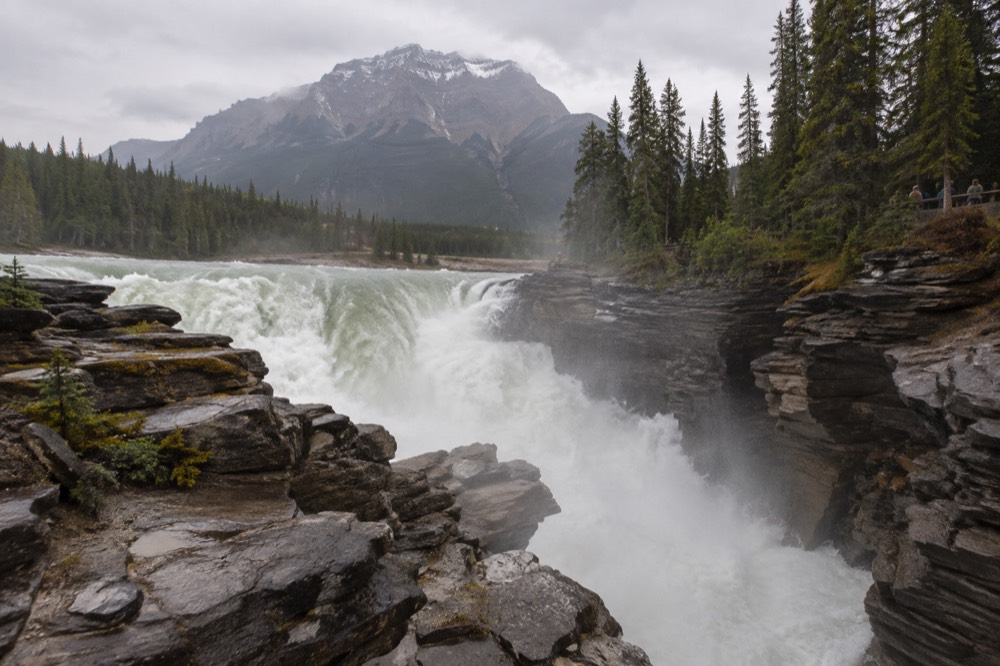
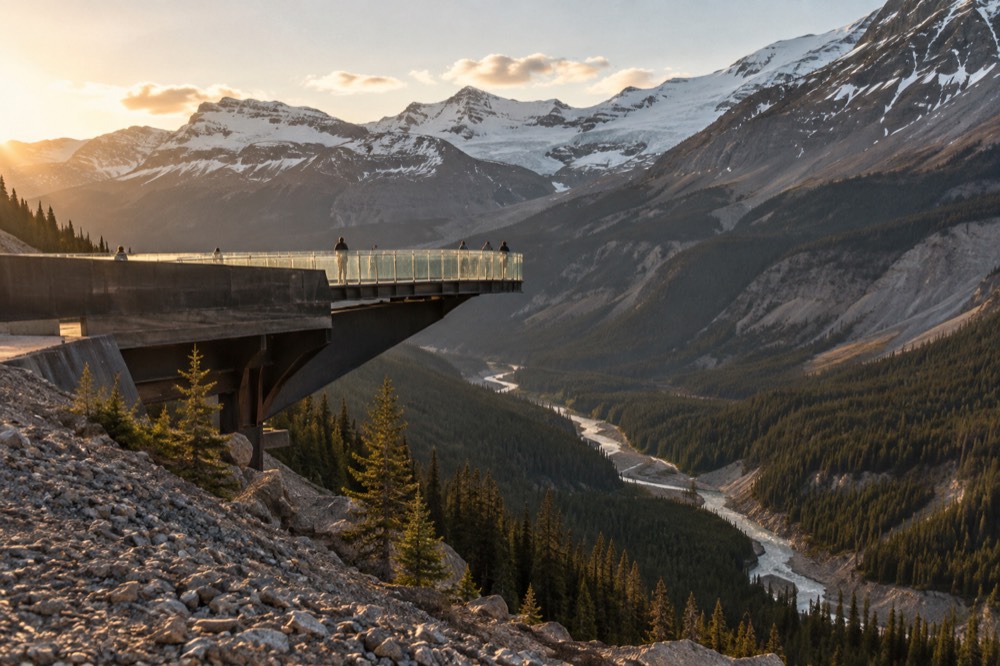
The stops are what actually consume the day. Athabasca Falls alone deserves a good half hour to an hour: it is 23 metres high, and Parks Canada notes that while that is not very high by Canadian Rockies standards, the size of the river makes it one of the most powerful falls in the mountain national parks. Sunwapta Falls, 54 km from Jasper, is a shorter stop but the trail beyond it runs through the Chaba River burn area, the legacy of a 1967 wildfire, now one of the best bear and moose habitats in the park. The Columbia Icefield area, 103 km from Jasper, is the stop that can swallow an entire afternoon if you let it, because the Ice Explorer, the Skywalk and the glacier viewpoint are three separate experiences.
One practical note that surprises first-time drivers: there are no services along the Icefields Parkway in winter, and there is no cell coverage en route, with service only at each end. Even in summer, fuel and food are limited to a couple of locations, so the day needs to be provisioned before you start. The Jasper townsite information centre at 500 Connaught Drive is open 9 am to 7 pm from 14 May to 30 September, and it is a sensible last stop for maps and conditions. Check 511 Alberta before you drive, and Parks Canada's road page for seasonal closures; Parks Canada warns that navigation apps are not always accurate for Jasper National Park.
A park pass is also legally required to drive the Icefields Parkway, and the daily admission fee is charged per person: Adult $12.25 CAD, Senior $10.75 CAD, Youth 17 and under free, with a Family/Group daily rate of $24.50 CAD covering up to seven people arriving in a single vehicle. Our full breakdown is in the Jasper park entry fee guide. Note the currency: every park fee here is Canadian dollars.
If the self-drive version of this day feels like too much logistics, the question is worth asking directly before you commit.
Which stops are worth the time in a one-day plan?
Three stops anchor almost every good one-day parkway itinerary: Athabasca Falls, the Columbia Icefield area, and Sunwapta Falls, in that order from Jasper or reverse from Lake Louise. Everything else is a bonus if the day runs well. The Icefield Centre sits 103 km south of Jasper, Athabasca Falls 30 km, Sunwapta Falls 54 km, so the three sit in a natural line with the glacier roughly at the midpoint of the route.
Athabasca Falls is the easiest stop to protect, because it sits close to the Jasper end and the viewing infrastructure is right off the road. The water pours over hard quartzite and has cut into the softer limestone beneath, carving potholes and a short canyon. The falls day-use area and trail are open, and the Athabasca River itself is the largest river system in Jasper, designated a Canadian Heritage River in 1989. Thirty minutes here is enough to see the main gorge; an hour lets you walk the full loop without rushing.
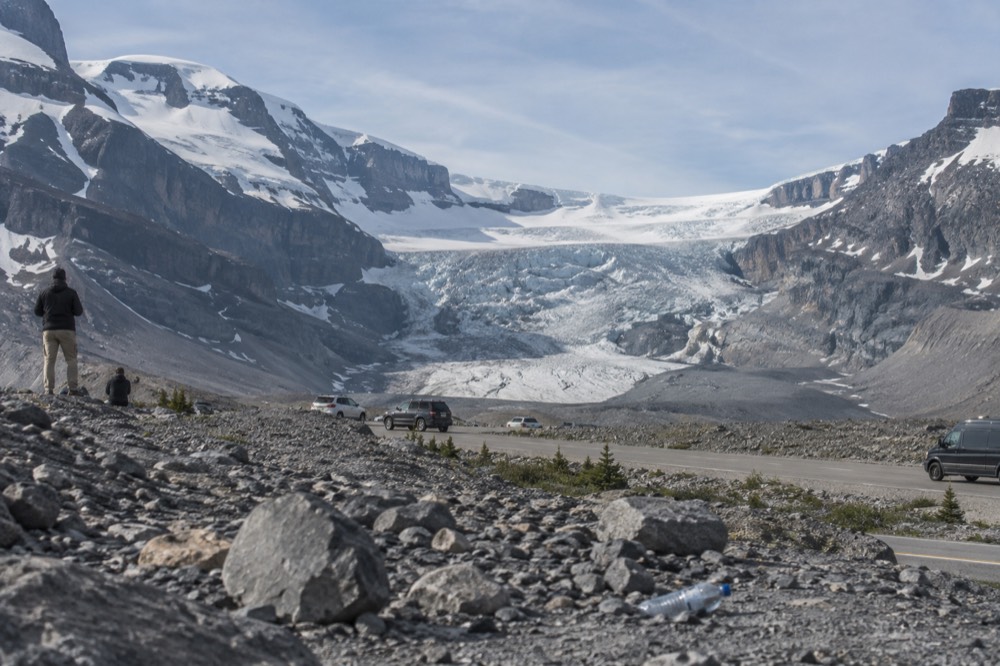
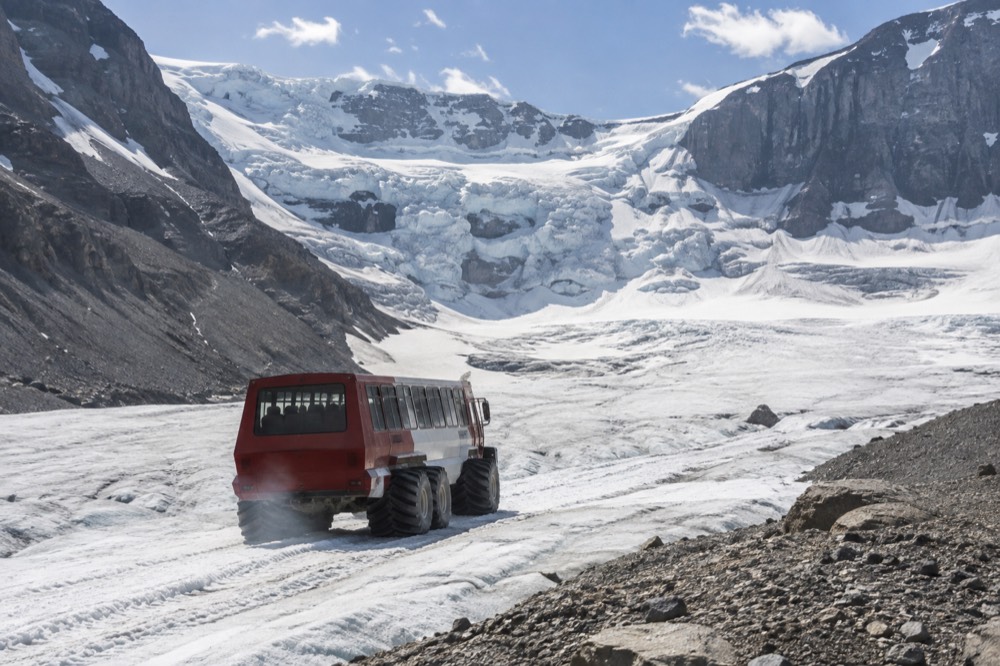
The Columbia Icefield is the stop the day is really built around. The icefield is the largest in the Canadian Rockies, more than 300 km² of ice, and the Athabasca Glacier spills from it across the road from the Icefield Centre. Parks Canada calls the glacier Canada's most accessible glacier, and the glacier has been receding for the last 125 years. Between 1985 and 2024, Jasper lost 21.8 percent of its total glacier mass, and over the same period the Columbia Icefield alone lost nearly 13.3 percent of its ice. Those numbers are why the viewing areas and barriers are where they are: Parks Canada's own words are that the glacier is dangerous, that people have been killed falling into hidden crevasses, and that you should not cross the barriers.
Sunwapta Falls is a stepping waterfall formed where the smaller hanging Chaba Valley meets the larger Athabasca Valley, with a deep limestone gorge below the footbridge. It is a shorter stop than the other two, but it is on the natural line of the drive and the gorge is genuinely dramatic. The falls day-use area and picnic site are open.
The table below is the honest stop budget for a one-day, one-way run. Distances are Parks Canada's own figures from Jasper.
| Stop | Distance from Jasper | What it is | Realistic stop budget |
|---|---|---|---|
| Athabasca Falls | 30 km | 23 m falls over quartzite, short canyon and potholes | 30-60 minutes |
| Sunwapta Falls | 54 km | Stepping waterfall, limestone gorge, 1967 burn area beyond | 20-40 minutes |
| Columbia Icefield / Icefield Centre | 103 km | Largest icefield in the Canadian Rockies, glacier viewpoint, tours, food | 2-4 hours |
| Bow Lake area (from the Banff end) | on route | Lake, glacier views, historic lodge | about half an hour |
| Peyto Lake viewpoint (Banff side) | on route | Famous viewpoint walk | under an hour |
Add those budgets to the driving and the day is full but workable in summer daylight. What the table also shows is why the return-trip version fails: double the driving and you halve every stop, and the glacier area is the one that suffers, which is the one most people came for.
What does a realistic one-day itinerary look like?
Start early, drive one way, and put the Columbia Icefield in the middle of the day rather than the end. A summer plan from the Jasper side looks like: Athabasca Falls in the morning, Sunwapta Falls mid-morning, two to three hours at the icefield around lunch, then the long scenic run south with a stop or two before arriving at your Banff-side base by evening. From the Banff side, invert it and start even earlier.
The reason to front-load from Jasper is simple: the two waterfalls are close to town, and the icefield is far enough south that arriving there late in the day means arriving at the Ice Explorer and Skywalk after the last departures. The Columbia Icefield Adventure, operated by Pursuit, runs 1 May to 12 October in 2026, weather dependent, and the Skywalk is a separate ticket from the Ice Explorer if you only want one. Booking the timed experiences in advance is the one piece of the day where a missed slot genuinely ruins the plan, so decide before you drive whether the glacier experience is a stop-and-look or a stop-and-do.
From the Lake Louise end, the arithmetic is harsher. Athabasca Falls is 203 km from Lake Louise and Sunwapta Falls is 179 km, so the entire first half of the day is driving before the first headline stop. That is not a reason to skip the drive, it is a reason to leave at dawn and to accept that the Banff-to-Jasper direction spends its morning on the road and its afternoon on the stops. Our Banff to Jasper drive guide covers that direction in detail, including where the 20 km stretch through the Jasper caribou herd's winter habitat sits and why the speed limits drop for wildlife.
One thing a one-day plan cannot do is add Maligne Lake. The lake is a separate corridor east of Jasper, and Spirit Island, the famous viewpoint, is 14 km up-lake with no road or trail access: tour boats or private non-motorized craft are the only means of reaching it. If Spirit Island is on your list, it needs its own half-day, and that is the single most common way a one-day parkway plan collapses, by trying to bolt a Maligne morning onto a parkway afternoon. The Maligne Lake Cruise runs 27 May to 11 October in 2026, weather dependent, and Pursuit advises allowing at least 90 minutes for the drive from Jasper to the lake, on top of the cruise itself.
That is exactly the gap the combined tours exist to fill. If you want both the parkway corridor and the Maligne Valley in a short stay, a guided day that handles the driving and the timing is often the only way both fit, and the Explore Jasper Tour with Maligne Lake Cruise is built for precisely that: 6 hours 30 minutes, rated 4.6 across 57 reviews, from $210.99, covering Maligne Canyon, Medicine Lake, the Athabasca River and a Spirit Island cruise in one guided block.
Is a guided tour better than driving the parkway yourself?
A guided tour is better when the day is tight, when you are travelling one-way without a car, or when you want the glacier experience without managing timed tickets yourself. Self-drive is better when you want to linger, hike, or photograph on your own schedule. The parkway itself needs no reservation, shuttle or timed entry: the only authorization required to travel it is a Park Pass.
That last point matters more than it sounds. Jasper National Park has no timed entry system, no reserved-access corridor and no mandatory shuttle for any attraction, which is a real difference from Banff's Lake Louise and Moraine Lake arrangements. If you have read that you need a shuttle reservation for this drive, you are reading about the wrong park. The only paperwork for the Icefields Parkway is the park pass displayed on your dash, sold at the gates, at information centres and at the automated pass machines in Jasper.
The trade-offs on a guided day are the ordinary ones. A tour fixes your stop times, which protects the glacier booking but removes the option of staying an hour at a viewpoint nobody else stopped for. A small-group format, like the Columbia Icefield: Ice Odyssey Glacier Experience, 2 hours on the ice, rated 4.9 across 36 reviews from $201.66, trades breadth for depth: you spend the time on the glacier rather than spreading it across the corridor. A full-day tour with transport, like the Jasper to Banff Icefields Parkway and Glacier Day Tour, 10 hours, rated 5 across 3 reviews from $212.2 with free cancellation, solves the one-way problem completely, because the tour ends in Banff and you never drive the road yourself at all.
Self-drive wins when the day is yours to bend. The Toe of the Glacier trail is open, Wilcox Pass is open, and both are the kind of stop a fixed itinerary cannot wait for. The honest summary: drive it yourself if you have a full day and a car, book a tour if you are one-way, car-free, or trying to fit the glacier and the lake into the same short stay.
Can you drive the Icefields Parkway in winter in one day?
Yes, but it is a different kind of day. The parkway does not close for winter; from 1 November to 31 March a vehicle on it must have snow tires or chains, there are no services along it in winter, there is no cell coverage en route, and the road is not salted, so it is often compact snow. Snow clearing and maintenance runs 7 am to 3:30 pm, which shapes when a winter day is possible at all.
The most common winter mistake is planning the parkway like a summer day. In winter there is nowhere to buy fuel or food along the route, so the day needs to be self-contained: full tank, food, water, warm layers, and a plan for what happens if the car stops. Parks Canada publishes a dedicated winter page for the parkway precisely because the summer assumptions fail. The 8 to 11 percent grades near Bow Lake and Sunwapta Pass are the same grades, now on compact snow.
The second mistake is trusting a phone. There is no cell coverage en route, service exists only at each end, and Parks Canada's road reports describe the worst condition a driver may meet over the road's whole length, so a clear report does not mean a clear road. Check 511 Alberta before you drive and again at whichever end you start from, and carry the Parks Canada road page's seasonal closures list in mind: Parks Canada calls its own 2026 table a tentative plan whose dates may change without notice.
In winter the one-day question answers itself differently. The stops that make the summer day, the glacier rides and the waterfalls picnic areas, are either closed or transformed, and the day becomes a through-drive with a couple of viewpoints. It is still one of the great winter drives in Canada, bighorn sheep, mountain goats, coyotes and deer are commonly sighted along it in winter, but it is a drive you do for the driving, not for a list of stops.
If one day on the parkway has convinced you the area deserves more, the Jasper National Park Tours site has a full set of guides to the corridors off it, from the Maligne Valley to the townsite sky and stargazing options in the park's dark-sky preserve.
Common questions about the Icefields Parkway in one day
Can You Do Icefields Parkway In One Day?
Yes, as a one-way drive between Lake Louise and Jasper it fits comfortably in one long day with three or four stops. A return trip in one day does not fit, and neither does adding Maligne Lake to the same day.
Do you need a park pass to drive the Icefields Parkway?
Yes. A valid national parks pass is required to drive the parkway, and a pass is legally required to be inside Jasper National Park at all. The daily fee is charged per person: Adult $12.25 CAD, Senior $10.75 CAD, Youth 17 and under free, with a Family/Group rate of $24.50 CAD covering up to seven people in one vehicle.
Is there a shuttle or timed entry for the Icefields Parkway?
No. Jasper National Park has no timed entry system, no reserved-access corridor and no mandatory shuttle for any attraction. The only authorization required to travel the parkway is a Park Pass.
What is the best direction to drive it in one day?
Either direction works, but the rhythm differs. From Jasper the big stops come early and the icefield sits mid-day; from Lake Louise almost the whole drive comes before the first headline stop, so start at dawn.
Can you do the Icefields Parkway in winter?
Yes, the road does not close for winter, but it is a different day: snow tires or chains are required from 1 November to 31 March, there are no services and no cell coverage en route, and the road is not salted.
Can you add Maligne Lake to the same day?
Not realistically. Spirit Island is 14 km up Maligne Lake with no road access, and the cruise plus the drive to the lake needs a half-day on its own. A guided tour that bundles the Maligne Valley is the practical way to see both in a short stay.