Can You Walk On The Athabasca Glacier Without A Tour?
The honest answer to whether you can walk on the Athabasca Glacier without a guided tour, what Parks Canada's barriers and closure rules actually say, and the one legal way to stand on the ice.
Can You Walk On The Athabasca Glacier Without A Tour?
No. Walking on the Athabasca Glacier without a guide is not a legal option, and Parks Canada says so in unusually direct language: the glacier is dangerous, people have been killed falling into hidden crevasses, and crossing the barriers is prohibited. The only ways onto the ice are a guided glacier hike or the Ice Explorer vehicle experience, both run by licensed operators.
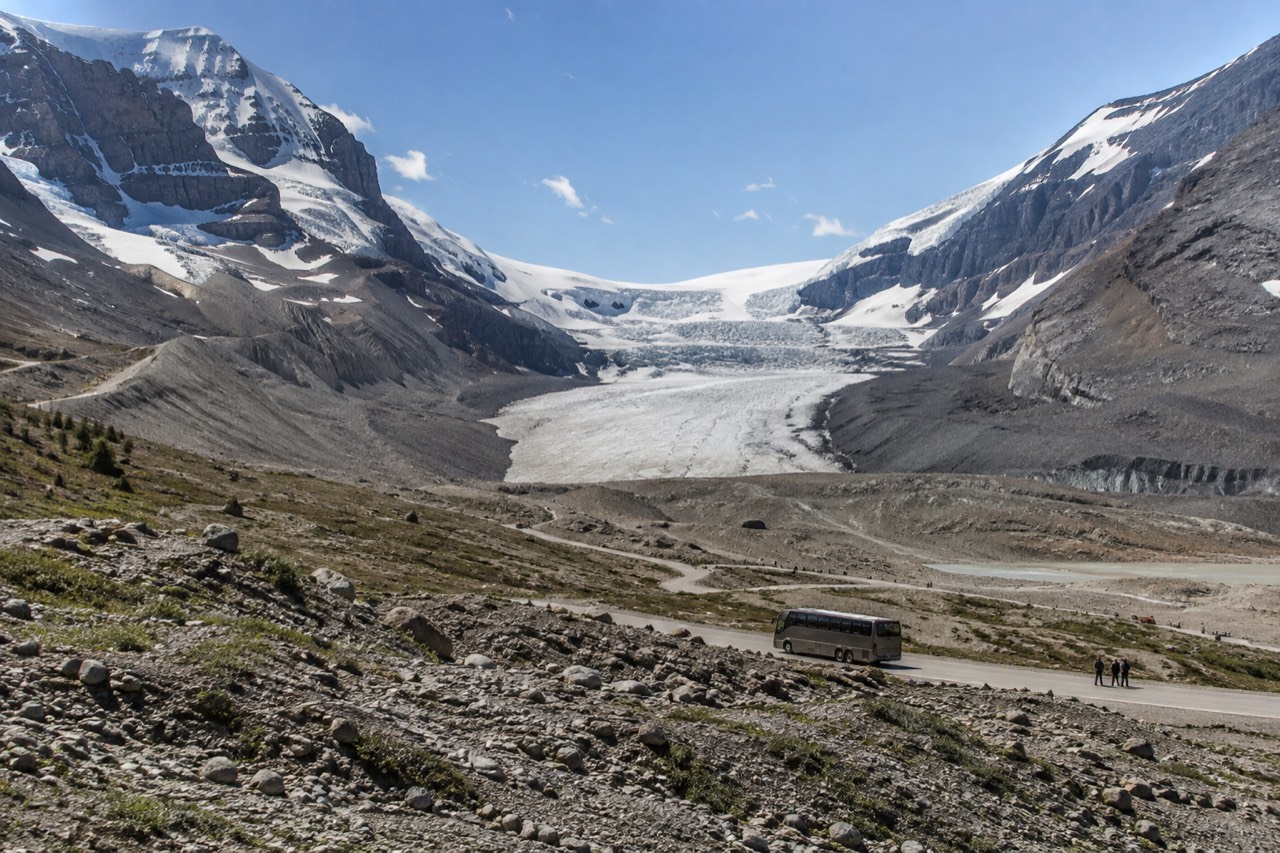
The Athabasca Glacier sits directly across the Icefields Parkway from the Columbia Icefield Discovery Centre, 103 km south of Jasper on Highway 93. It is the most accessible glacier in Canada, which is exactly why the question comes up so often. You can see the ice from the parking lot. It looks close, it looks walkable, and every summer visitors reasonably wonder whether they can simply walk up and step on it.
The answer is no, and it is not a soft no. Parks Canada's own page for the glacier carries the warning in its own words: "The glacier is dangerous! For your safety do not cross the barriers. People have been killed falling into deep, hidden cracks called crevasses in the glacier." The barriers in question are physical, they are maintained, and crossing them is treated as entering a hazardous closed area inside a national park. The fine framework for violating a closure or restricted activity in a Canadian national park runs to a maximum of $25,000 CAD.
That is the short answer. The rest of this article explains why the rule exists, what you can legally do at the glacier on your own, and what the guided options cost, because a traveller who understands the rule usually still wants to stand on the ice, and there are exactly two sanctioned ways to do that.
What Parks Canada actually says about walking on the glacier
Parks Canada prohibits crossing the barriers onto the Athabasca Glacier outside the roped, guided access points, warns that people have died in crevasses, and separately warns against entering ice caves formed by summer meltwater. A glacier that looks solid from the parking lot is a cracked, moving mass of ice with voids that can be tens of metres deep and invisible under a thin snow bridge.
The core of the rule is the barrier system. The toe of the glacier is fenced and signed where the public trail reaches its end, and the ice beyond it is closed to unguided access. The reason is crevasse hazard. A glacier is not a flat ice field: it flows, it fractures as it bends over bedrock steps, and the cracks that result, the crevasses, can be bridged by nothing more than a layer of snow that has drifted over the gap. To a walker in running shoes, a snow bridge looks like ground. It is not ground. Parks Canada's warning exists because people have stepped on that surface and fallen through.
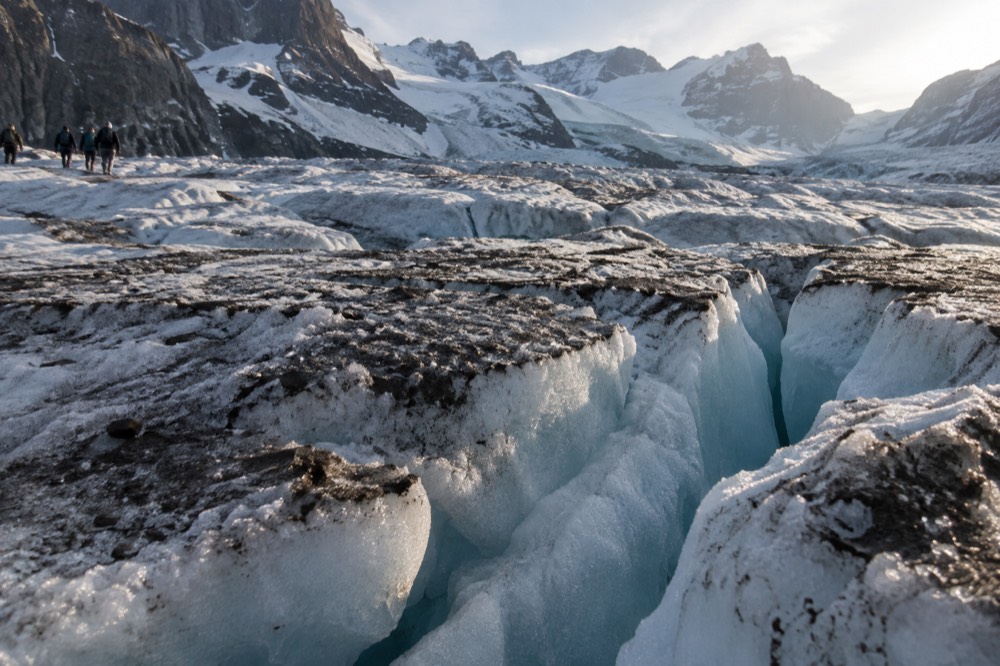
The second warning concerns ice caves. Meltwater carves caves into the glacier through the summer, and they look spectacular and inviting in photographs. Parks Canada's guidance is that they are dangerous and should not be entered, by anyone, guided or not. Caves in a moving glacier can collapse, and the meltwater streams that carved them can surge without warning on warm afternoons.
It is worth being precise about what is and is not being claimed here. Parks Canada does not ban you from the glacier area. The Toe of the Glacier trail is open, maintained and free to walk, and it takes you close enough to see the ice in serious detail. What is prohibited is stepping onto the glacier itself outside a guided or operator-controlled context. The distinction between those two things is the whole practical answer to this question, and the next section covers the legal half of it.
There is one more layer that a self-guided traveller should know about. The glacier has been receding for the last 125 years, and in 2023 it lost more ice than in any of the previous ten years. The edge of the ice moves back a little every season, which means the terrain near the toe is freshly exposed rock and unstable till, not a stable walking surface. The barriers move with the ice. This is covered in more detail in our guide to Athabasca Glacier tours.
The Toe of the Glacier trail: what you can legally do alone
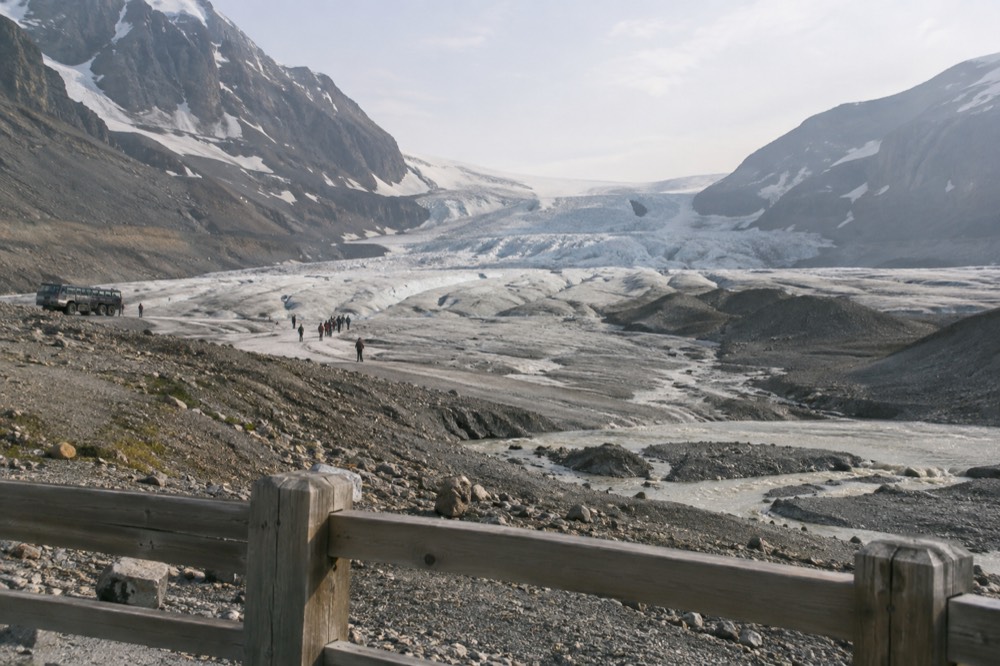
The Toe of the Glacier trail is open, self-guided and free beyond your park pass, and it is the closest a solo visitor can legally get to the Athabasca Glacier. It is a short maintained walk from the parking area to a viewpoint at the glacier's edge, where the barriers and closure signs begin. You can see the ice, the meltwater and the crevasses, but you cannot step on the glacier.
This trail is the honest answer to the traveller who wants to experience the glacier without paying for a tour, and it delivers more than most people expect. The walk runs from the parking area across the outwash plain toward the glacier snout, over ground the ice covered within living memory. You pass boulders dropped by the ice, meltwater braiding through gravel, and then you arrive at the fence line where the glacier's retreat has left fresh, bare rock.
From the barrier you look directly at the glacier toe. On a warm day you can hear it: meltwater pouring from under the ice, and occasionally the crack of the glacier shifting. The crevasses that make the surface impassable are visible from this vantage, which does more to explain the closure rule than any sign can. You will also see the Ice Explorer vehicles crawling down the far side of the ice on their graded road, and possibly a guided hiking group roped together near the toe, which is a useful illustration of what unguided access would actually involve.
A few practical notes for the self-guided visit. The Icefield Centre, which houses the Parks Canada information desk and Glacier Gallery, is 103 km south of Jasper on Highway 93, so the drive each way is over an hour on the Icefields Parkway. There is no cell coverage along the parkway, and in winter there are no services at all along it. A park pass is legally required to drive the parkway and to be anywhere in the park, charged per person at $12.25 CAD per adult per day with a Family/Group rate of $24.50 CAD covering up to seven people in one vehicle, and the fee page is the authority since Parks Canada adjusts these annually: Parks Canada Jasper fees. Youth 17 and under enter free.
The Toe of the Glacier trail appears on Parks Canada's open register, but conditions change, and the authoritative live status is the What's open in Jasper National Park register. Check it before you drive down, and check 511 Alberta for road conditions, because Parks Canada warns that navigation apps are not always accurate for the park.
Why the guided tours exist: crevasses, ropes and liability
Guided glacier access exists because crevasses make the ice genuinely unpassable without training, rope and equipment, not because operators want a monopoly. A guide carries the rope, the rescue gear and the route knowledge to pick a path through the cracked zones, and the barriers exist because an unroped walker on the same surface has no protection at all if a snow bridge fails.
It is easy to read the closure as bureaucracy. It is not. The Athabasca Glacier spills over three giant bedrock steps as it comes down from the Columbia Icefield, and each step is a zone where the ice is under tension and breaks apart. The lower glacier, the part you would walk on, is the most crevassed section precisely because it is the steepest and most deformed. Operators who run guided hikes on it do not wander; they follow established routes that are assessed and reassessed, and they put clients on a rope where the terrain warrants it. Other pages covering the same trip are gathered on Jasper National Park Tours.
The commercial framework matters too. Parks Canada charges a Commercial Group rate of $10.42 CAD per person for operators bringing tours into the park, and licensed glacier operators work under that authorization with conditions attached, including the guided-access zones on the ice. The barriers are the visible edge of that system. Whether any individual tour ticket includes your park pass is an operator-by-operator decision; the inclusions list on each live listing is the only authority for that tour, and this site does not generalise it.
For context on the ice itself: the Columbia Icefield is the largest icefield in the Canadian Rockies, more than 300 km² of ice, and Parks Canada states that if current trends continue, the park's glaciers will disappear within the next century. The glacier you are looking at is a shrinking one, and the terrain left behind as it retreats is raw. If you want the full picture of the icefield's tours, our Columbia Icefield tours guide covers every product on the ice in detail.
What a guided glacier hike actually gets you
A guided hike puts you on the glacier ice itself, on a roped route with crampons and a guide, for roughly three to four hours and from $101.57 to $135.25 per person depending on the operator. You get the crevasse safety system, the equipment and the interpretation; what you give up is the freedom to wander, because the guide's route is the whole point.
There are two guided hiking products on the Athabasca Glacier. The IceWalks guided glacier hike runs 3 hours, from $101.57, rated 4.9 across 422 reviews, with free cancellation. Tread Lightly Glacier Hikes runs 4 hours, from $135.25, rated 4.8 across 198 reviews. Both stage from the Columbia Icefield Discovery Centre area, both put you on the ice with a guide, and both exist because the ice cannot be walked safely without one. A smaller-group option, the Ice Odyssey experience, runs 2 hours from $201.66 for a small group, rated 4.9 across 36 reviews.
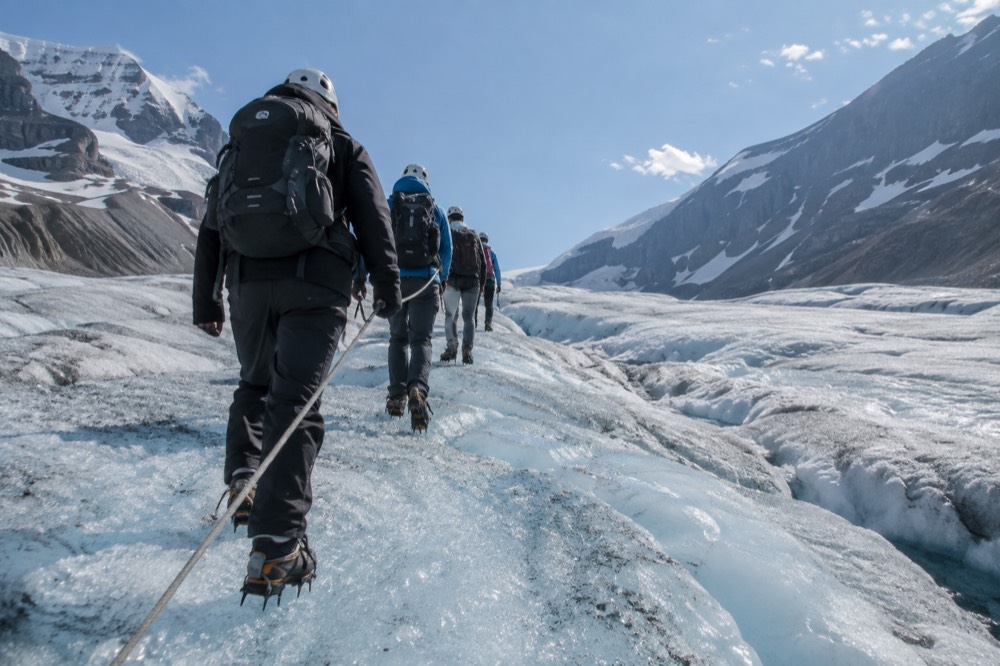
What the money buys, concretely: crampons that grip the ice, a helmet, a rope and harness where the route requires it, a guide who reads the crevasse pattern daily, and rescue equipment nobody hopes to use. It also buys interpretation, and on a glacier that is not filler. The guide can tell you which way the ice is flowing under your feet, why the rock bands bend through the glacier, and how far the toe stood from where you are standing when the Icefields Parkway was built. Reviews for these products consistently mention the guide as the difference between a walk and an experience.
The honest comparison is this. The Toe of the Glacier trail is free, safe and genuinely good, and it ends at a fence. The guided hike crosses the fence, and that crossing is the entire product. If standing on glacial ice matters to you, the guide is not optional; it is the legal mechanism by which the crossing happens. If it does not matter that much, the trail plus the Skywalk viewpoint, covered in the next section, delivers most of the spectacle for a fraction of the cost.
Alternatives if you don't want to hike the ice
If a guided hike is more than you want, the sanctioned alternatives are the Ice Explorer vehicle, which drives onto the glacier and lets you stand on a roped section of ice, and the glass-floored Columbia Icefield Skywalk, which hangs over the Sunwapta Valley with no ice contact at all. Both are ticketed experiences from the Discovery Centre, and neither requires you to walk on the glacier.
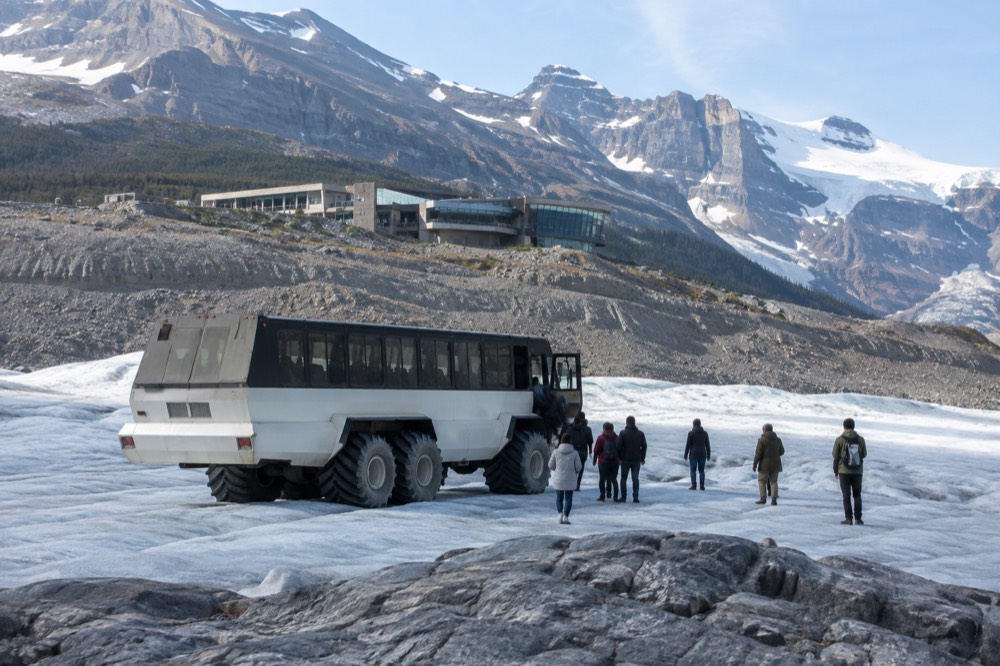
The Ice Explorer and Skywalk combo, from $95.17 and rated 4.5 across 3,187 reviews, is the volume product at the icefield, and it solves the access problem mechanically: a purpose-built all-terrain vehicle drives down a graded road onto the glacier, and you step out onto a controlled area of ice for a short walk. You are on the glacier, you are standing on ice, and you never cross a crevasse zone. The Skywalk, from $37.01 for admission only and rated 4.4 across 1,050 reviews, is a cliff-edge walkway with a glass floor over the Sunwapta Valley, a completely different experience that involves no glacier contact. Our Columbia Icefield Skywalk tickets guide compares them in detail.
For a traveller whose real goal was just an unforgettable Jasper day rather than glacier ice specifically, the roster widens considerably. The Maligne Lake cruise to Spirit Island, the wildlife tours through the Maligne Valley, and the Jasper SkyTram all deliver marquee scenery without a crevasse in sight, and our things to do in Jasper National Park roundup puts them side by side. The trio below includes one of those alternatives alongside the two icefield products, because the honest advice is that not everyone who asks this question actually needs to be on the ice.
Choosing between the four legal ways to see the glacier
Match the product to what you actually want: the trail for a free close-up, the Skywalk for a viewpoint, the Ice Explorer for standing on ice without hiking, and a guided hike for the full glacier experience. Price follows involvement, from free up to $135.25, and every option except the trail requires a ticket booked in advance in peak season.
| Option | What you actually do | Time | From (per person) | Guided? |
|---|---|---|---|---|
| Toe of the Glacier trail | Walk to the fenced glacier edge, view the ice | About 1 hour round trip | Free with park pass | No |
| Columbia Icefield Skywalk | Glass-floored walkway over Sunwapta Valley | Length on the listing | $37.01 | No |
| Ice Explorer and Skywalk combo | Vehicle onto the glacier, stand on a roped ice section, plus the Skywalk | Length on the listing | $95.17 | Operator-led |
| Tread Lightly Glacier Hikes | Crampon hike on the glacier with a guide | 4 hours | $135.25 | Yes |
| IceWalks guided glacier hike | Crampon hike on the glacier with a guide | 3 hours | $101.57 | Yes |
Two decision notes. First, the icefield is 103 km from Jasper, so a self-drive visit plus a short product like the Skywalk is a long day of driving for a short experience; the full guided day tours from Jasper, which pair the icefield with Athabasca Falls and other Icefields Parkway stops, exist for exactly that reason. Second, weather at the icefield is its own thing even in July, and the question of what to wear is answered in our what to wear on a Jasper glacier tour guide.
Whatever you book, the pass question comes back: a park pass is legally required to be in Jasper National Park, per person, with the Family/Group cap at $24.50 CAD per day for up to seven in one vehicle, and each tour's inclusions list is the only place that says whether your ticket covers it. Jasper also has no timed entry, no reservation corridor and no mandatory shuttle for any attraction, so unlike Banff's Moraine Lake system, you do not need a booking simply to reach the glacier area. You need a pass, a plan and, if you want to be on the ice, a guide.
Common questions about walking on the Athabasca Glacier
Can You Walk On The Athabasca Glacier Without A Tour?
No. Crossing the barriers onto the glacier without a licensed guide or operator is prohibited, and Parks Canada's warning is explicit that people have been killed falling into hidden crevasses. The only legal ways onto the ice are a guided glacier hike or the Ice Explorer vehicle experience.
Can you touch the Athabasca Glacier from the Toe of the Glacier trail?
The trail takes you to the fenced edge of the glacier toe, close enough to see crevasses and hear meltwater, but the ice itself is beyond the barrier and closed to unguided access. You cannot legally step onto the glacier from the trail.
Why is it dangerous to walk on a glacier without a guide?
Glaciers are cracked by crevasses as they flow over bedrock steps, and the cracks can be bridged by a thin layer of snow that looks like solid ground. A walker who falls through a snow bridge can drop tens of metres. Guides carry ropes, rescue equipment and daily route knowledge that an unroped visitor does not have.
Are ice caves on the Athabasca Glacier safe to enter?
No. Parks Canada warns that ice caves formed by summer meltwater are dangerous and should not be entered by anyone, guided or not. They can collapse, and the meltwater streams inside them can surge without warning.
How much does a guided glacier hike on the Athabasca cost?
The IceWalks guided glacier hike runs 3 hours from $101.57, and Tread Lightly Glacier Hikes runs 4 hours from $135.25. A small-group Ice Odyssey experience runs 2 hours from $201.66. Check the live listing for each product for current prices, dates and inclusions.
Do I need a park pass to visit the Athabasca Glacier?
Yes. A park pass is legally required to be anywhere in Jasper National Park, including the Icefields Parkway and the glacier area. The daily fee is charged per person, $12.25 CAD per adult, with a Family/Group rate of $24.50 CAD covering up to seven people in one vehicle. Whether a tour ticket includes the pass varies by operator; each listing's inclusions are the authority.