What Is The Best Month To Go To Jasper?
A month-by-month answer to when to visit Jasper National Park, matched to which tours are actually running, from the Maligne Lake cruise season to the October Dark-Sky Festival.
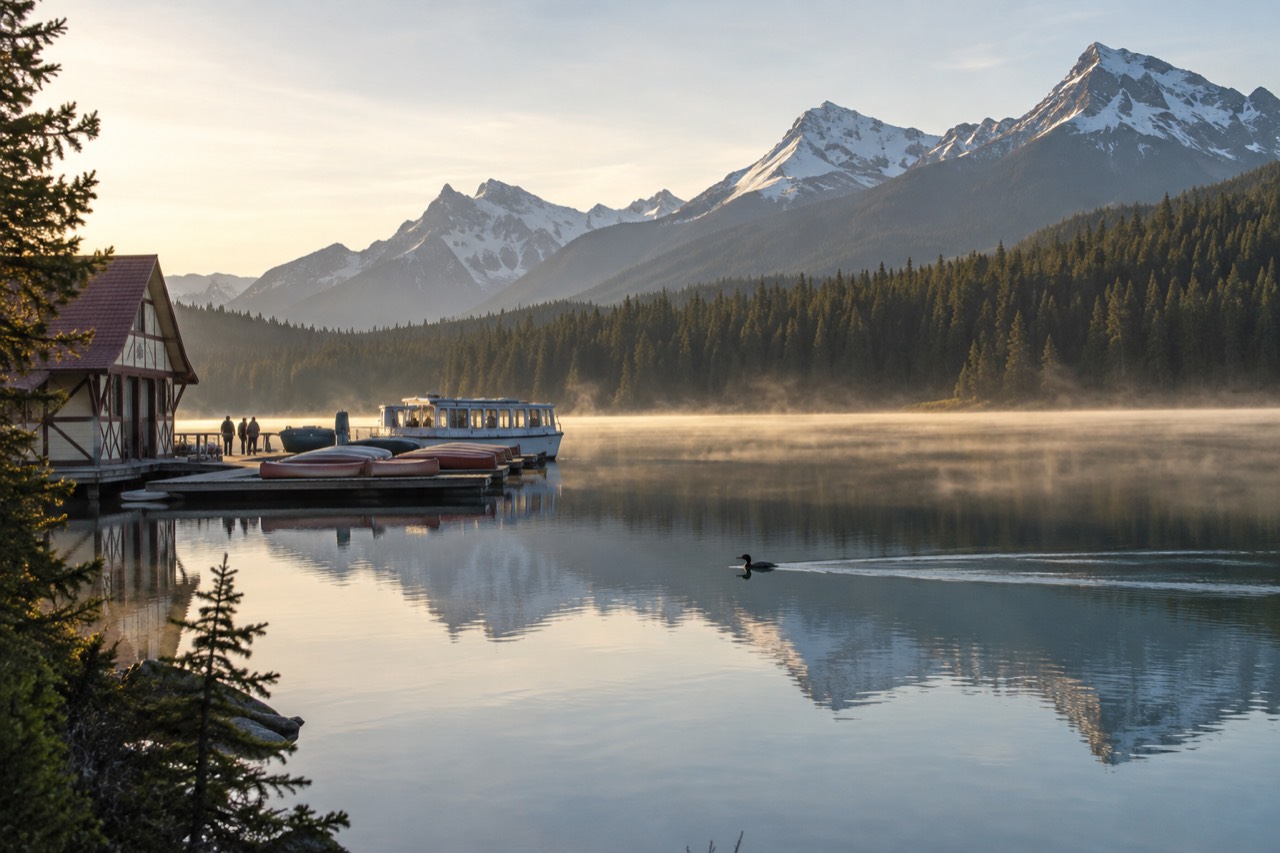
What Is The Best Month To Go To Jasper?
July and September are the two best months, for different reasons. July has the warmest weather, with a daily average of 15.4 °C and every tour in the park running, while September combines running operators, thinner crowds, larch colour late in the month and dark skies ahead of the October festival. June is the value pick, and February is the winter pick.
The honest answer is that there is no single best month, because Jasper's year is lopsided. The park itself is open year round and a park pass is legally required in every season, but most of the headline tours run inside a window from late April to mid-October. Pick a month outside that window and the question stops being "which tour" and becomes "which winter tour", which is a different shortlist entirely.
The second thing that shapes the answer is that Jasper has no timed entry, no reservation corridor and no mandatory shuttle for any attraction. Unlike Banff, where access to certain lakes is managed through a shuttle system, the only authorization you need to travel anywhere in Jasper is a Park Pass. That means the month you choose is about weather and operating seasons, not about competing for a reservation slot. Daily admission is charged per person, at $12.25 CAD for an adult, with a Family/Group rate of $24.50 CAD covering up to seven people in one vehicle, and Parks Canada raises these fees annually, so check the official Jasper fee page before you budget.
Here is the shortlist this article hands you, matched to what is actually running in each month.
Which months have the most tours running?
Late May through early October is when nearly everything runs. The Maligne Lake cruise operates 27 May to 11 October, the Columbia Icefield Adventure 1 May to 12 October, and the Jasper SkyTram 15 April to 25 October, all weather dependent. August is the only month where every single operator is guaranteed to be in season.
Those season dates matter more in Jasper than in most parks, because several of the best experiences have no off-season substitute. Spirit Island sits 14 kilometres up Maligne Lake with no road or trail access, so the tour boat or a private non-motorized craft is the only way to reach it, and the boats stop in early October. Miette Hot Springs, the hottest springs in the Canadian Rockies at a 54 °C source, closes for the season on 12 October and reopens in May 2027, and admission there is sold in person only, first come first served, with no online tickets at all.
If your month is flexible, aim for the overlap. A visit in the first week of October still catches the Maligne cruise, the Icefield Adventure, the SkyTram and Miette in one trip, which no other week can say once the autumn closures begin. A visit in late April catches the SkyTram but misses the lake. June catches everything except the very start of the cruise season.
The Maligne Valley is the single best use of a summer-shoulder day, because it stacks three experiences in one road: the canyon viewpoint area, Medicine Lake with its disappearing drainage, and the cruise to Spirit Island. The SunDog Maligne Valley Wildlife and Spirit Island Cruise tour, rated 4.7 across 253 reviews and priced from $140.35 for a six-hour day, covers Medicine Lake and the cruise with a guide, and it free-cancels if your plans shift.
Still deciding which month fits your trip?
What is Jasper like in the peak summer months?
July and August are the warmest and busiest months, with daily highs of 23.4 °C and 23.0 °C respectively and the year's lowest snowfall, zero centimetres in both. Every tour runs, but July also averages 52.2 mm of rain, the second-wettest month of the year, so pack for afternoon showers.
Summer is when Jasper's visitation peaks, and the numbers back that up. Parks Canada estimates 2,137,000 independent visitors in the 2025 calendar year, below the pre-wildfire baseline of around 2.5 million, and a large share of those trips land in July and August. The practical consequences are real but manageable: book the Maligne cruise and the SkyTram ahead, expect the Icefields Parkway to carry more traffic, and expect wildlife jams on Maligne Lake Road, where roadside viewing is a restricted activity year round and you must stay in your vehicle, pull over only where safe, and move on if a jam develops.
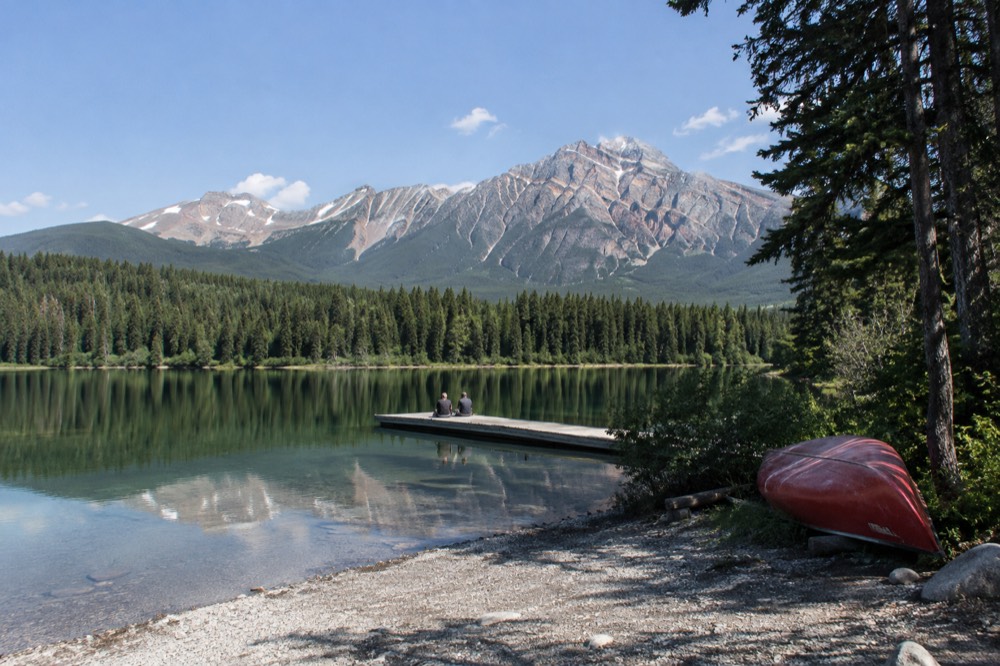
The trade for the crowds is completeness. In July the Milky Way's dense centre arches overhead, the Perseids begin building toward their mid-August peak, and the glacier tours, rafting runs and wildlife watches all operate daily. The Athabasca River rafting trips, from the mild two-hour runs to the Class III Sunwapta Challenge, are at their best when the glacial melt is high. If you want the full menu and you accept the company of other visitors, July and August are your months.
One planning note that surprises people: August rainfall in the climate record, 58.8 mm, actually exceeds the total precipitation figure for the month, because the two series are measured differently in the official normals. Do not read that as a contradiction, just take it as a sign that summer rain is a real factor in Jasper's valley weather and plan a rain layer.
Is September the sweet spot?
September is the best single month for most visitors. Daily highs still reach 17.9 °C, every major operator is still running until at least the second week of October, crowds thin after Labour Day, and the Perseids have passed but the dark skies arrive, with the Jasper Dark-Sky Festival held every October.
The case for September is the overlap of three curves: temperatures stay pleasant, the tour season is intact, and demand drops. The Maligne Lake cruise runs to 11 October, the Columbia Icefield Adventure to 12 October, and Miette Hot Springs to 12 October with its 11 am to 9 pm hours, so a late-September visit loses nothing operationally. What it gains is elbow room on the trails, easier SkyTram boarding, and a better chance of standing at the Sunwapta Falls footbridge without a queue. The wider set of guides lives on Jasper National Park Tours.
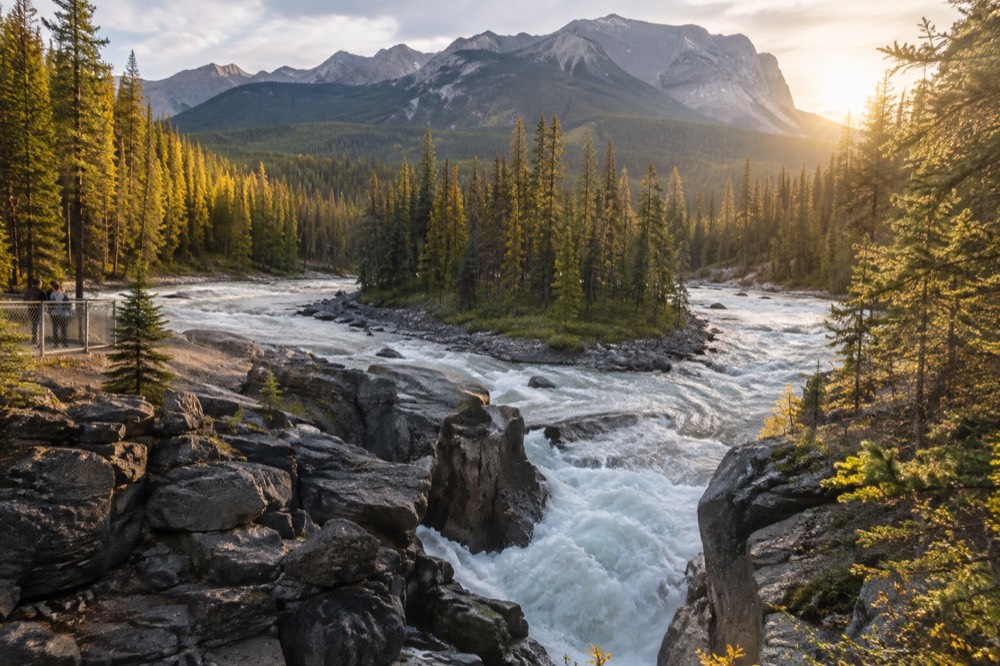
Wildlife is a genuine September story, and an honest one. Elk move into the rut in early autumn, and the park's mammals, from moose in the lodgepole forest at the north end of Maligne Lake to bighorn sheep along the Icefields Parkway, are all present. A sighting is never a guarantee, on any tour in any month, but the guided wildlife watches run all season and the official distances apply year round: 30 metres from elk, deer and moose, 100 metres from bears and other carnivores.
If your September visit has room for one water-based half day, the 90-minute Maligne Lake Cruise itself, rated 4.8 across 1,279 reviews and from $87.45, is the purest version of the Spirit Island trip, and Pursuit advises arriving about an hour ahead and allowing at least 90 minutes for the drive from Jasper, with missed cruises non-refundable.
What about winter in Jasper?
December through March is the quiet season, with January daily means of -8.8 °C and 41.1 days per year of wind chill below -20 °C, but the park stays open. The Maligne Lake Road is open year round, the Icefields Parkway does not close for winter, and the winter tours are snowshoeing, wildlife watching and stargazing.
Winter Jasper is a real trip, not a consolation prize, but it demands the right expectations. The Maligne cruise is docked, the Ice Explorer is parked, and Miette is closed until May. What remains is genuinely good: snowshoe tours with hotel pickup from around $65.08, winter wildlife discovery drives, the planetarium and telescope combo, and the second-largest dark-sky preserve in the world at its absolute best, with Orion's belt climbing the eastern sky from November through February and the Geminids in season.
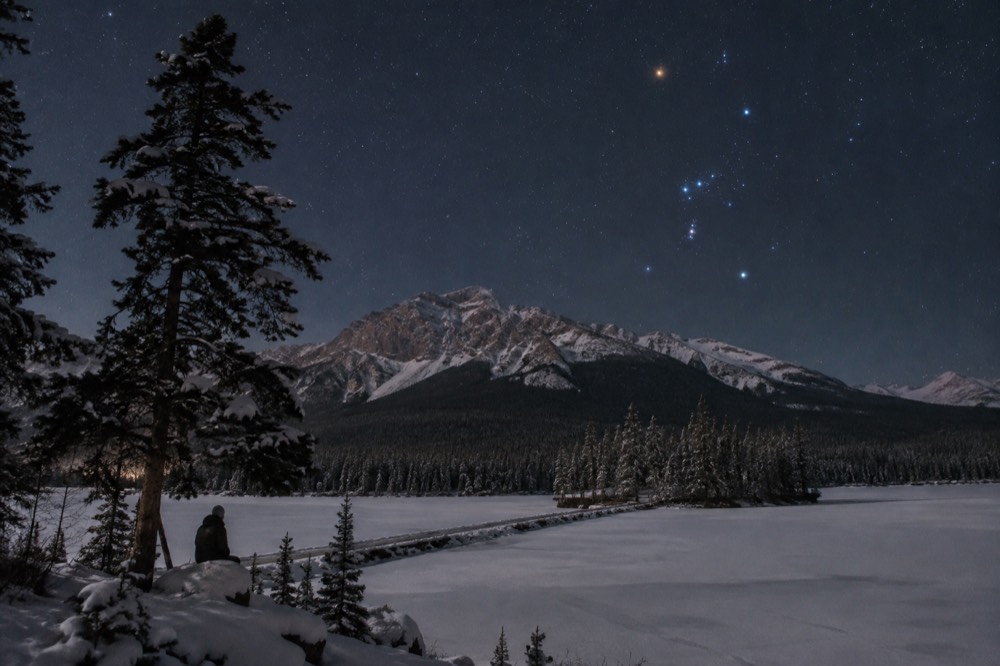
Driving is the part that needs respect. From 1 November to 31 March, a vehicle on the Icefields Parkway must have snow tires or chains, the road is not salted, maintenance runs 7 am to 3:30 pm, there are no services en route and no cell coverage between the two ends. Check 511 Alberta before you drive, and Parks Canada's road restrictions page for seasonal closures, because Parks Canada warns that navigation apps are not always accurate for Jasper National Park. For more on the cold-weather side of the park, see our guide to Jasper in winter.
One caution that matters for winter planning: Maligne Canyon is closed to all access for the 2026 season, including winter access for winter recreation, under a standing Superintendent's closure. No canyon ice walk can legally run there while the closure stands, so do not build a winter itinerary around one.
How does the 2024 wildfire affect choosing a month?
The wildfire does not close the park in any month, and the majority of Jasper National Park is open and ready to explore, with virtually all trails reopened. What it changes is two specific places: Cavell Road and Maligne Canyon are both closed for the 2026 season, and Parks Canada has not set a reopening date for either.
The July 2024 fire burned 32,722 hectares and reached the townsite within 48 hours, but the recovery has been fast and the visitor-facing park is largely whole. Parks Canada's own words are that "virtually all of Jasper's trails have now reopened", the Valley of the Five Lakes trail reopened in summer 2026 after full reconstruction, and 77 percent of the pre-wildfire frontcountry campground inventory plus 100 percent of the backcountry inventory are available. In town, 70 percent of structures were saved and rebuilding is under way.
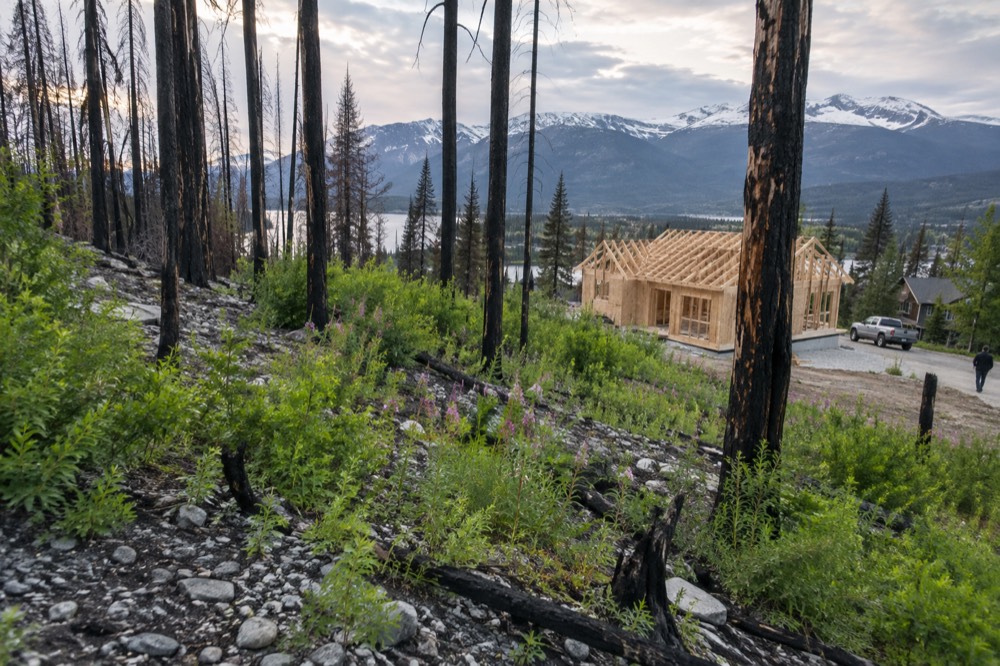
For month planning, the practical effects are these. The burn is visible along the Athabasca valley south of town, around the townsite's southwest edge and up the Maligne road corridor, and regrowth is under way, which is worth seeing rather than avoiding. Fire bans and air quality change through the season, so check Parks Canada's fire page and albertafirebans.ca before you go. And because both closed areas are in steep terrain awaiting slope stabilisation, do not pick a month hoping Cavell Road or the canyon will open in it. Check the park recovery page before you plan around either. Our guide to what not to miss in Jasper covers the open highlights in detail.
A quick month-by-month verdict
March through May are the transition months, June is the value pick, July and August are the full-menu months, September is the best all-round month, and October splits between early-season-full and late-dark-sky. November is the hardest month to recommend, with tours closed and snow activities not yet running.
Here is the whole year compressed into one table, using the operator seasons and the 1991 to 2020 climate normals for the Jasper station.
| Month | Daily high / low °C | Tours running | Verdict |
|---|---|---|---|
| January | -3.2 / -14.4 | Snowshoe, wildlife, planetarium | Quiet, cold, best skies |
| February | 0.5 / -12.7 | Snowshoe, wildlife, planetarium | Best of the deep winter |
| March | 4.7 / -8.2 | Winter tours, SkyTram from 15 April | Transition, slush risk |
| April | 10.9 / -3.6 | SkyTram from 15 April, Icefield from 1 May | Late-month opening window |
| May | 16.4 / 0.9 | SkyTram, Icefield Adventure, Miette | Good value, cruise not yet running |
| June | 20.0 / 5.2 | Everything, cruise from 27 May | Best value month |
| July | 23.4 / 7.4 | Everything | Warmest, busiest |
| August | 23.0 / 6.1 | Everything | Full menu, rain risk |
| September | 17.9 / 2.5 | Everything | Best all-round month |
| October | 9.9 / -2.4 | Early month nearly all, then closures | Dark-Sky Festival, split month |
| November | 1.5 / -8.1 | Winter tours only | Hardest month to recommend |
| December | -3.5 / -14.1 | Snowshoe, wildlife, planetarium | Festive, dark, cold |
Whichever month you land on, two bookings do the most work. A Maligne Valley day covers wildlife, Medicine Lake and Spirit Island in one guided sweep, and a lake or canoe alternative gives you water time without a full-day commitment. The Pyramid Lakes guided canoe trip, a small-group three-hour paddle with snacks and drinks included, from $449.58, suits visitors who want quiet water close to town rather than the long drive south, and it pairs naturally with a morning wildlife watch in any month from late spring through September.
Common questions about visiting Jasper by month
What Is The Best Month To Go To Jasper?
September is the best single month for most visitors: every major tour is still running, daily highs average 17.9 °C, and crowds thin after summer. July and August are the best months if you want the warmest weather and the full tour menu, and February is the best winter month for snowshoeing and stargazing.
Is Jasper too cold in winter to enjoy?
January daily means sit around -8.8 °C and wind chill drops below -20 °C on about 41 days a year, but the town, the winter tours and the dark skies all operate. Dress for it and winter Jasper is one of the quietest, clearest times in the park.
Do Jasper tours run in October?
Early October, yes. The Maligne Lake cruise runs to 11 October, the Columbia Icefield Adventure to 12 October, Miette Hot Springs to 12 October, and the Jasper SkyTram to 25 October. After the second week of October only the SkyTram and winter-season tours remain.
Is Jasper busy in summer?
July and August are the busiest months, in a park that received an estimated 2,137,000 independent visitors in 2025. Booking the Maligne cruise, the SkyTram and glacier tours ahead is the standard advice for those two months.
Does the Icefields Parkway close in winter?
No. The parkway has no seasonal closure, but from 1 November to 31 March a vehicle must carry snow tires or chains, there are no services en route, and maintenance runs 7 am to 3:30 pm. A park pass is required to drive it.
When is the Jasper Dark-Sky Festival?
Every October. Jasper National Park was designated a Dark-Sky Preserve by the Royal Astronomical Society of Canada in 2011 and celebrates Dark-Sky Month each October, with the festival run by Tourism Jasper.