What Is The Best Time Of The Day To Visit Columbia Icefield?
The best time of day to visit Columbia Icefield, based on how the glacier tours, the Skywalk, the light and the Icefields Parkway actually work through a summer day.
What Is The Best Time Of The Day To Visit Columbia Icefield?
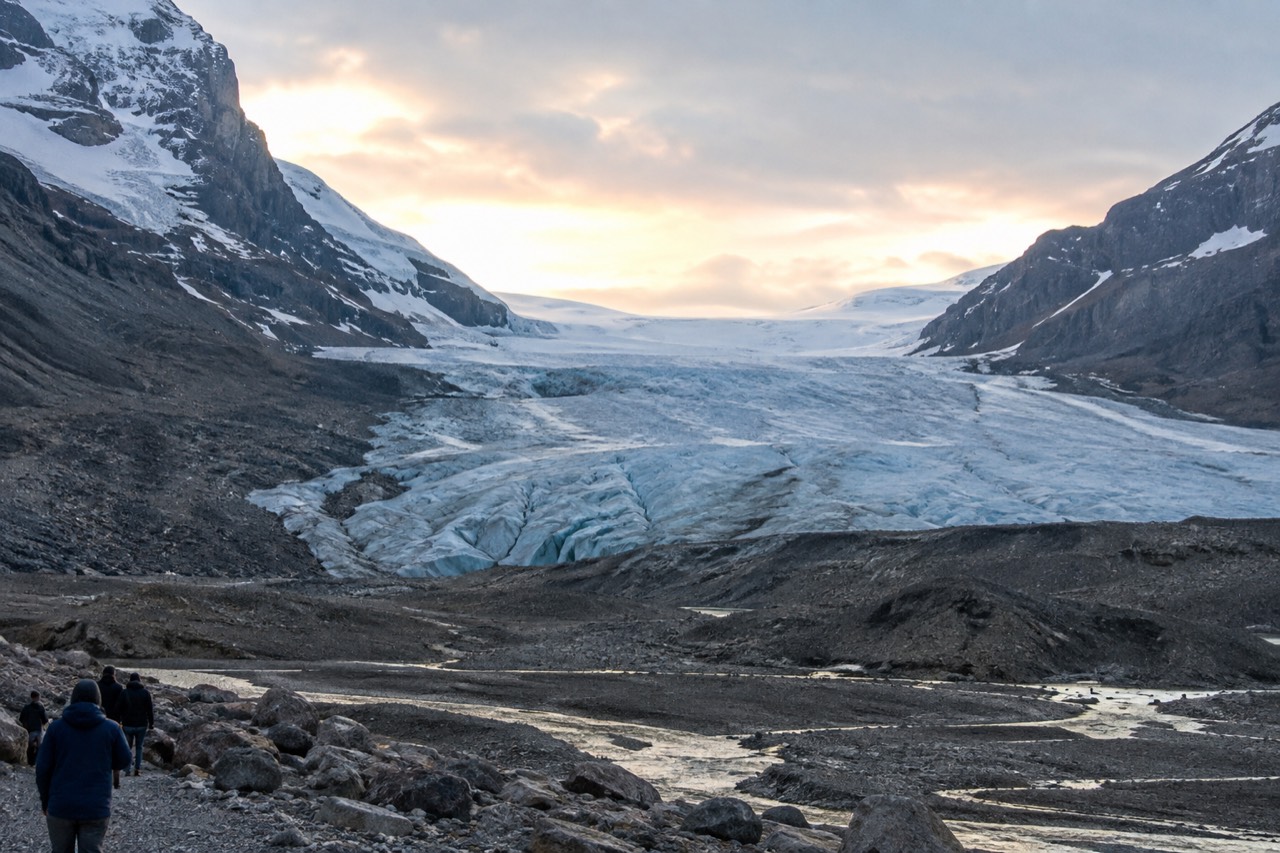
The best time of day to visit Columbia Icefield is the first departures of the morning, roughly the 9 to 11 am window, when the ice is hardest and brightest, the parking areas are emptiest, and the afternoon build-up of cloud that forms over the icefield has not yet arrived. The second-best window is the last departures of the day, after 3 pm, when crowds thin again.
The reasoning behind that answer is practical, not aesthetic guesswork. The Columbia Icefield sits at high elevation on the Continental Divide, and its weather runs on a daily engine: clear cold mornings, a build-up of cloud through the middle of the day as the sun heats the ice, and often a clearing again toward evening. Parks Canada's own glacier pages note that the Athabasca Glacier saw more ice melt in 2023 than in any of the previous ten years, and melt is exactly what a visitor is looking at by mid-afternoon. Meltwater streams cut across the ice, the surface turns from white to grey, and the photographs that made the place famous get harder to take.
The morning also wins on logistics. The Icefield Centre sits 103 km south of Jasper on Highway 93, and the drive down the Icefields Parkway is half the experience. A morning departure forces you onto the parkway early, which is when its roadside wildlife, bighorn sheep and mountain goats among them, is most active. A midday arrival means you drove its best 100 km in the flattest light of the day and arrived with everyone else.
There is a booking dimension too. The glacier experiences at the site, the Ice Explorer ride onto the Athabasca Glacier and the glass-floored Skywalk over the Sunwapta Valley, run on scheduled departures rather than continuous boarding, and the operator's season runs 1 May to 12 October, weather dependent, per Pursuit's official attraction page. Morning slots on peak days sell out first because experienced travellers take them, so if you are booking late in the season or late in your planning, the afternoon may be what is left. That is not a disaster, and the section on late visits below explains why.
If you are still choosing which product to book at all, the three below cover the main ways people do the Icefield: a full guided day from Jasper, the glacier-and-Skywalk ticket, and a wildlife-and-lakes alternative if the glacier itself is not the whole point of your day.
Why the first departures of the morning win
Morning wins for three concrete reasons: the ice is at its most photogenic before the day's melt begins, the glacier surface is firmer and safer underfoot for the walking portions, and the site's parking and boarding queues are shortest before the late-morning wave arrives from Jasper and Banff. Expect the clearest sky of the day before about 11 am.
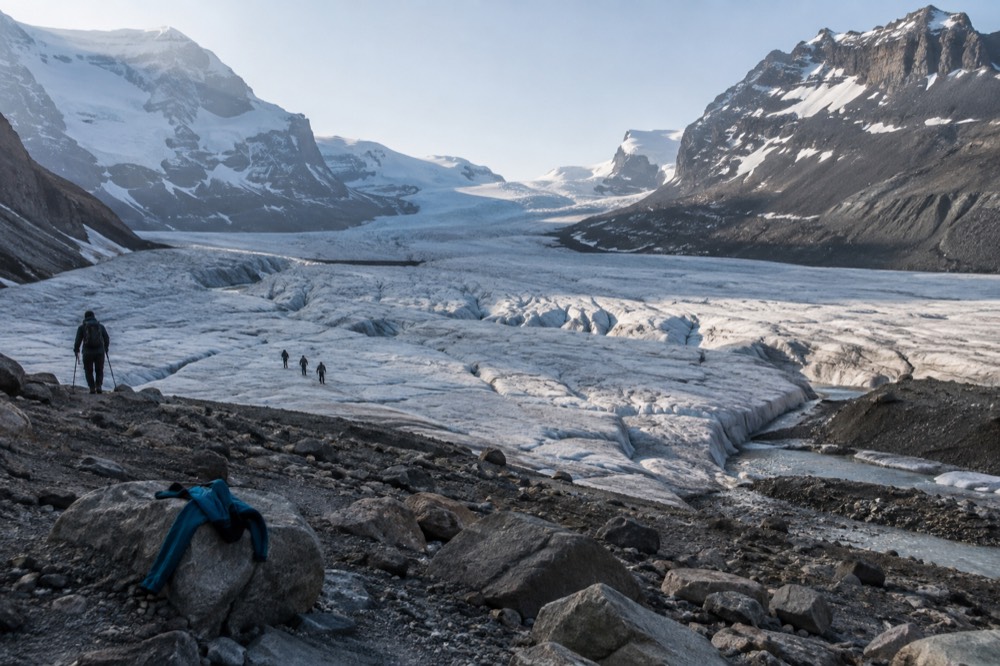
The Athabasca Glacier has been receding for 125 years, and the retreat is accelerating: from 1985 to 2024 Jasper lost 21.8 percent of its total glacier mass, and the Columbia Icefield alone lost nearly 13.3 percent over the same period. What that means for a day visitor is that the glacier you walk on is a moving target of melt. In the first hours after sunrise the surface is refrozen and firm, the crevasse fields hold their shape, and the light rakes low across the ice so that its texture shows in photographs. By early afternoon the same surface is wet, darker, and losing definition.
Cloud behaves the same way. High-elevation icefields generate their own weather as the day warms, and the classic pattern is a cloud cap building over the Divide through the middle hours. Anyone who has stood at the Icefield Centre at 2 pm watching the peaks disappear into grey has seen it. The morning window is when postcard conditions are most likely, and it is also when the temperature is most comfortable for standing on ice: Environment and Climate Change Canada's 1991 to 2020 climate normals for the Jasper station show July and August daily maxima of 23.4 and 23.0 degrees, but at the Icefield's elevation the felt temperature is several degrees lower, and the wind off the ice is constant.
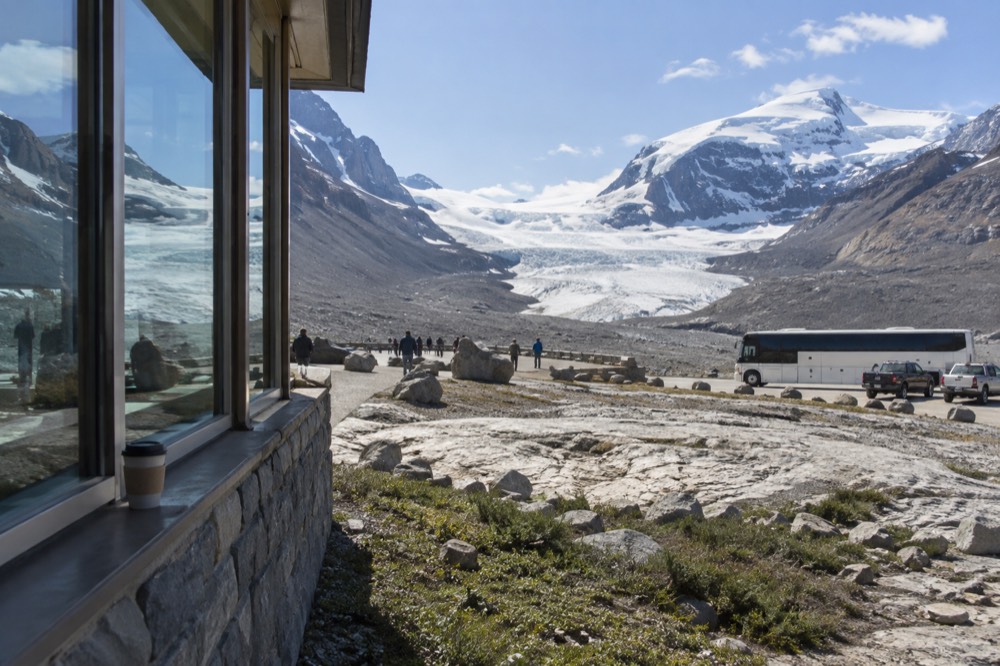
The crowd argument is just as strong. The site is a terminus for two directions of traffic: Jasper-based visitors driving south and Banff-based visitors driving north up the Icefields Parkway, which runs 232 km between Lake Louise and Jasper. Both waves tend to arrive late morning. Book the first or second departure of the day and you will walk the Skywalk, the cliff-edged glass walkway over the Sunwapta Valley, with room to move rather than in a procession.
For the ticket that covers both the Ice Explorer ride onto the glacier and the Skywalk, morning slots are the ones to target. The combo, officially the Jasper: Columbia Icefield Skywalk and Ice Explorer Ticket, runs 4.5 across 3,187 reviews and from $95.17, with length and group size on the listing. Its confirmed stops are the Athabasca Glacier, the Skywalk and the Columbia Icefield Discovery Centre, which is the full circuit of the site in one booking. You can also read the Columbia Icefield Skywalk ticket guide for how the Skywalk-only option compares.
What midday is actually like at the Icefield
Midday is the site's busiest and flattest-lighted stretch, roughly 11 am to 2 pm, when the Jasper and Banff traffic waves overlap, the glacier surface is at its wettest, and cloud often caps the Divide. It is still worth visiting at midday if that is the slot you can get, but it is the weakest window for photography and the longest window for queues.
Two things converge at midday. The first is arrival volume: the parking areas at the Icefield Centre and the Skywalk are sized for a site that receives a large share of the roughly 2.1 million visitors Jasper National Park recorded in the 2025 calendar year, and the middle of the day is when the coaches and self-drive traffic stack up. The second is the light itself. Direct overhead sun flattens the glacier's texture, kills the blue of the ice in the crevasse walls, and puts harsh shadows on the Skywalk's canyon views.
The melt also peaks then. The glacier loses mass fastest in the warmest hours, and the surface water channels that make the ice look dirty are a midday phenomenon. None of this makes midday a bad visit; the Ice Explorer vehicles run all day, the interpretive guides are the same quality at noon as at nine, and families with small children often find midday the most practical slot for naps and meals. The Discovery Centre has food service, which matters because there are no services along this stretch of the parkway in winter and only limited ones in summer.
One planning note belongs here and nowhere else in this article: a park pass is legally required to be in Jasper National Park, including on the Icefields Parkway, and the daily admission is charged per person, $12.25 CAD for an adult, with a Family/Group rate of $24.50 CAD covering up to seven people in one vehicle. Parks Canada raises these fees annually, so check the official fee page before you go, and check each tour's inclusions list rather than assuming the operator absorbs it.
The case for going late: after 3 pm
Late afternoon is the quiet second-best window: the day-trip traffic has started its long drive back, the cloud cap often breaks up, and the low sun returns texture and colour to the ice. The trade-offs are a compressed visit, since the last departures of the day are fixed, and a drive back to Jasper in evening light with wildlife on the road.
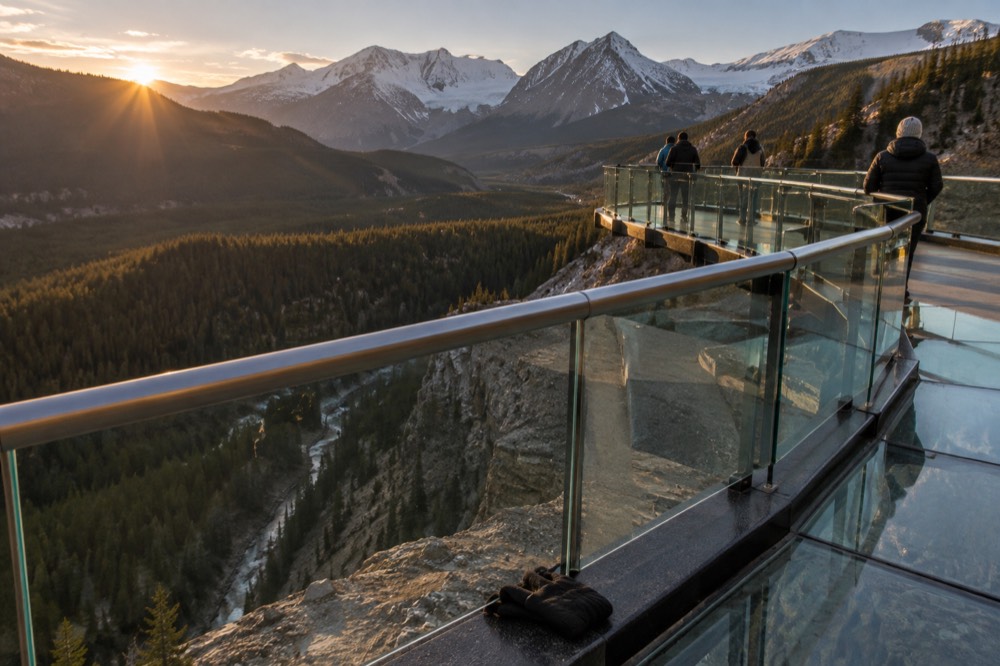
The evening clear-out is real. Most self-drive visitors plan the Icefield as a mid-trip stop and want to be back in Jasper or back on the road to Banff before dinner, so from about 3 pm the site visibly empties. Photographers who know the parkway prize the last two hours of daylight for the same reason morning is prized: raking light, long shadows on the ice, and the Sunwapta Valley below the Skywalk picking up warm colour. If your goal is pictures rather than the full interpretive experience, a late slot competes seriously with a morning one.
The risks are on the road side. The Icefields Parkway has no cell coverage en route, it is not salted, and in the shoulder seasons the maintenance window runs 7 am to 3:30 pm, meaning a late departure can put you on the drive home after the day's ploughing has finished. From 1 November to 31 March, snow tires or chains are legally required on the parkway. In summer the evening risk is different: wildlife. Bighorn sheep, mountain goats, coyotes and deer are named by Parks Canada as commonly sighted along the parkway, and the official rule for roadside viewing is to stay in your vehicle, slow down, use hazard lights, pull over only where it is safe, and move on. Dusk driving demands that discipline more than any other hour.
A late slot also suits a specific kind of itinerary: travellers driving the parkway one way between Jasper and Banff, who can take a final-afternoon Icefield stop and continue south to overnight in Banff. That is exactly the shape of the Jasper to Banff day tour on this site's roster, which covers the glacier, the Skywalk, Athabasca Falls and Maligne Canyon in a single 10-hour southbound day, rated 5.0 across 3 reviews and from $212.2 with free cancellation. For anyone ending in Banff, the timing question answers itself: you take the Icefield when the tour takes it, and the tour times its glacier stop deliberately.
How the hour changes what you see on the ice
The glacier's appearance changes more across a single day than most visitors expect: morning ice is firm, white and blue-crevassed, midday ice is wet, grey and stream-cut, and evening ice regains texture as the sun drops. The Skywalk's canyon view follows the same arc, so the hour you pick effectively chooses which Icefield you see.
A table makes the trade-offs easier to scan than prose. This is a planning summary based on how the site's daily rhythm works, not a weather promise; conditions at high elevation change fast, and the operator's own weather calls govern each departure.
| Window | Ice and light | Crowds and queues | Best for |
|---|---|---|---|
| Before 11 am | Firm white ice, low raking light, clearest sky of the day | Shortest; first departures sell out first | Photography, firm walking surfaces, calm |
| 11 am to 2 pm | Wet grey surface, flat overhead light, cloud cap likely | Peak; both traffic waves overlap | Families, food service, fixed schedules |
| After 3 pm | Texture returns, warm light on the Sunwapta Valley | Thins steadily toward last departures | Photographers, one-way Jasper-to-Banff drivers |
Two safety points attach to any hour. Parks Canada's own words on the Athabasca Glacier are blunt: the glacier is dangerous, people have been killed falling into hidden crevasses, and you should not cross the barriers. The Toe of the Glacier viewpoint trail, which is open, lets you see the ice safely from the moraine. And the ice caves formed by summer meltwater, which look spectacular in photographs, are dangerous and should not be entered at any time of day.
If the glacier itself is one stop in a broader wildlife-and-lakes day rather than the whole point, timing pressure drops sharply. The wildlife and sightseeing tour with lakeshore hike, rated 4.7 across 391 reviews and from $78.45 for a 6-hour day, spends its time on Patricia Lake, Medicine Lake and the Maligne valley instead, where the golden hours matter more than departure slots. More detail on the glacier-versus-alternatives question is in is the Athabasca Glacier tour worth it.
Planning the drive: the hour starts in Jasper
The hour you book at the Icefield is really the hour you leave Jasper, because the site is 103 km south on Highway 93 and the parkway between is the slowest, most stoppable road in the park: Athabasca Falls sits 30 km from Jasper and Sunwapta Falls 54 km, and every stop you make on the way pushes your glacier slot later.
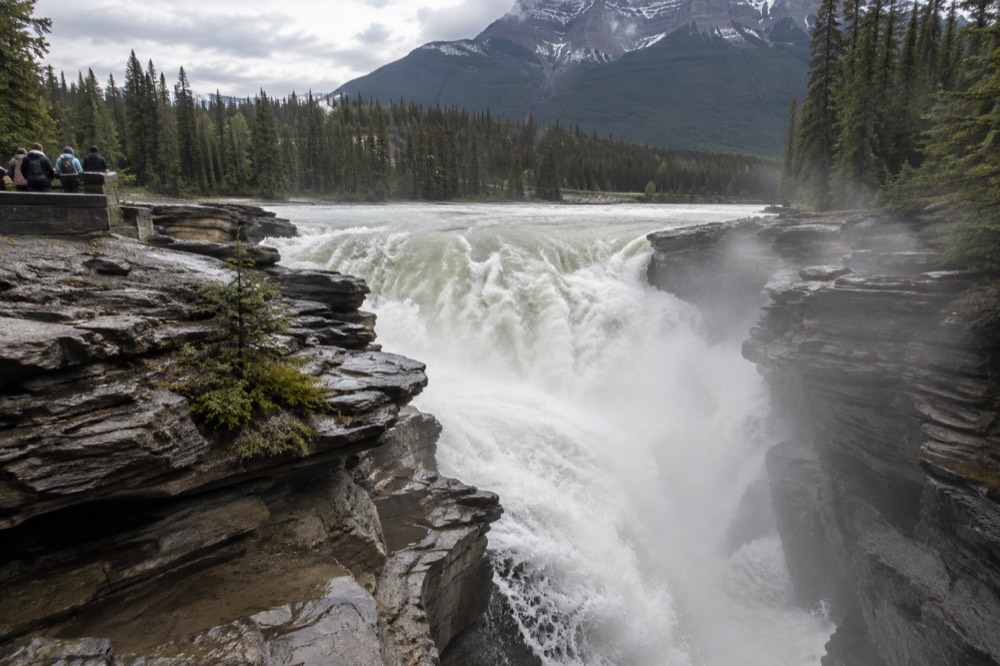
This is the planning mistake that undoes more Icefield visits than the weather does. Travellers book a 1 pm glacier departure, leave Jasper at 11, and then meet Athabasca Falls, a 23-metre drop Parks Canada calls one of the most powerful in the mountain parks, and Sunwapta Falls, a stepping waterfall where the Chaba Valley hangs over the Athabasca Valley, both of which demand stops. The parkway is not a highway you drive past things on.
The fix is to treat the drive as part of the booking. A morning Icefield slot means leaving Jasper by about 8 am with stops budgeted; a late-afternoon slot means you can leave late morning, see both falls unhurried, and still make the last departures. There is no cell coverage along the parkway, so download or print what you need before leaving town, and check 511 Alberta for road conditions before you drive, since Parks Canada warns that navigation apps are not always accurate for Jasper National Park.
Season changes the calculus too. The glacier attractions run 1 May to 12 October, weather dependent, per Pursuit's official page, and in May and October the days are short enough that the morning window is the only comfortable one: the ECCC climate normals show April and October daily maxima of 10.9 and 9.9 degrees at the Jasper station, and the Icefield runs colder. In deep summer, July and August, the daylight is so long that even a 5 pm slot leaves hours of usable light for the drive back. The shoulder-season visitor should book morning without agonising; the July visitor has genuine latitude.
For a fuller comparison of every way to book the site, from the Skywalk-only ticket to the small-group Ice Odyssey, the Columbia Icefield tours guide breaks down the whole roster, and this site's own Jasper National Park Tours pages cover the rest of the park the same way. If you have settled on your product and are choosing between two departure times, take the earlier one whenever the day's plan allows it.
Common questions about the best time of day at Columbia Icefield
What Is The Best Time Of The Day To Visit Columbia Icefield?
The first departures of the morning, roughly 9 to 11 am, offer the firmest ice, the clearest sky and the smallest crowds. The last departures after 3 pm are the second-best window. Midday, roughly 11 am to 2 pm, is the busiest and flattest-lighted part of the day.
Does Columbia Icefield get crowded at midday?
Yes. The site receives traffic waves from both Jasper and Banff, and they overlap between about 11 am and 2 pm. Booking the first or the last departures of the day avoids the peak, and morning slots sell out first for exactly that reason.
How long should I allow for the drive from Jasper to the Icefield?
The Icefield Centre is 103 km south of Jasper on Highway 93. There is no verified driving time, and the honest answer is that most travellers should budget a half-day each way with stops, because Athabasca Falls and Sunwapta Falls sit directly on the route and deserve time.
Is the Skywalk better in the morning or the afternoon?
Morning, for the same reasons as the glacier: clearer skies over the Sunwapta Valley and fewer people on the glass. Late afternoon is the runner-up, when low sun adds warm colour to the canyon and the crowds thin. Midday gives the flattest view of the day.
Do glacier tour times change with the seasons?
Departure windows compress outside deep summer. The attractions run 1 May to 12 October, weather dependent, and in May and October the short, cold days make the morning slot the only comfortable choice. In July and August, long daylight gives you real flexibility.