Where Is The Best Place To See Wildlife In Jasper National Park?
The Maligne Valley, the Athabasca valley and the Icefields Parkway are Jasper's most reliable wildlife areas. Here is where to go, when, and what the rules are.
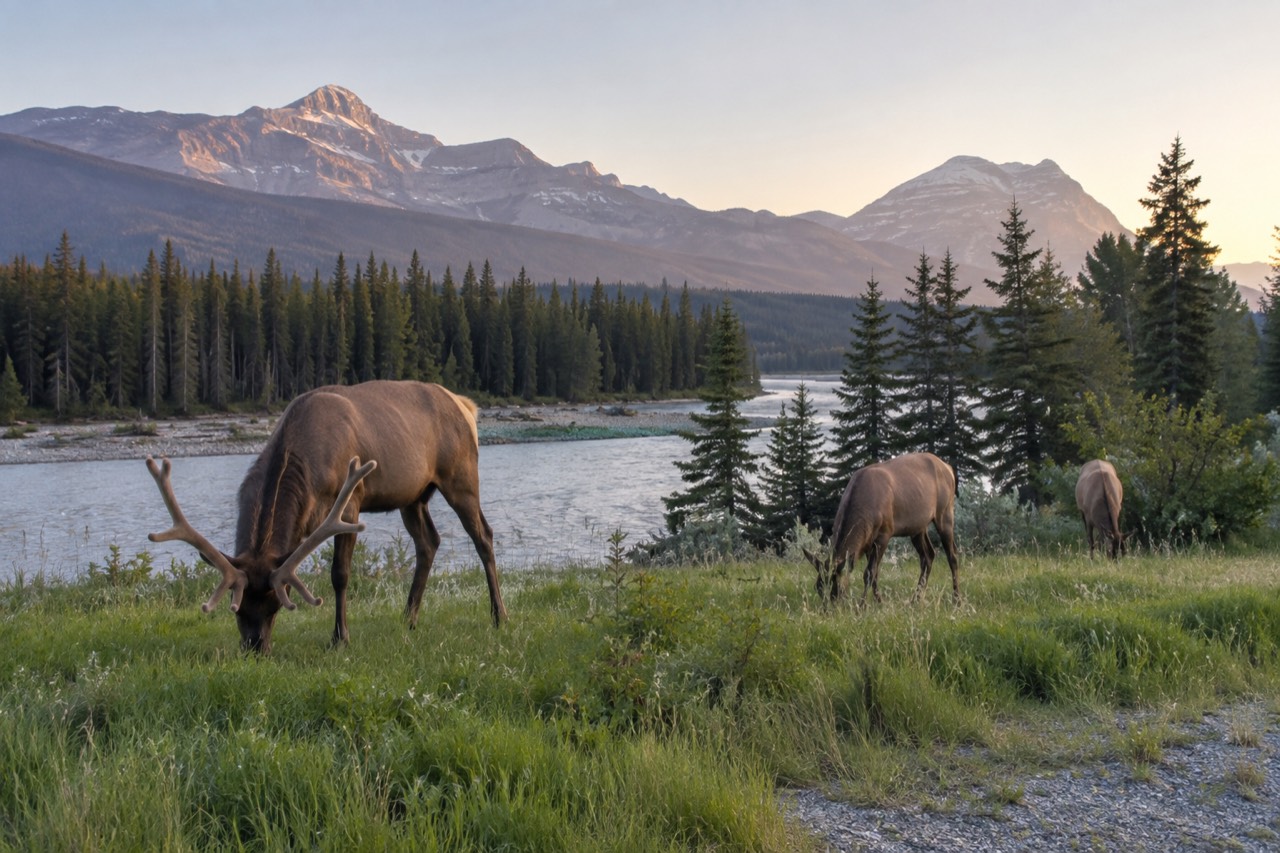
Jasper National Park is the largest of the Canadian Rocky Mountain national parks, 11,228 square kilometres of it, and it carries a full Rocky Mountain mammal roster: elk, deer, moose, caribou, bighorn sheep, mountain goats, bears, coyotes, wolves, beavers, pine martens, lynx, porcupines, cougars, snowshoe hares and wolverines. That list is Parks Canada's own, not a tourism brochure's. What the list does not tell you is that most of those animals are concentrated in a handful of valleys, that the time of day matters as much as the place, and that a small set of viewing rules decides whether an encounter becomes a memory or a fine. This page walks through the areas that consistently produce sightings, the reasoning behind each one, and the practical details that separate a good wildlife day from a drive through empty forest.
Where Is The Best Place To See Wildlife In Jasper National Park?
The single best area is the Maligne Valley, the road that runs 44 km from Highway 16 past Medicine Lake to Maligne Lake, because it strings together river bottom, lakeshore and burned regrowth forest, three habitat types that feed elk, moose, deer, bears and bighorn sheep along one drivable corridor. The Athabasca valley south of town is the strong second choice, and the Icefields Parkway is best in winter.
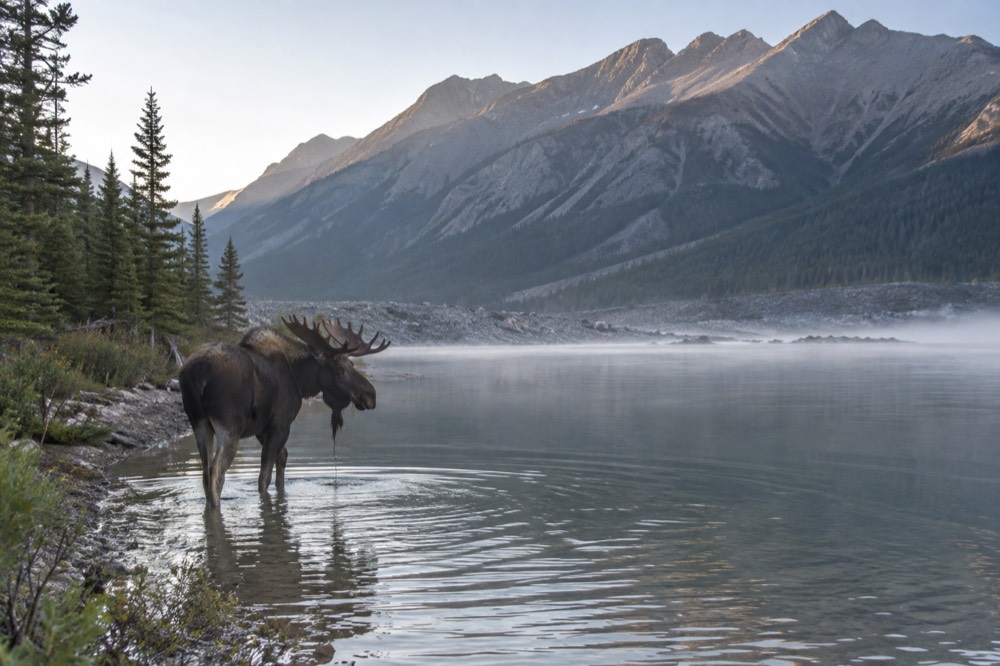
The Maligne Valley earns its reputation for a reason that is visible on any map. A single road, open year round, follows the Maligne River through a chain of different habitats in under an hour of driving. Near the highway end the valley is wide, wet river bottom, which is where moose and Harlequin Ducks live at the north end of Maligne Lake, in the open lodgepole pine and spruce forest Parks Canada names specifically. Medicine Lake, mid-valley, is a strange body of water with no visible outflow, draining through sinkholes into a limestone cave system, and its shrinking autumn shoreline draws animals down to feed. The 2024 wildfire also burned in the Maligne Valley, and burned regrowth is feed: the trail beyond Sunwapta Falls elsewhere in the park passes through the Chaba River burn from a 1967 fire, now one of the best bear and moose habitats in Jasper, which tells you how fire regrowth turns into wildlife habitat over decades.
The practical case for Maligne is just as strong. The road has no seasonal closure, so you can drive it on your own schedule at dawn or dusk, the two windows when animals are moving. There are pullouts all along it. And if you would rather not do the spotting yourself, more of Jasper's guided wildlife tours run up this valley than anywhere else in the park, which is not a coincidence: operators go where the animals are.
One caution belongs here rather than buried further down. Maligne Canyon, in the lower valley, is closed for the 2026 season, with access prohibited from the First Bridge parking lot to the Fifth Bridge junction, including winter access for winter recreation. Parks Canada has not set a reopening date. The closure does not affect the road to Medicine Lake and Maligne Lake, but it does mean you cannot walk the canyon itself, and the canyon's trail system is not part of your wildlife options this year. Check the park bulletins before you plan around it.
The Maligne Valley: why guides rate it first
Guided wildlife tours in Jasper disproportionately choose the Maligne Valley because it compresses the park's three most productive habitat types, river bottom, lakeshore and regenerating burn, into one short drive with legal pullouts, and because the valley's animals are habituated to slow vehicle traffic, which produces calm roadside sightings rather than roadside jams. The 90-minute Maligne Lake cruise adds Spirit Island, reachable only by boat.
The numbers behind the guides' choice are worth spelling out. Maligne Lake is the largest natural lake in the Canadian Rockies, 22.3 km long and up to 96 m deep, fed by glaciers and averaging 4 °C. Its north end is the open pine and spruce forest where Parks Canada specifically names moose and Harlequin Ducks. Between there and the highway, Medicine Lake drains and refills on a seasonal cycle: in summer, glacial meltwater overwhelms the sinkholes in its bed and the lake fills; in autumn and winter the sinkholes win and the lake becomes a mudflat with scattered pools. That mudflat is a late-season feeding ground, and the drive past it in September and October is one of the better cheap bets in the park.
Parks Canada calls the Maligne drainage one of the largest known sinking rivers in the Western Hemisphere and possibly the largest inaccessible cave system anywhere in the world, and states that this drainage system was part of why the Rocky Mountain Parks World Heritage Site was created. None of that guarantees you an animal on any given drive, and nothing on this site will promise you one. What it does mean is that the valley concentrates food, water and cover in a small area, and concentrated habitat is what a wildlife watcher should be shopping for.
If you take a tour up the valley, you have a choice of formats. The SunDog Wildlife Discovery Tour runs about 3.5 hours with hotel pickup and free cancellation, from $61.94. The longer wildlife and sightseeing tours add the Maligne Lake cruise, the 90-minute boat trip to Spirit Island, which the lake's own geography makes special: the island is 14 km up-lake and there is no road or trail access, so tour boats or private non-motorized craft are the only means of reaching it. A six-hour valley tour with the cruise runs from $140.35, and a version with hotel pickup from $169.04. Prices are on the live listings; check them before you book.
The Athabasca valley and the Icefields Parkway
The Athabasca valley between Jasper and Athabasca Falls, 30 km south of town, is the second-strongest wildlife corridor, and the Icefields Parkway is at its best in winter, when bighorn sheep, mountain goats, coyotes and deer are commonly sighted along the roadside. The parkway runs 232 km to Lake Louise, stays open all winter, and requires snow tires or chains from 1 November to 31 March.
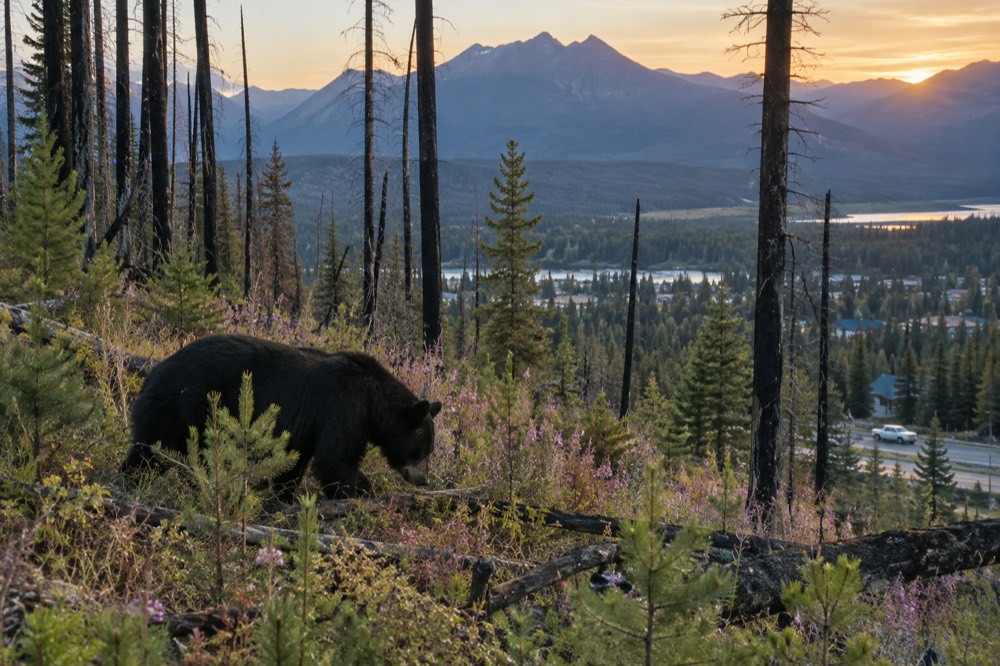
The Athabasca River is the largest river system in Jasper, designated a Canadian Heritage River in 1989, and its valley floor south of town is the park's main travel artery for animals and people alike. The wildfire of July 2024 ran north up this same valley, and the burn is visible along it today, along with regrowth. Burned forest is not empty forest: it is early-stage feed, and the Chaba River burn's history, 1967 fire, now premier bear and moose habitat, is the template. Give the regenerating slopes a few years and they will be among the better places in the park to watch ungulates feed.
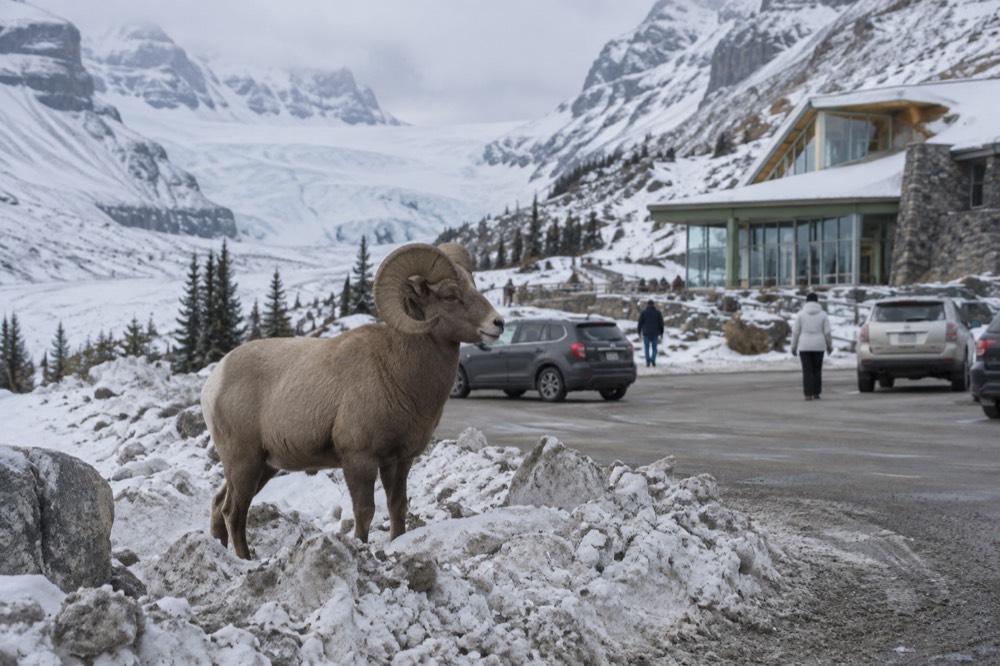
The parkway in winter is a different experience from the summer version most visitors know. Parks Canada names bighorn sheep, mountain goats, coyotes and deer as commonly sighted along it in winter, because deep snow pushes them down to the plowed road edge to lick minerals and travel. The road is not salted, so it is often compact snow, there are no services along it in winter, and there is no cell coverage en route. Snow clearing runs 7 am to 3:30 pm. A 20 km stretch runs through winter habitat for the Jasper herd of woodland caribou, a species at risk, which is one reason the speed limit drops below the 90 km/h park maximum in places. Check 511 Alberta and the Parks Canada road page before you drive it, and take the winter driving requirements seriously.
For a structured version of this corridor, the morning or evening wildlife watch tour runs 3 hours with hotel pickup, from $68.57, and visits Pyramid Lake and The Whistlers summit. It is built around exactly the dawn and dusk windows the animals use.
Where the rules matter more than the map
The best place to see wildlife is also the place where the rules bite hardest: roadside wildlife viewing is a designated restricted activity in Jasper year round, you must stay 30 m from elk, deer and moose and 100 m from bears and other carnivores, and the maximum penalty under the Canada National Parks Act is $25,000. Knowing the distances matters as much as knowing the valleys.
The rules are Parks Canada's, and they are specific. Stay 30 m away from elk, deer and moose, which the agency describes as three bus lengths. Stay 100 m away from bears and other carnivores, ten bus lengths. It is an offence to entice, pet, harass or feed wild animals, and pursuing an animal with a camera counts as harassment. For roadside viewing, the restricted-activity rules are: stay in your vehicle, slow down and obey speed limits, use hazard lights, pull over only where it is safe, do not stop in driving lanes, observe and photograph and move on, and move on immediately if a traffic jam develops. The rest of the planning pages sit on Jasper National Park Tours.
| Rule | Distance or requirement | Why it exists |
|---|---|---|
| Elk, deer, moose | Stay 30 m away | Large herbivores injure more people in parks than predators do |
| Bears and other carnivores | Stay 100 m away | A habituated bear usually ends up dead, not relocated |
| Roadside viewing | Restricted activity, 1 January to 31 December | Roadside jams cause strikes and habituation |
| Feeding or enticing | Offence under the Canada National Parks Act | Fed animals become aggressive animals |
| Drones | Prohibited, fines up to $25,000 CAD | Stress and displace wildlife |
| Aggressive encounters | Report to Parks Canada Dispatch, 780-852-6155 | Dispatch tracks problem animals before they escalate |
On foot the guidance shifts to prevention rather than distance: travel in groups, make noise, remove headphones, back away and return the way you came if you meet wildlife, and carry bear spray and know how to use it. Our page on bear spray and trail safety covers the on-foot side in full. The official rules live on Parks Canada's Jasper wildlife safety page, which is the authority this article follows rather than paraphrases.
The best time of day and the best months
Dawn and dusk outperform midday by a wide margin, because Jasper's mammals do most of their feeding and moving in low light, and the shoulder months, May, June, September and October, outperform July and August because thinner crowds, active burns and autumn feeding cycles put animals closer to the roads. Winter swaps the cast: sheep, goats, coyotes and deer replace the bears, which are denned.
The climate record explains the dawn-and-dusk pattern better than folklore does. Jasper's July daily maximum is 23.4 °C and June's is 20.0 °C, warm enough that heavy-coated animals avoid open ground in the middle of the day. In January the daily maximum is -3.2 °C and the daily mean -8.8 °C, with wind chill below -20 °C on 11.7 January days and 11.7 December days per year. Animals manage those swings by moving when the light is low and the temperature is moderate, which in summer means very early and very late, and in winter means the short midday window itself. A winter wildlife tour at midday is not a compromise; it is the correct time.
Seasonally, the autumn pattern is the one most visitors miss. Medicine Lake drains to a mudflat in autumn and winter, drawing feeders to the exposed shoreline. The wildfire's regrowth is greening up across the Athabasca valley south of town, at the townsite's southwest edge and up the Maligne road corridor, and new growth is grazing. And 2025 visitation, which Parks Canada estimates at 2,137,000 independent visitors, remains below pre-wildfire levels, which means the quiet hours are quieter than they were a few years ago. Fewer vehicles on the Maligne road at 7 am in late September is about as good as this park gets.
Guided tours versus finding animals yourself
A guided tour does not guarantee sightings, nothing legally can, but it converts your two or three low-light hours into hours spent in the right habitat with someone who knows the individual animals, and it handles the viewing rules for you. Self-driving the Maligne Valley costs only a park pass, from $12.25 CAD per adult per day.
The honest comparison is about hours, not expertise alone. A guide's advantage is that they drive the valley daily and know where a particular elk herd has been feeding, which is information that changes week to week and never appears in any article, including this one. Your advantage, self-driving, is total schedule control: you can be on the Maligne road at 6:30 am, which is when the tour vans are still loading. The strongest play for a short trip is often both, a guided evening on your first day to learn the valley, then your own dawn drive on the second.
A park pass is legally required to be inside Jasper National Park, whatever you choose. The daily fee is charged per person, $12.25 CAD for an adult, with youth 17 and under free, and a Family/Group rate of $24.50 CAD covering up to seven people in one vehicle. A day pass is valid until 4 pm the next day and also covers Banff, Kootenay, Yoho and the other mountain parks. Whether a tour includes the pass is an operator-by-operator decision, so read each listing's inclusions rather than assuming. The fees are on Parks Canada's fee page, which is the live authority and rises annually. Our park entry fee guide breaks the pass options down fully.
If you want wildlife plus the valley's headline scenery, the six-hour wildlife and sightseeing tour with the Maligne cruise, from $169.04, pairs the animal hours with the 90-minute boat trip to Spirit Island, with hotel pickup and free cancellation.
Common questions about wildlife in Jasper National Park
Where Is The Best Place To See Wildlife In Jasper National Park?
The Maligne Valley, the road from Highway 16 past Medicine Lake to Maligne Lake, is the single best area, because it compresses river bottom, lakeshore and regenerating burn into one drivable corridor. The Athabasca valley south of town toward Athabasca Falls is second, and the Icefields Parkway leads in winter, when sheep and goats come down to the road edge.
What animals can you see in Jasper National Park?
Parks Canada lists elk, deer, moose, caribou, bighorn sheep, mountain goats, bears, coyotes, wolves, beavers, pine martens, lynx, porcupines, cougars, snowshoe hares and wolverines as present in the park. No sighting is ever guaranteed, and no tour or article can promise one.
How close can you get to wildlife in Jasper?
Stay 30 m from elk, deer and moose, and 100 m from bears and other carnivores. Roadside viewing is a restricted activity year round: stay in your vehicle, pull over only where safe, observe and move on. Feeding, petting or pursuing any wild animal is an offence.
What is the best time of day to see wildlife in Jasper?
Dawn and dusk in summer, when animals avoid the warm midday, and the short midday window in winter, when the cold forces movement during the warmest hours. Late September and early October add the draining Medicine Lake mudflat as a feeding area.
Do you need a tour to see wildlife in Jasper?
No. You can self-drive the Maligne Valley or the Athabasca valley with a park pass, from $12.25 CAD per adult per day. A tour adds daily local knowledge of where animals have been, handles the viewing rules, and uses your limited low-light hours efficiently.
Is wildlife viewing affected by the 2024 wildfire?
The majority of the park is open and virtually all trails have reopened. The burn is visible along the Athabasca valley south of town, the townsite's southwest edge and the Maligne corridor, and regrowth is under way. Maligne Canyon is closed for the 2026 season, so canyon-based viewing is not currently possible.
The valleys named here have been producing sightings since before the town existed, and they will keep producing them whether you arrive with a guide or with a coffee and a full tank. The one thing that reliably ruins a wildlife day is not bad luck, it is the wrong hour, so plan around the light, carry your pass, and give every animal the distance the rules demand.