Is It Safe To Visit Jasper Right Now?
An honest, sourced answer to whether Jasper National Park is safe to visit after the 2024 wildfire: what is open, what is closed, wildlife rules, driving conditions and how to check current status.
Is It Safe To Visit Jasper Right Now?
Yes. Jasper National Park is safe to visit, and Parks Canada's own words are that the majority of the park is now open and ready to explore, with virtually all trails reopened since the 2024 wildfire. Two specific places, Maligne Canyon and the Cavell Road area, are closed for the 2026 season because of post-fire slope instability, and those closures are the main thing a visitor needs to plan around.
The question is fair, and it deserves a straight answer rather than reassurance. A wildfire reached the town of Jasper in July 2024, destroyed 358 structures by the initial rapid assessment, and burned 32,722 hectares inside the park before being declared extinguished on 1 April 2025. That is a serious event, and this site does not write it down. What follows is what the official record actually says about the park now: what is open, what is closed, what the wildlife rules require of you, and where to check anything that moves.
The short version for a trip planner: the town is functioning, the Maligne Lake cruise, the Columbia Icefield attractions, the SkyTram, Miette Hot Springs and the rafting runs are all operating, and the two closures that matter are posted, signed and easy to route around. A park pass is legally required to be inside the park, at $12.25 CAD per adult per day or $24.50 CAD for a family or group of up to seven people in one vehicle, and there is no timed entry, no reservation corridor and no mandatory shuttle anywhere in Jasper. You can read the full fee picture in the Jasper National Park entry fee guide.
If your trip includes a guided experience, a wildlife tour is one of the safest ways to spend a first day, because the guide handles the driving, the roadside etiquette and the animal-distance rules that trip up self-driving visitors.
Is the town of Jasper safe to walk around after the wildfire?
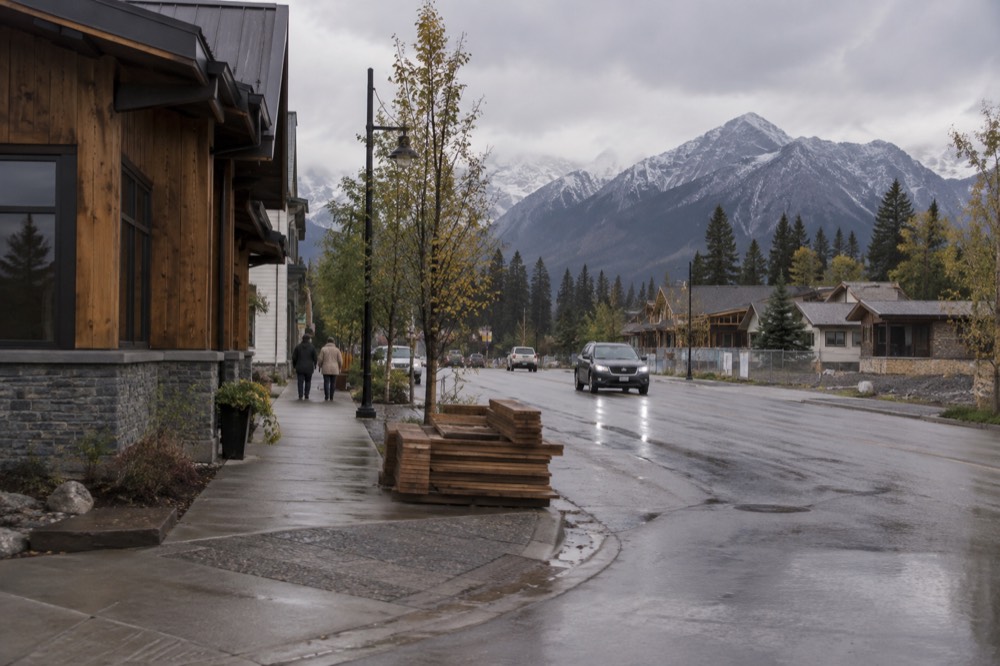
Yes. The town of Jasper is open and functioning, with 70 percent of its structures saved in the fire including all critical infrastructure, and rebuilding well under way on the properties that were lost. Visitors will see construction and some fire-affected streets, but the shops, restaurants and hotels that trade today are open for business.
The honest framing comes from Parks Canada itself: 70 percent of the structures in town were saved, including all critical infrastructure, and the initial rapid assessment identified 358 destroyed structures. Further assessment put rebuilding at 374 properties, and the recovery dashboard tracks progress on them continuously, which is exactly why this site does not print a frozen rebuild count on a page. What a visitor actually sees downtown is a working mountain town with a rebuild happening at its southwest edge, where the fire embers fell on 24 July 2024.
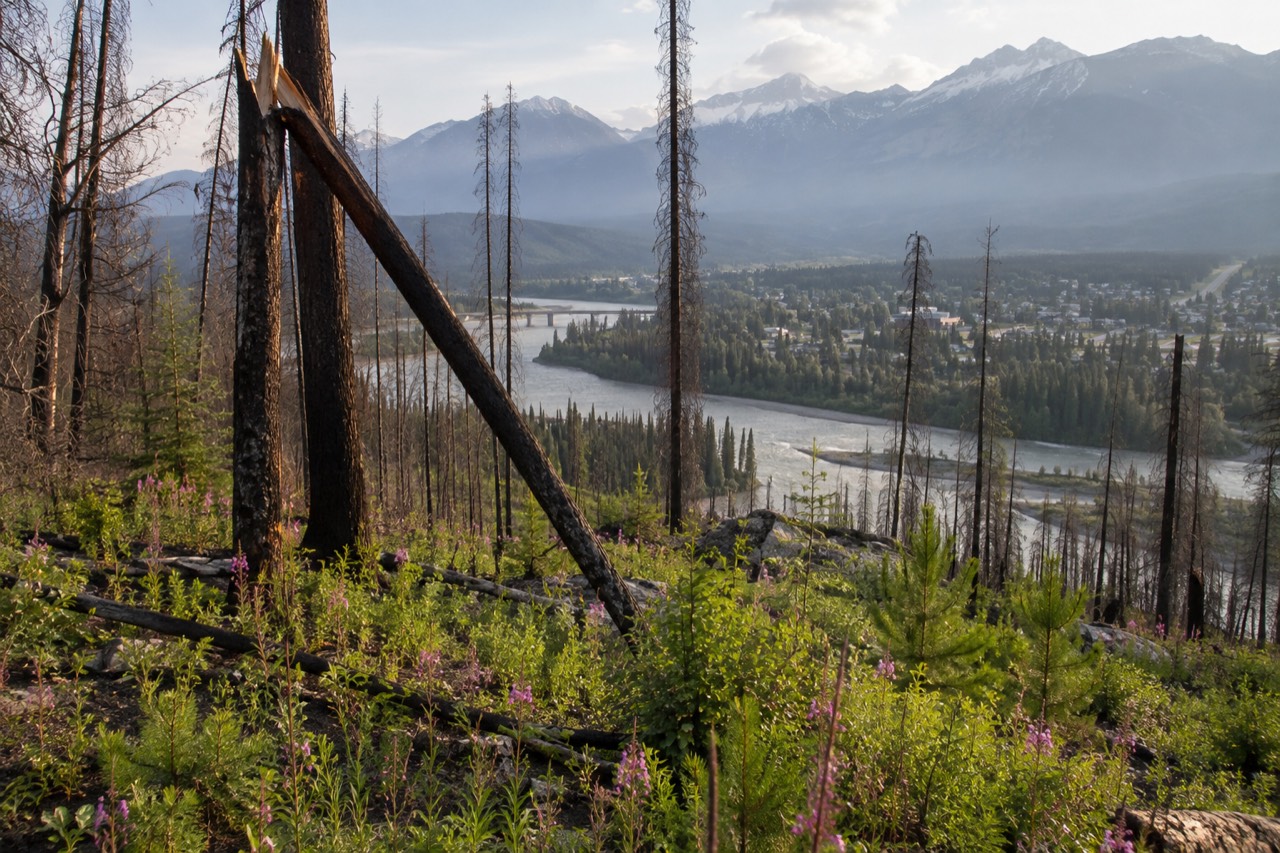
Two practical notes follow from the fire. First, debris removal and site certification are essentially complete across the affected properties, so the hazard that follows a fire, unstable ground and hazard trees, has been actively managed rather than left. Second, the burned slopes visible along the Athabasca valley south of town and around the townsite's southwest edge are regenerating: whitebark pine restoration planting is under way, and Parks Canada describes a regenerating landscape along the reopened Valley of the Five Lakes trail. Burned slopes in steep terrain remain unstable for years, which is why the two closures covered in the next section exist.
For a fuller picture of what the fire changed and what it did not, read the guide to Jasper after the wildfire. Visitation tells its own story: Parks Canada estimates 2,137,000 independent visitors in the 2025 calendar year, below the roughly 2.5 million the park drew before the fire, largely because frontcountry camping and commercial accommodation are still rebuilding. The town wants visitors, and the crowding pressure that defined peak seasons has eased.
Which parts of Jasper National Park are closed right now?
Two areas are closed for the 2026 season: Maligne Canyon, with access prohibited from the First Bridge parking lot to the Fifth Bridge junction including all winter recreation, and the Cavell Road area with the Edith Cavell trails, because burned slopes above both need stabilisation before they meet safety standards. Everything else on the main visitor circuit is open.
These are the only closures that change what a normal visitor can book, and both come from the same cause. The fire took trees and vegetation off high-angle slopes, raising the risk of debris flows and landslides, so Parks Canada is requiring slope stability work, possibly including retaining structures and guardrails, before either reopens. On Cavell Road, geotechnical assessment and hazard tree removal are complete, and slope stabilisation is planned from autumn 2026 through spring 2027; the opening date will be set only once that work finishes. Maligne Canyon remains in early planning. Parks Canada has not set a reopening date for either, and no page, including this one, should predict one. Check the park recovery page at Parks Canada's Jasper recovery information before you plan around either.
| Area or activity | Status for the 2026 season |
|---|---|
| Maligne Canyon (First to Fifth Bridge) | Closed, all access prohibited, including winter recreation |
| Cavell Road and Edith Cavell trails | Closed to all travel, motorised and non-motorised |
| Maligne Lake, boat cruise and Spirit Island | Open, cruise runs to 11 October, weather dependent |
| Columbia Icefield, Athabasca Glacier and Skywalk | Open, Ice Explorer runs to 12 October, weather dependent |
| Athabasca Falls and Sunwapta Falls | Day-use areas and trails open |
| Miette Hot Springs | Open, closes for the season on 12 October |
| Valley of the Five Lakes, Old Fort Point, Whistlers trails | Open, virtually all trails have reopened |
| Backcountry campgrounds | All 85 listed are open |
The canyon closure has a legal edge worth stating plainly. A canyon ice walk cannot legally run while the closure stands, and a product listing existing on a booking site does not make the activity legal. If a winter itinerary includes a Maligne Canyon ice walk, it needs to be rebooked or replaced; the background is in why Maligne Canyon is closed. The penalty for entering a closed area is up to $25,000 CAD under the Canada National Parks Act, and the closures are posted in the official bulletins at Parks Canada's Jasper bulletin listings.
Everything on the standard visitor circuit is otherwise running. The Maligne Lake Cruise operates to 11 October, the Columbia Icefield Adventure to 12 October, the SkyTram to 25 October, and Miette Hot Springs closes for the season on 12 October, reopening in May 2027. Operator seasons are published as weather dependent, so treat those as months rather than promises.
Is wildlife in Jasper dangerous for visitors?
Jasper's wildlife is not dangerous to a visitor who follows the rules, and the rules are specific: stay 30 metres from elk, deer and moose, stay 100 metres from bears and other carnivores, and never feed, entice or approach any animal. The real risk pattern in Jasper is roadside wildlife viewing, which is a restricted activity year round, not a trail attack.
Parks Canada's list of mammals in the park includes elk, deer, moose, caribou, bighorn sheep, mountain goats, bears, coyotes, wolves, cougars, lynx and wolverines. None of that makes the park hazardous; it makes the viewing rules non-optional. Elk cause more injuries in the mountain parks than bears do, usually because a visitor with a phone got closer than three bus lengths to an animal that weighs more than they do. On the trails the guidance is to travel in groups, make noise, remove headphones, carry bear spray and know how to use it, and back away the way you came if you meet wildlife. Aggressive encounters go to Parks Canada Dispatch at 780-852-6155. The rest of the planning pages sit on Jasper National Park Tours.
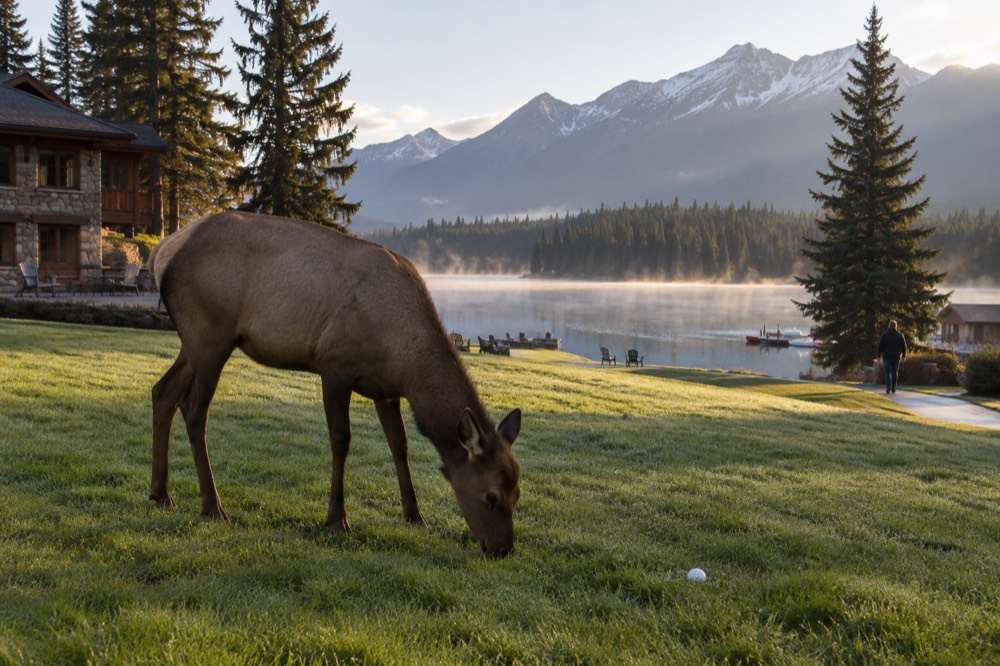
Roadside viewing is where the rules bite hardest, because it is a designated restricted activity from 1 January to 31 December: stay in your vehicle, slow down, use hazard lights, pull over only where it is safe, never stop in a driving lane, and move on immediately if a traffic jam develops. Pursuing an animal with a camera counts as harassment, and feeding any wild animal is an offence. Drones are prohibited, with fines up to $25,000 CAD. The full guidance is published at Parks Canada's Jasper wildlife safety page, and the bear-spray question is covered in detail in do you need bear spray in Jasper.
A sighting is never a guarantee, and no honest page promises an animal. What a guided wildlife tour buys you is not a bear; it is a guide who knows where animals are working the valley that morning, who handles the roadside stops legally, and who carries the distance discipline for the whole vehicle. On the Evening or Morning Wildlife Watch, rated 4.6 across 1,089 reviews with hotel pickup and a 3-hour runtime from $68.57, the guide does the driving and the spotting while passengers stay inside the rules.
For a longer day, the Wildlife and Sightseeing Tour with Lakeshore Hike, rated 4.7 across 391 reviews from $78.45, adds Patricia Lake, Medicine Lake and a guided walk to the wildlife drive, which keeps the on-foot portions under an interpretive guide rather than improvising them.
Is it safe to drive the Icefields Parkway?
Yes, the Icefields Parkway is safe to drive and it does not close for the winter, but it is a 232 km mountain road with no cell coverage, no winter services, 8 to 11 percent grades and no salting, so it demands winter tires or chains from 1 November to 31 March and a check of 511 Alberta before you set out.
The parkway connects Jasper to Lake Louise and is the spine of most Jasper itineraries. Parks Canada publishes a dedicated winter driving page for it, which tells you the road stays open rather than shutting seasonally. What changes in winter is the burden on the driver: snow clearing runs 7 am to 3:30 pm, the surface is often compact snow because it is not salted, there are no services along it in winter, and cell service exists only at each end. A park pass is required to drive it, the same pass that covers the whole park.
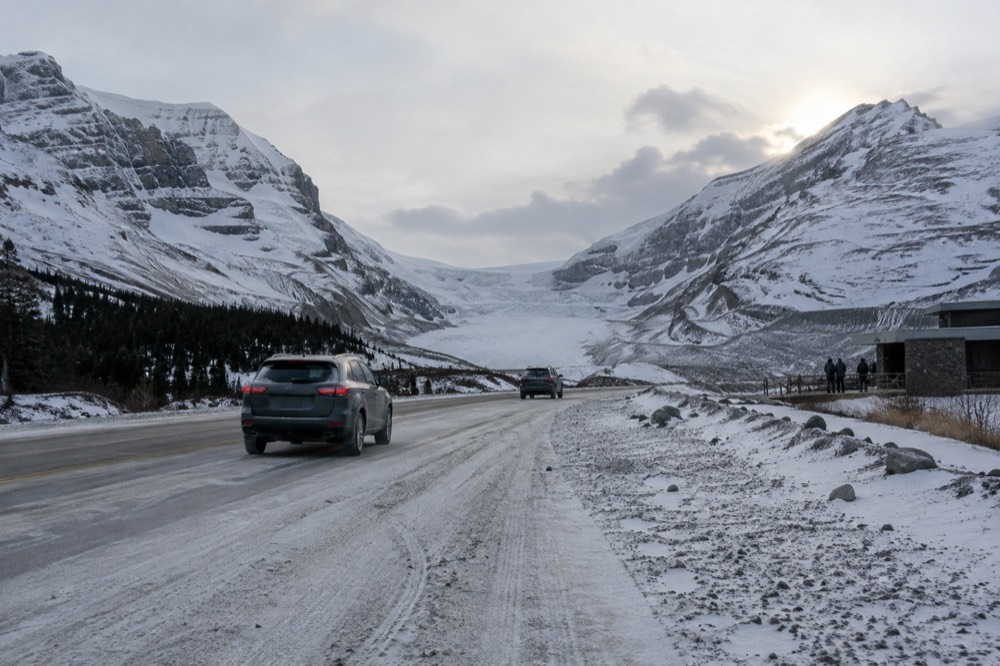
The checking habit matters more than any single condition. Parks Canada calls its own seasonal road table a tentative plan whose dates may change without notice, and it warns that navigation apps are not always accurate for Jasper National Park. Before any drive, check 511 Alberta for road conditions and the Parks Canada road restrictions page for seasonal closures. That habit, not a reassurance from any website, is what keeps a Jasper driving day safe.
One fire-related note for the drive south: the burn is visible along the Athabasca valley south of town, and regrowth is under way along it. It is a real part of the landscape now, and seeing it from the road is safe; the closed areas are closed precisely so the unstable slopes are somewhere no one is standing.
What about smoke, fire bans and air quality?
Fire bans and air quality change through the season, so no page, including this one, can responsibly state today's condition; the authorities to check are Parks Canada's Jasper fire page and albertafirebans.ca, and the 2024 Jasper Wildfire itself was declared extinguished on 1 April 2025.
The 2024 fire is over as an event: declared being held on 17 August 2024, under control on 7 September 2024 and extinguished on 1 April 2025. What persists is the seasonal reality of any Rocky Mountain park, which is that fire bans and smoke conditions move with the weather. Check Parks Canada's Jasper fire information page and albertafirebans.ca before you go, and treat those two pages as the only current answer to the smoke question.
For context on what the season is actually like, Jasper's climate normals from 1991 to 2020 put July's average daily maximum at 23.4 °C and January's at -3.2 °C, with the warmest months carrying the most rain: June averages 57.6 mm of precipitation and July 52.2 mm. Days with humidex above 30 number just 7.5 per year, almost all in July and August, while 41.1 days per year see wind chill below -20 °C, concentrated in December through February. None of that is dangerous to a prepared visitor; it just means the packing list changes with the month, which is worth a look at the best time to visit Jasper.
A final reassurance that is not a reassurance but a fact: the town's emergency response has been tested at a scale no mountain town wants, and the park's closure system, bulletins and status pages are actively maintained. The infrastructure of safety information around Jasper is, if anything, more current than it was before the fire.
The bottom line for booking a trip
Yes, book the trip: Jasper is safe to visit, the town is open, and every headline attraction on the standard circuit is running, with the two closures, Maligne Canyon and Cavell Road, signed, posted and simple to route around. The wildlife rules are clear distances, the driving is ordinary mountain driving with a 511 habit, and anything that genuinely moves lives on official pages that update faster than any article could.
This site points you at those pages rather than pretending to freeze them. The park recovery page covers the closures and the rebuild, the fire page and albertafirebans.ca cover smoke and bans, 511 Alberta covers the roads, and the wildlife safety page covers the distances. Between those four and a park pass, a visitor has everything the safety question actually requires.
If a first Jasper day could use a guide's eyes on the valley, the trio below covers the three safest ways to spend it: a wildlife watch with pickup, a longer wildlife and lakeshore day, or a small-group paddle on Pyramid Lake where the only hazard is a wet sleeve.
Common questions about visiting Jasper safely
Is It Safe To Visit Jasper Right Now?
Yes. Parks Canada states that the majority of Jasper National Park is open and ready to explore and that virtually all trails have reopened since the 2024 wildfire. The two closures to plan around are Maligne Canyon and the Cavell Road area, both closed for the 2026 season for slope stabilisation.
Is the town of Jasper safe after the wildfire?
Yes. Seventy percent of the town's structures were saved, including all critical infrastructure, and rebuilding is under way on the properties that were lost. Visitors will see some construction and fire-affected streets alongside a functioning mountain town.
Can you do the Maligne Canyon ice walk this winter?
No. Winter access to Maligne Canyon for winter recreation is prohibited under a standing closure, and the canyon is closed for the 2026 season. A listing on a booking site does not override the closure, and entering a closed area carries a maximum penalty of $25,000 CAD.
Is it dangerous to drive the Icefields Parkway?
The parkway does not close for the winter, but it demands respect: no cell coverage, no winter services, no salting and grades of 8 to 11 percent. Snow tires or chains are required from 1 November to 31 March. Check 511 Alberta before you drive.
How close can you get to animals in Jasper?
Stay 30 metres, three bus lengths, from elk, deer and moose, and 100 metres, ten bus lengths, from bears and other carnivores. Never feed or entice any animal, and move on immediately if a roadside stop develops into a traffic jam.
Do I need a park pass if I am on a guided tour?
A park pass is legally required to be inside Jasper National Park, charged at $12.25 CAD per adult per day or $24.50 CAD for a family or group of up to seven in one vehicle. Whether a tour's ticket includes the fee varies by operator, so check the tour's own inclusions list.