Jasper Wildlife Tours: Which One to Book and What You Actually See
Wildlife tours are the most popular guided product in Jasper after the glacier trips, and they are sold on odds rather than guarantees. Here is what each tour covers, what it costs, and what the park's own rules say about how close you can get.
Short answer
A Jasper wildlife tour is a 3 to 6 hour guided drive or walk with a spotter who knows where animals feed. The most booked option runs from $68.57 per person and covers 3 hours with hotel pickup. Elk, deer and bighorn sheep are the common sightings; bears and wolves are possible but never promised, and no honest operator will tell you otherwise.
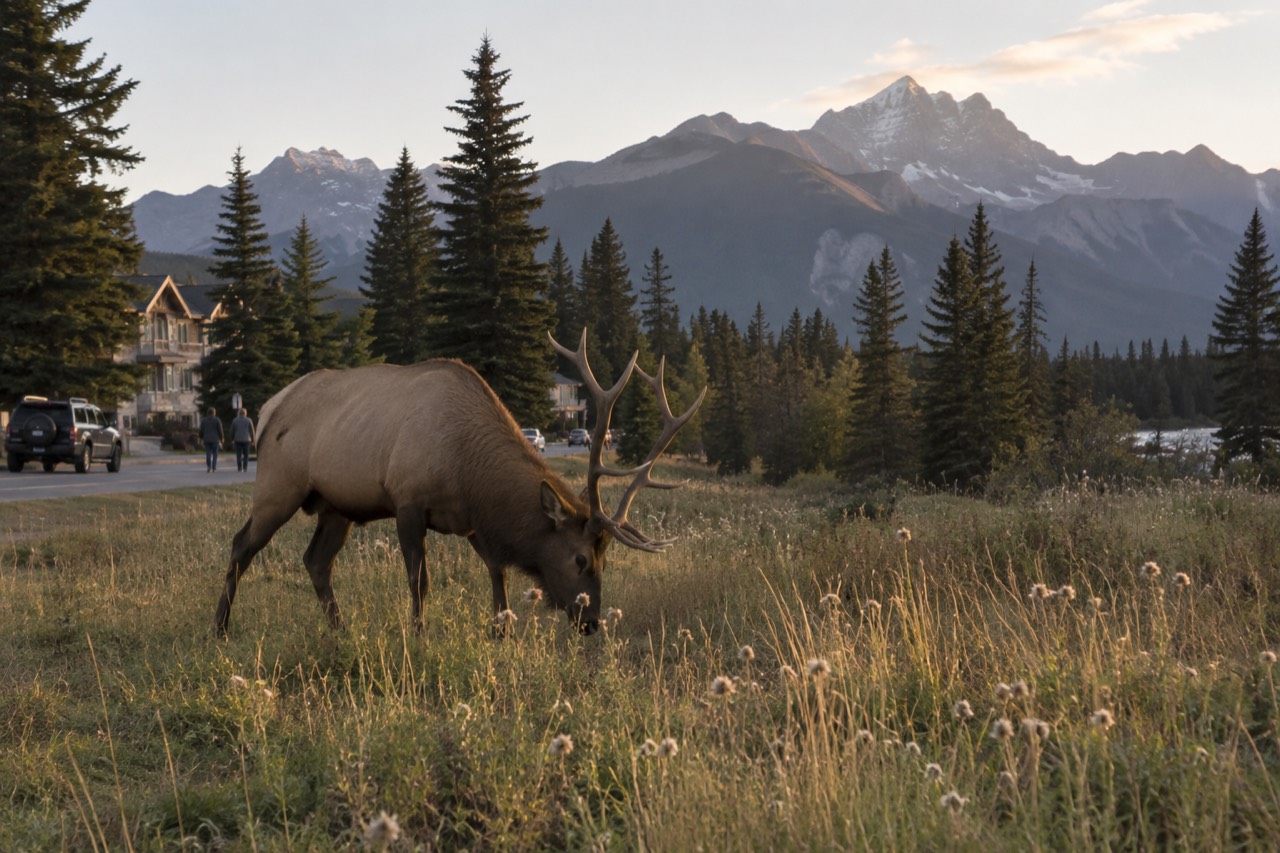
Elk stand in the fields beside Highway 16 most mornings of the year, and that single fact explains why wildlife tours are the most-booked guided product in Jasper after the glacier trips. The park holds one of the largest and most accessible wildlife populations in the Canadian Rockies, and a guide who drives these valleys daily knows which meadow the herd used last night and which roadside pull-off is legal to stop at. This page compares the tours on the roster, prices and all, and tells you what the park's own rules say about how close anyone, guided or not, may get to an animal.
What a Jasper wildlife tour actually is
A Jasper wildlife tour is a guided drive, walk or snowshoe outing built around finding animals rather than reaching a landmark. Most run 3 to 6 hours, cost between $61.94 and $169.04 per person, and pair a driver-guide with a spotter's knowledge of seasonal feeding grounds. Hotel pickup is common, and the better-reviewed options include free cancellation.
The format matters more than the marketing. A 3-hour evening watch is a driving loop close to town: Pyramid Lake, the Pyramid Beach road, the Athabasca River flats and the lower Maligne Valley, all within half an hour of the townsite. A 6-hour valley tour goes deeper, out the Maligne Lake Road past Medicine Lake to the lake itself, sometimes with a boat cruise bolted on. The walking options are different again: a gentle interpretive nature walk or a lakeshore hike where the point is habitat as much as sightings.
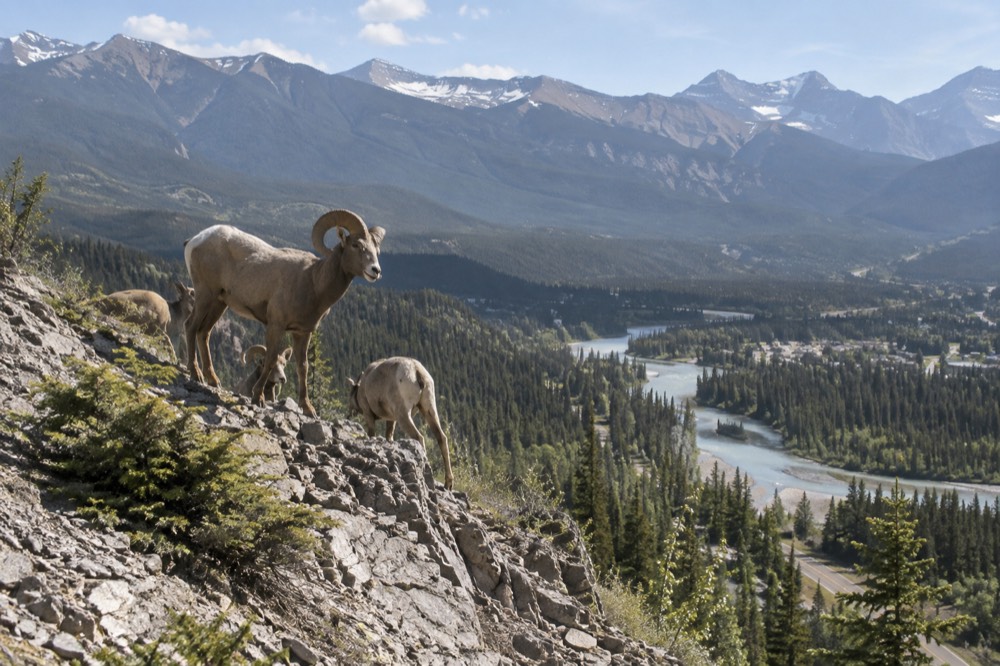
What every version shares is a guide who is out in the park daily. Elk move between the same meadows most of the season, bighorn sheep work the road cuts along the Icefields Parkway, and moose favour the wetlands at the north end of Maligne Lake. A guide also handles the part most visitors underestimate: the rules. Roadside wildlife viewing is a restricted activity in Jasper year round, and knowing where you may legally pull over, and when you must move on, is half the service you are paying for.
The honest framing, which this site holds to on every page: a sighting is never a guarantee. No tour on the roster promises an animal, and any listing that does should be read with suspicion. What a good tour improves is your odds and your safety, not certainty. If a page elsewhere on this site interests you, the guide to where wildlife actually gathers in Jasper covers the same ground for independent travellers.
Which animals you might see, and how likely each one is
Elk, deer and bighorn sheep are near-certain on any wildlife tour in Jasper, and moose, black bears and coyotes are regular possibilities. Grizzly bears, wolves, caribou and cougars live in the park but are genuinely rare sightings, and no tour operator can honestly promise any of them. Parks Canada's own species list is the baseline, not a tour's brochure.
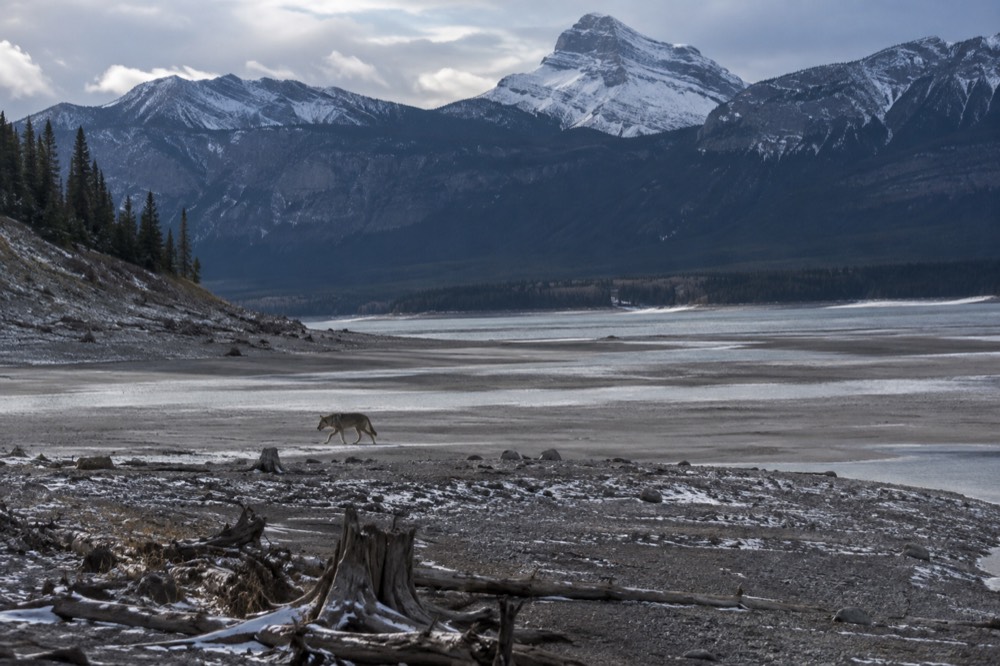
Parks Canada's list of mammals present in Jasper National Park includes elk, deer, moose, caribou, bighorn sheep, mountain goats, bears, coyotes, wolves, beavers, pine martens, lynx, porcupines, cougars, snowshoe hares and wolverines. That list is the ceiling. What a 3-hour tour near town realistically delivers is the ungulate end of it: elk in the fields along Highway 16 and the Maligne Road, whitetail and mule deer, and bighorn sheep on the mineral licks and rock cuts. Coyotes appear in the same valleys, and beaver activity is visible on Pyramid and Patricia lakes.
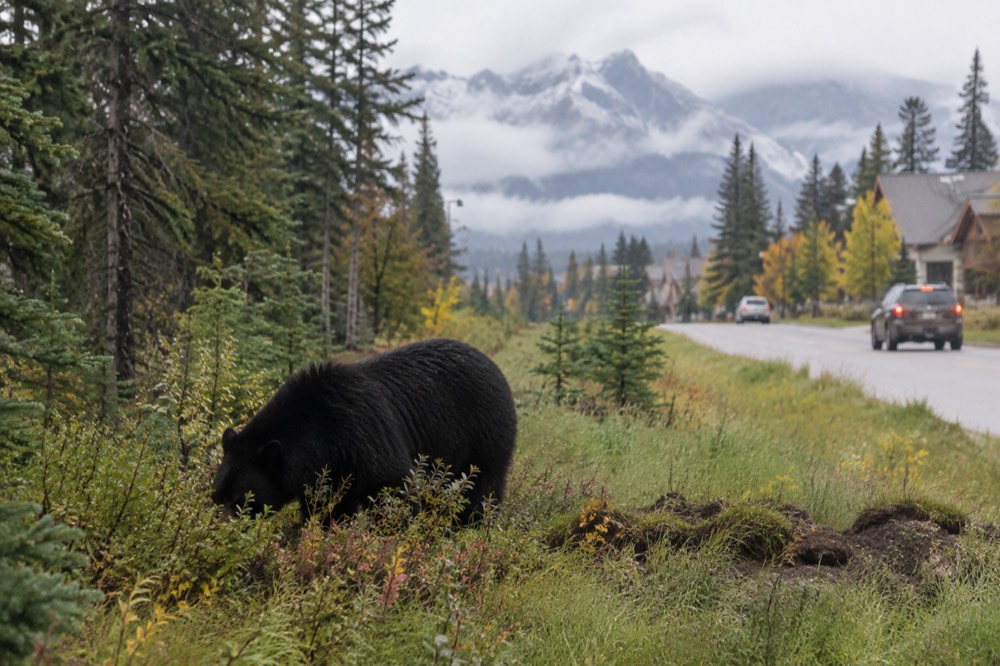
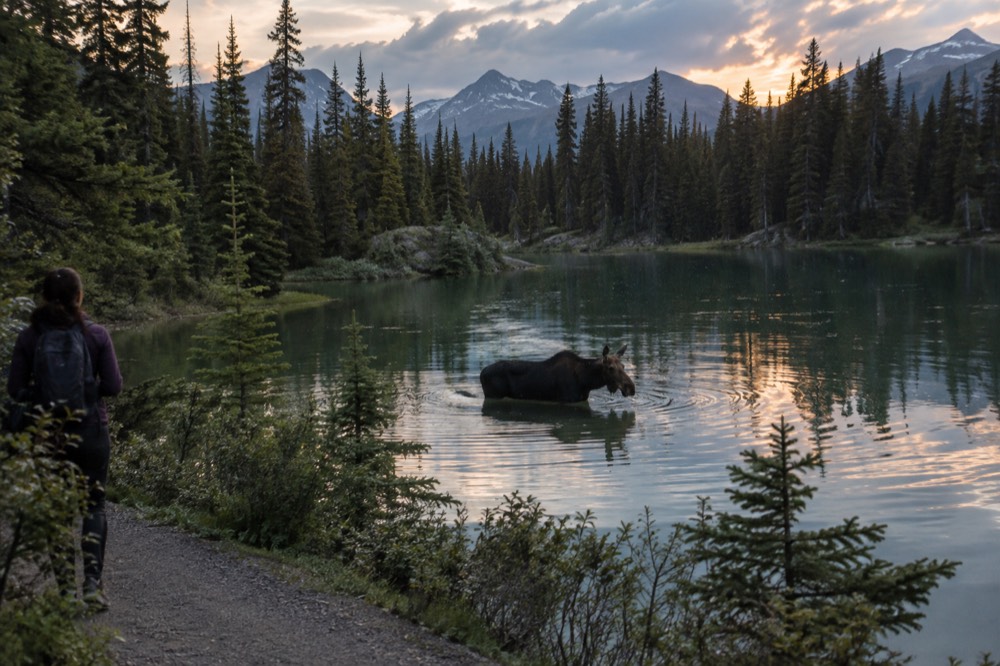
Bears are the question everyone asks. Black bears are common in the park and are seen along the Icefields Parkway and in the Maligne Valley through the summer, and a morning or evening tour in berry season has a real chance of one. Grizzly bears are present but far less often seen from a road. Wolves are the rarest realistic prize: Jasper's wolf packs range widely, and sightings are occasional rather than routine. Caribou are a species at risk with a conservation breeding centre in the park, and the wild herd is under a permanent area closure, so a tour will not show you one.
| Animal | Odds on a wildlife tour | Where the tour looks |
|---|---|---|
| Elk | Near-certain, most of the year | Fields along Highway 16, Pyramid Lake area, Maligne Valley |
| Deer (whitetail, mule) | Near-certain | Road edges near town and along the Maligne Road |
| Bighorn sheep | Very likely on valley routes | Rock cuts and mineral licks, Icefields Parkway in winter |
| Coyote | Possible, more at dawn and dusk | Open valley floors |
| Moose | Possible, never promised | Wetlands at the north end of Maligne Lake, beaver ponds |
| Black bear | Possible in summer, odds rise in berry season | Icefields Parkway, Maligne Valley |
| Grizzly bear | Rare from a road | Higher slopes, occasional valley crossings |
| Wolf | Rare | Ranges widely, no fixed area |
The odds shift with the clock as much as the calendar. Animals feed at dawn and dusk, which is why the most-booked tour on the roster is sold as a morning or evening watch rather than a midday one. In July the daily maximum averages 23.4 °C and animals retreat to shade and higher ground by late morning; in January the average maximum is -3.2 °C and the sheep and elk that winter along the parkway are easier to find all day. Parks Canada names bighorn sheep, mountain goats, coyotes and deer as commonly sighted along the Icefields Parkway in winter, which is why winter wildlife tours exist as a product at all.
If that honest picture still appeals, and for most readers it should, these are the three wildlife tours worth comparing first.
The best Jasper wildlife tours compared on price and route
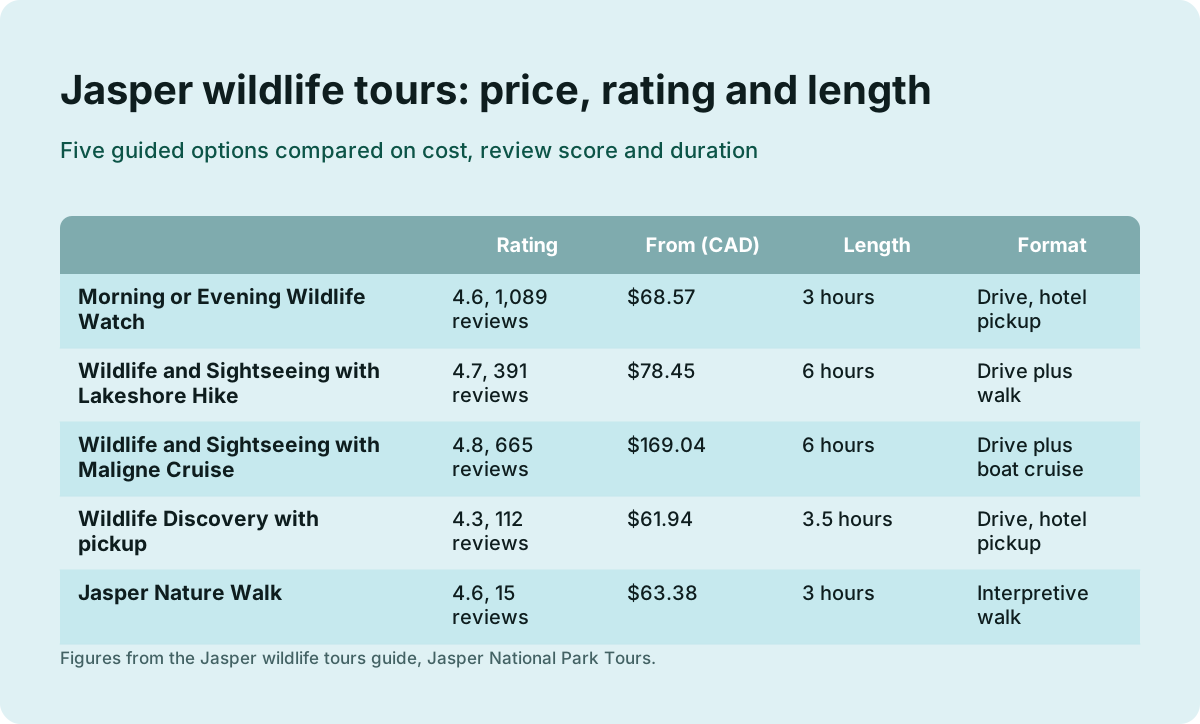
The most-booked option is the Morning or Evening Wildlife Watch, 4.6 across 1,089 reviews, from $68.57, a 3-hour drive with hotel pickup and free cancellation. The 6-hour Wildlife and Sightseeing Tour with Lakeshore Hike, from $78.45, adds Patricia Lake, Medicine Lake and the Whistlers summit. The cruise-combined version, from $169.04, adds Spirit Island by boat.
The short tour is the volume seller for good reasons. It runs at the two times of day when animals are actually moving, it picks you up at your hotel, and its confirmed stops, Pyramid Lake and the Whistlers summit area, sit in some of the most reliable elk and deer habitat near town. At 3 hours it fits a morning before a glacier trip or an evening after a day on the Icefields Parkway. Its review base of 1,089 is the largest of any wildlife product in the roster, which tells you it runs often and fills regularly.
The 6-hour Wildlife and Sightseeing Tour with Lakeshore Hike, 4.7 across 391 reviews, is the same idea with more valley in it. Its confirmed stops are Patricia Lake, the Maligne Lake boathouse and cruise dock, Medicine Lake and the Whistlers summit, and the lakeshore walk adds a stretch on foot through moose and beaver habitat. Six hours is the right length if Jasper is a short stay and you want the whole Maligne Valley, Medicine Lake included, handled in one booked day rather than one you drive yourself.
The Wildlife and Sightseeing Tour with Maligne Cruise, 4.8 across 665 reviews from $169.04, is the fullest version: hotel pickup, the Maligne Valley drive, and the 90-minute boat cruise to Spirit Island, a place Parks Canada is explicit has no road or trail access, tour boats or private non-motorized craft being the only means of reaching it. It is the pick when wildlife is the priority but Spirit Island is on the list too, and one booked product covers both.
Two cheaper short formats are worth knowing about. The Jasper National Park Wildlife Discovery Tour with hotel pickup, 4.3 across 112 reviews, runs 3.5 hours from $61.94 and is the budget entry point. Discover Jasper and its Wildlife, 4.2 across 163 reviews from $66.59, is an evening drive of the same length. Both are real tours with real spotters; their ratings simply trail the 4.6 of the category leader.
There is also a walking option. The Ultimate Jasper Nature Walk, 4.6 across 15 reviews, runs 3 hours from $63.38 with free cancellation, and trades the van for an interpretive walk where the guide reads tracks, scat and habitat rather than scanning from a windshield. It suits travellers who would rather stand still in good habitat than cover 100 km of road, and its small review base reflects a newer listing, not a weaker product.
| Tour | Rating | From (CAD) | Length | Format |
|---|---|---|---|---|
| Morning or Evening Wildlife Watch | 4.6, 1,089 reviews | $68.57 | 3 hours | Drive, hotel pickup |
| Wildlife and Sightseeing with Lakeshore Hike | 4.7, 391 reviews | $78.45 | 6 hours | Drive plus walk |
| Wildlife and Sightseeing with Maligne Cruise | 4.8, 665 reviews | $169.04 | 6 hours | Drive plus boat cruise |
| Wildlife Discovery with pickup | 4.3, 112 reviews | $61.94 | 3.5 hours | Drive, hotel pickup |
| Discover Jasper and its Wildlife | 4.2, 163 reviews | $66.59 | 3.5 hours | Evening drive |
| Ultimate Jasper Nature Walk | 4.6, 15 reviews | $63.38 | 3 hours | Guided walk |
Prices are in Canadian dollars. Every figure above comes from the operator's live listing, and tour listings move with the season, so treat the table as a comparison of formats and check the listing for the day you want. The differences that matter are length, pickup and whether a walk or cruise is built in; the wildlife odds are broadly similar across all of them because they all work the same valleys.
When to take a wildlife tour: season and time of day
Book a dawn or dusk slot in any season, because that is when elk, deer and bears feed. June through September gives the longest days and the best odds on black bears in berry season; winter tours trade bears for reliable sheep, goats and elk along the Icefields Parkway, where Parks Canada itself names those species as commonly sighted in winter.
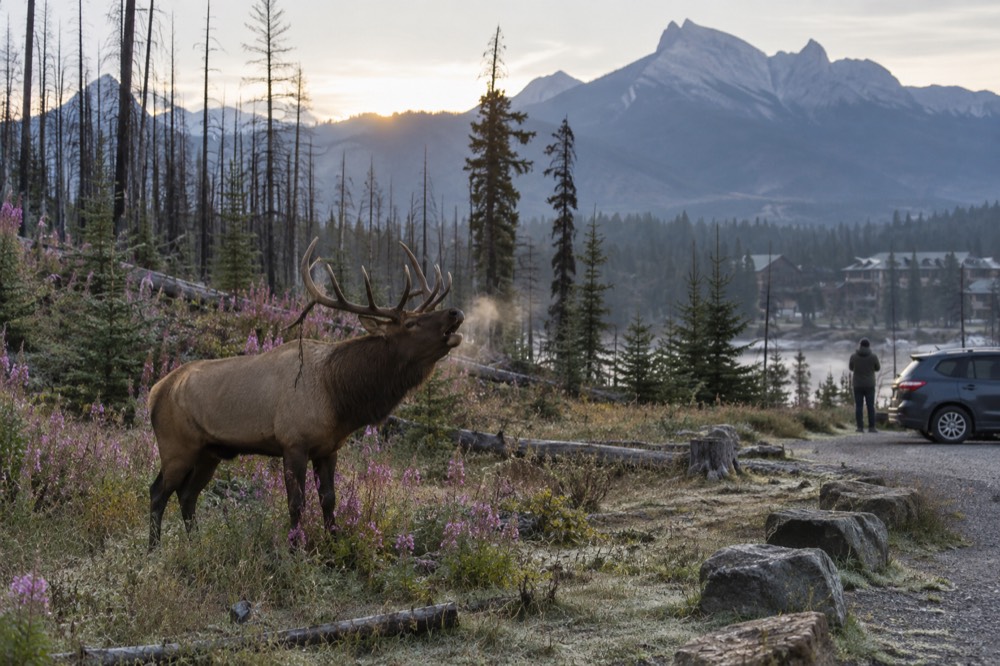
The climate record backs the clock. July and August, Jasper's warmest months with daily maxima averaging 23.4 °C and 23.0 °C, push animals to shade and higher ground by mid-morning, so the evening watch is the stronger summer bet. In May and June, when the daily maximum averages 16.4 °C and 20.0 °C, animals stay low and visible much longer, and spring is also calving season, when elk cows are defensive and guides keep extra distance. September and October are the rut: bull elk bugling in the fields near town is one of Jasper's most reliable wildlife spectacles, and the morning watch in early October is arguably the single best-value slot of the year.
Winter is a different product and should not be dismissed. The Winter Wildlife Discovery Tour, 4.6 across 71 reviews from $66.59, works the valley floors where animals concentrate, and Parks Canada names bighorn sheep, mountain goats, coyotes and deer as commonly sighted along the Icefields Parkway in winter. Bears are denned, so the honest winter pitch is reliable ungulates in dramatic light rather than a chance at a bruin. There is also the Secrets of Jasper snowshoe tour, from $65.08 with hotel pickup and free cancellation, a 3-hour outing for travellers who want tracks and quiet rather than a driving loop.
One seasonal caution that no tour listing will phrase plainly: the 2024 wildfire changed habitat in parts of the Maligne Valley and the Athabasca valley south of town, and regrowth is actively drawing grazers into the burned areas, which in some spots has improved sightings. A guide who drives those roads daily will know where the new growth is pulling animals this month. Fire bans and air quality change through the season; check Parks Canada's Jasper fire page at the park's fire information page and albertafirebans.ca before you go.
The rules every tour follows: distances and roadside viewing
Parks Canada's rule is stay 30 metres from elk, deer and moose, and 100 metres from bears and other carnivores, and a licensed tour guide is bound by it exactly like you are. Roadside viewing is a restricted activity year round: you may stop only where it is safe, never in a driving lane, and you must move on immediately if a jam develops. Feeding, petting or pursuing any animal is an offence.
Those distances are in Parks Canada's own words three bus lengths and ten bus lengths, and they are the reason a guide adds safety as well as odds. A guide knows that an elk cow with a calf in May is more dangerous than most visitors assume, and that a roadside bear stop must be managed, not lingered at. The full rules are on Parks Canada's Jasper wildlife safety page, and the restricted-activity wording for roadside viewing is in the park's bulletins. It is an offence to entice, pet, harass or feed wild animals, and pursuing an animal with a camera counts as harassment.
Drones are prohibited everywhere in Jasper National Park, with fines up to $25,000 CAD, so leave the aerial camera at home. On foot, the park's advice is to travel in groups, make noise, remove headphones, back away and return the way you came if you meet wildlife, and carry bear spray and know how to use it. Report aggressive wildlife encounters to Parks Canada Dispatch on 780-852-6155. A guided walk or drive handles all of this for you, which is a quiet part of what the ticket buys.
| Rule | What it means on a tour |
|---|---|
| 30 m from elk, deer, moose | The van stops no closer; you photograph from the vehicle |
| 100 m from bears and carnivores | Longer lens, shorter stop, guide decides when to leave |
| Roadside viewing is restricted | Stop only in safe pull-offs, never in a driving lane |
| No feeding or enticing | No exceptions, no baiting, ever |
| Move on if a jam develops | The guide ends the stop rather than feeding the crowd |
| Drones prohibited | Up to $25,000 CAD fine, applies to everyone |
One more rule that matters to your wallet rather than your safety: a park pass is legally required to be inside Jasper National Park, including on a guided tour vehicle, and the daily fee is charged per person, $12.25 CAD for an adult, with a Family/Group rate of $24.50 CAD covering up to seven people in one vehicle. Whether a tour builds the fee into its ticket is an operator-by-operator decision, so check the inclusions list on the listing. The fee schedule is at Parks Canada's fee page, and this site's fuller treatment is in the guide to the Jasper National Park entry fee.
What a wildlife tour costs, and what changes the price
Short 3-hour wildlife drives in Jasper run from $61.94 to $78.45 per person, 6-hour valley tours with a hike or cruise run from $78.45 to $169.04, and a private small-group canoe product reaches $449.58. The price steps up with length, not with odds: the animals are the same ones every tour looks for.
The pattern across the roster is that you pay for hours and add-ons, not for better sightings. The gap between the $61.94 budget discovery drive and the $68.57 category leader is pickup, review base and scheduling polish, not a different valley. The jump to $169.04 buys the Maligne Lake cruise and Spirit Island, a destination in its own right. The Pyramid Lakes Guided Canoe Trip with snacks and drinks, from $449.58 for a small group, is a premium quiet-water product aimed at photographers and families who want the lake to themselves.
Two costs sit outside the ticket. The park entry fee, covered above, applies per person unless your operator includes it. And gratuities are not in the listed price on any of these products; budget with that in mind. Cancellation terms differ by listing, and several of the roster's wildlife tours, including the category leader, the lakeshore hike and the cruise combination, carry free cancellation, which is worth having in a mountain park where a smoke morning or a rain cell can change the whole experience.
Guided tour or drive yourself: which actually gives better odds?
A guided tour wins on knowledge of where animals were yesterday, legal stopping and safety. Driving yourself wins on schedule freedom and cost once you are two or more people, and Jasper has no timed entry, no reservation corridor and no mandatory shuttle for any attraction, so nothing stops you driving the Maligne Valley on your own with a park pass.
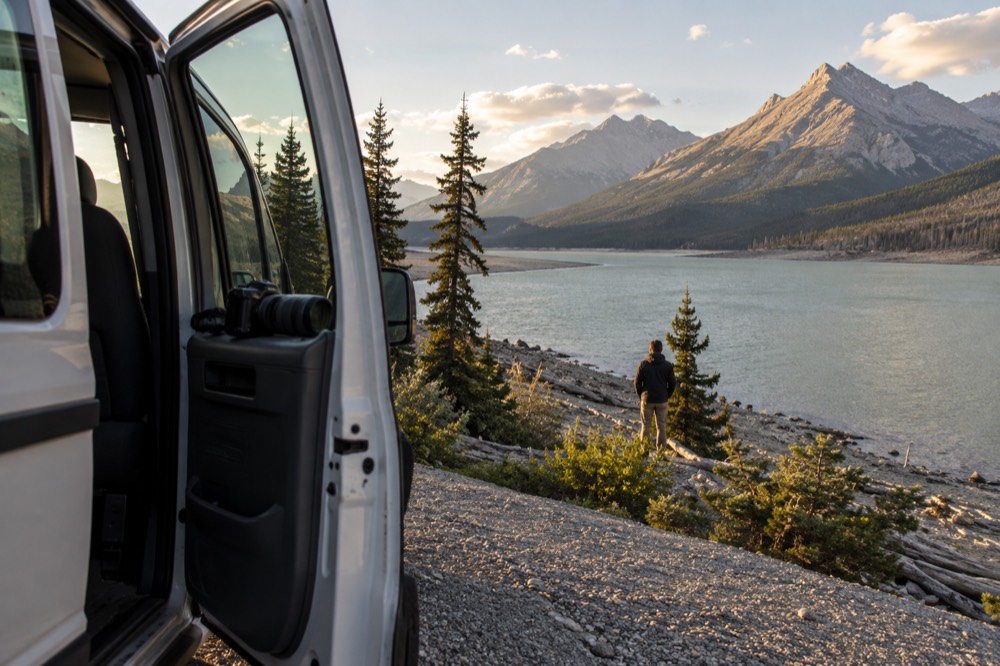
That last point is worth underlining because Jasper is often confused with Banff on this. Banff runs shuttle and reservation systems for its most famous lakes; Jasper has none of that, and the only authorization required to travel anywhere in the park is a Park Pass. The Maligne Lake Road is open year round with winter driving conditions, so the valley every wildlife tour works is also a valley you can drive yourself, and many visitors do, stopping at Medicine Lake and the Maligne Lake boathouse picnic site, both of which Parks Canada lists as open.
What you lose going alone is the spotter. A guide who was in the valley this morning knows whether the moose family is at the north end of the lake and which pull-off the sheep are working. You also lose the managed stop: independent visitors cause most of the roadside jams Parks Canada's restricted-activity rules exist to prevent, and a first-time visitor does not know the difference between a safe pull-off and a driving lane with a view. If you do drive yourself, read the rules section above before you go, and pair the drive with the blog guide to the best places to see wildlife in Jasper.
The honest tie-breaker: take one guided tour early in your stay, then drive the valleys yourself on what you learned. The tour teaches you the habitat, the clock and the rules, and your own driving days afterward are better for it. If your Jasper time is short and wildlife is the main reason you came, book the 6-hour version and let the guide handle everything, then browse the wider things to do in Jasper National Park roundup for the rest of your days.
How to book smart: slots, seasons and cancellation
Book the dawn or dusk slot, not the midday one, and book the day's first tour of your stay so the guide's knowledge carries into the rest of your trip. Prefer listings with free cancellation in a mountain park, confirm whether the park pass is included, and check the operator's live listing for the exact meeting point and pickup window.
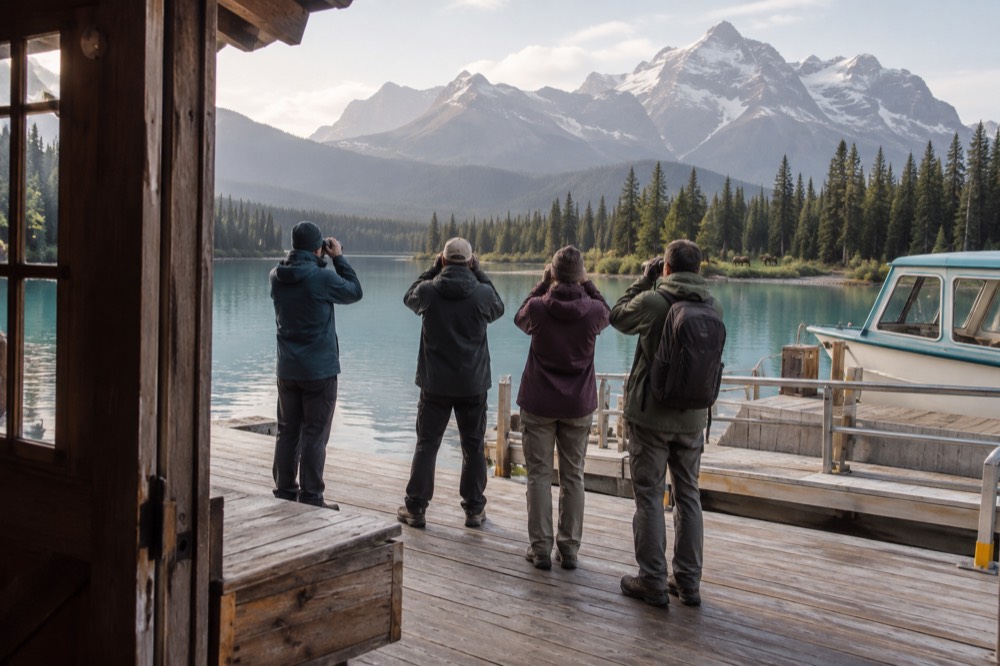
Hotel pickup is the roster's most common convenience, and it is worth confirming your hotel is on the operator's route, because Jasper's accommodation is spread from the townsite out to Patricia Lake. Dress warmer than the forecast suggests: a 3-hour evening watch in September sits near a daily minimum of 2.5 °C, and you will be standing at pull-offs, not hiking. Binoculars are the single most useful thing to bring after layers; every guide carries a spotting scope, but the waiting list for it is your whole van.
For photographers, the honest advice is that a roadside sighting is a vehicle-window shot, not a wildlife-art shot. The 100-metre rule for bears means long glass, and the guide will not break the distance for a better frame. If your goal is a portfolio image rather than a memory, ask the operator about their small-group or walk products before booking the volume driving tour.
Finally, cross-check the season before you commit a date. The Maligne Lake cruise that anchors the combined tour runs 27 May to 11 October in 2026, weather dependent, and a wildlife tour that includes it cannot run outside that window in the same form. Winter products like the snowshoe tour run the opposite end of the calendar. Whatever you choose, the listings on Jasper National Park Tours carry the live dates and prices for the season you are travelling in.
Common questions about Jasper wildlife tours
What is the best wildlife tour in Jasper?
The Morning or Evening Wildlife Watch is the most-booked, 4.6 across 1,089 reviews, from $68.57 for 3 hours with hotel pickup and free cancellation. For a fuller day, the Wildlife and Sightseeing Tour with Maligne Cruise, 4.8 across 665 reviews, adds Spirit Island by boat. The best one for you depends on whether you want a short drive at prime hours or a full valley day.
Will a Jasper wildlife tour guarantee I see a bear?
No, and no honest operator claims it. Black bears are common in the park and summer and early-fall tours have a real chance of one, but a sighting is never a guarantee anywhere in Jasper. Elk, deer and bighorn sheep are the reliable sightings on every tour; bears, wolves and moose are possibilities that the guide works to find.
How close do the tours get to the animals?
Parks Canada's rules bind guides exactly like everyone else: 30 metres from elk, deer and moose, and 100 metres from bears and other carnivores. Most viewing happens from the vehicle at a safe pull-off. The guide decides when a stop ends, and moves on immediately if a traffic jam develops, per the park's restricted-activity rules for roadside viewing.
When is the best time of day for a wildlife tour in Jasper?
Dawn and dusk, which is why the category leader is sold as a morning or evening watch. Animals feed in the low-light hours and retreat to shade or higher ground by late morning in summer, when daily maxima average above 23 °C. In winter, animals stay visible longer through the day along the valley floors and the Icefields Parkway.
Are Jasper wildlife tours worth it in winter?
Yes, for what winter actually offers. Bears are denned, but Parks Canada names bighorn sheep, mountain goats, coyotes and deer as commonly sighted along the Icefields Parkway in winter, and the Winter Wildlife Discovery Tour runs from $66.59. The snowshoe tour from $65.08 adds a quiet, track-reading format for travellers who prefer to walk.
Does a Jasper wildlife tour include the park entry fee?
It varies by operator, and the only authority is each tour's own inclusions list. Parks Canada charges commercial tours a group rate per person, and whether the operator builds that into the ticket is a commercial decision. The daily park fee for independent visitors is $12.25 CAD per adult, with a Family/Group rate of $24.50 CAD covering up to seven people in one vehicle.