Best Time to Visit Jasper: A Month-by-Month Guide for Tour Bookers
The month you choose for Jasper does not just change the weather. It changes which half of the tour roster exists at all: lake cruises, glacier rides and rafting vanish in winter, while snowshoe and dark-sky tours only exist in the cold half of the year.
Short answer
July and August are the busiest, warmest months, with daily highs around 23 °C and every major tour running. June and September offer quieter trails and most tours still operating, while winter runs snowshoe, wildlife and stargazing trips only. Maligne Lake cruises run 27 May to 11 October and the Columbia Icefield Adventure 1 May to 12 October.
The month you pick for Jasper decides more than the weather. It decides which tours exist at all. The Maligne Lake cruise runs 27 May to 11 October. The Columbia Icefield Adventure runs 1 May to 12 October. Rafting, canoeing and the SkyTram's full schedule all cluster in the warm half of the year, while snowshoe tours and the astronomy experiences fill the cold half. Choose wrong and half the things you came for are simply not for sale.
That is why this page is written for people choosing a tour, not just a week. Below is what each season actually delivers in Jasper, month by month, with the operator dates and the climate numbers that matter, and with the closures that will shape a 2026 or 2027 trip. Jasper National Park Tours keeps every seasonal date on this page tied to what operators and Parks Canada publish, not to guesswork.
What is the best month to visit Jasper?
There is no single best month, but July and August come closest for first-time visitors who want the full tour menu: daily highs around 23 °C, all major attractions operating, and the longest daylight. The trade-off is peak crowds and the highest accommodation prices. September is the sweet spot for quieter trails and still-warm days, and October for dark-sky events and fall colour.
The honest answer depends on what you are booking. If the Maligne Lake cruise to Spirit Island is the point of the trip, you need to be here between late May and early October, and the lake's average water temperature is 4 °C regardless of the air temperature, so it is never a swimming lake. If the glacier is the point, the Ice Explorer season opens 1 May and closes 12 October, and the guided glacier hikes run on similar windows. If wildlife is the point, spring and autumn are the strongest seasons and the wildlife tours run all year.
One thing worth deciding early: Jasper has no timed entry, no reservation corridor and no mandatory shuttle for any attraction. Unlike Banff, where Moraine Lake and Lake Louise access runs on a shuttle and reservation system, the only authorization you need to travel anywhere in Jasper is a park pass. That means the season you pick is about weather and tour availability, not about competing for a road permit.
Jasper month by month: what the climate actually does
Jasper's climate is genuinely four-season. July and August average daily highs of 23 °C and essentially zero snowfall; January averages a daily high of -3.2 °C with more than 20 cm of snow. June is the wettest month at 57.6 mm of precipitation, and September stays pleasant at a 17.9 °C average high while the crowds thin sharply.
These are the Canadian Climate Normals from Environment and Climate Change Canada, the 1991 to 2020 averages for the Jasper station, and they are the most reliable guide to what any given month feels like:
| Month | Daily high | Daily low | Precipitation | Snowfall |
|---|---|---|---|---|
| January | -3.2 °C | -14.4 °C | 20.2 mm | 21.2 cm |
| February | 0.5 °C | -12.7 °C | 15.2 mm | 11.8 cm |
| March | 4.7 °C | -8.2 °C | 19.6 mm | 17.0 cm |
| April | 10.9 °C | -3.6 °C | 19.6 mm | 7.9 cm |
| May | 16.4 °C | 0.9 °C | 36.5 mm | 4.7 cm |
| June | 20.0 °C | 5.2 °C | 57.6 mm | 0.0 cm |
| July | 23.4 °C | 7.4 °C | 52.2 mm | 0.0 cm |
| August | 23.0 °C | 6.1 °C | 50.8 mm | 0.0 cm |
| September | 17.9 °C | 2.5 °C | 36.2 mm | 2.1 cm |
| October | 9.9 °C | -2.4 °C | 26.0 mm | 8.3 cm |
| November | 1.5 °C | -8.1 °C | 24.4 mm | 20.8 cm |
| December | -3.5 °C | -14.1 °C | 17.9 mm | 17.9 cm |
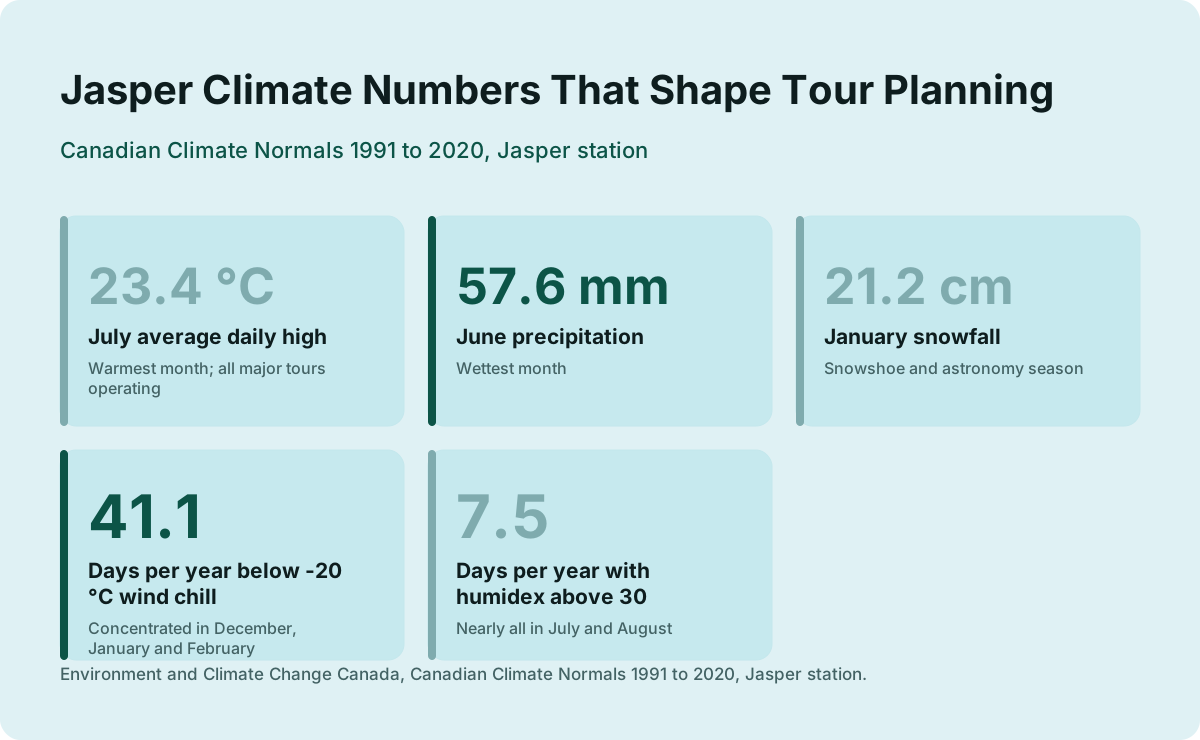
Read the table with a tour booker's eye. The zero-snowfall months, June through August, are when every warm-weather product runs and when the trails are at their most reliable. May sits in a gap: warm by afternoon at 16.4 °C on average, but with lingering snow at elevation and several operator seasons not yet open. September is the month locals tend to name as the best trade: 17.9 °C average highs, thinning crowds, and the full tour roster still running through the first week of October.
A few practical notes sit behind the averages. Days with humidex above 30 number just 7.5 per year, nearly all in July and August, so even peak summer rarely feels hot by most visitors' standards. Days with wind chill below -20 °C number 41.1 per year, concentrated in December, January and February, which is the real constraint on winter touring. The full climate record is published by Environment and Climate Change Canada.
Which tours run in which months?
The core summer roster runs May to October: the Maligne Lake cruise 27 May to 11 October, the Columbia Icefield Adventure 1 May to 12 October, and the Jasper SkyTram 15 April to 25 October. Rafting and canoe tours cluster in June through September. Winter belongs to snowshoe, wildlife and astronomy tours, and Miette Hot Springs closes for the season on 12 October and reopens in May 2027.
Every one of those operator seasons is published as weather dependent, so treat the dates as the window rather than a guarantee on any given day. Here is the seasonal availability of the main tour families on this site:
| Tour family | Season window | Notes |
|---|---|---|
| Maligne Lake cruise | 27 May to 11 October | Spirit Island reached by boat only, no road or trail access |
| Columbia Icefield Adventure | 1 May to 12 October | Ice Explorer onto Athabasca Glacier plus Skywalk |
| Guided glacier hikes | Roughly May to October | 3 to 4 hour guided walks on the glacier ice |
| Jasper SkyTram | 15 April to 25 October | Upper station at 2,263 m, summit trail above that |
| Wildlife tours | Year round | Morning and evening departures, hotel pickup on several |
| Rafting and canoeing | Roughly June to September | Athabasca and Sunwapta river trips |
| Snowshoe tours | Winter | Hotel pickup included on the main snowshoe product |
| Astronomy and planetarium | Year round, best in winter | Jasper is a Dark-Sky Preserve |
| Miette Hot Springs | To 12 October, reopens May 2027 | In-person admission only, first come first served |
Two buying facts are worth more than the rest of the table combined. First, Miette Hot Springs sells admission in person only, first come first served, with no advance or online tickets at all, so it cannot be pre-booked into an itinerary the way a cruise can. Second, Pursuit advises arriving about an hour before a Maligne cruise departure and allowing at least 90 minutes for the drive from Jasper, and states that missed cruises are non-refundable with limited rebooking. A tight seasonal window plus a fixed departure time is where trips go wrong.
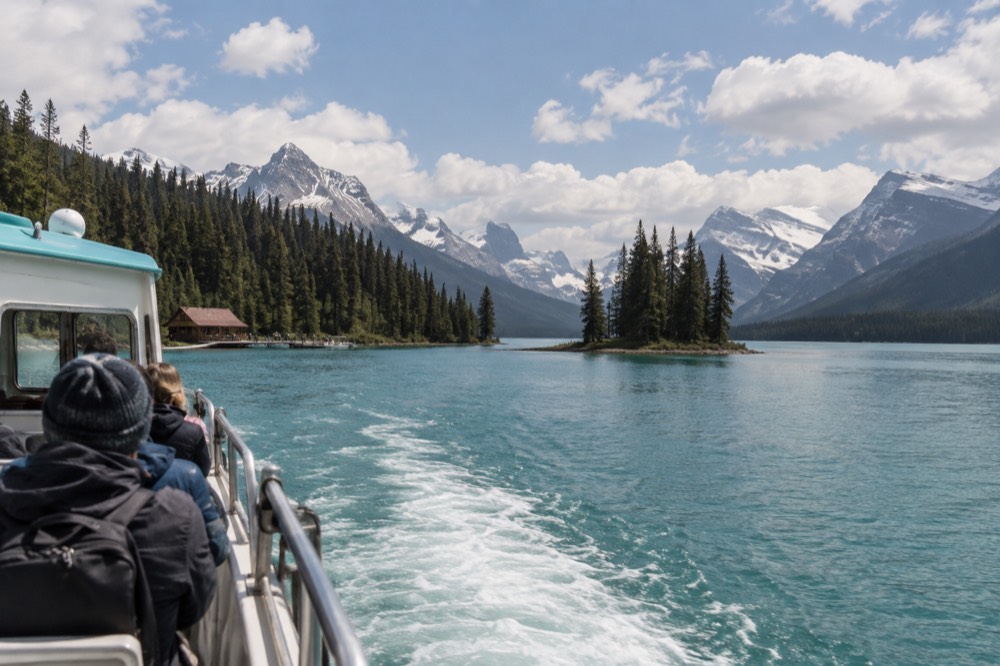
If you are booking a spring or autumn trip, check the specific tour's live listing before locking accommodation, because the shoulder edges move with the weather. The Maligne Lake cruise season guide covers the boat schedule in detail, and the Jasper winter tours guide does the same for the cold half of the roster.
Is summer the best time to visit Jasper?
Summer is the best time for first-timers who want everything: every major tour operating, the warmest weather of the year at 23 °C average highs, and the longest days. It is also the busiest and most expensive period, with 2025 visitation still running below pre-wildfire levels but concentrated hard into July and August.
The case for summer is simple completeness. The cruise, the glacier, the SkyTram, the rafting runs and the guided hikes all exist simultaneously, and the trails are at their most reliable. Parks Canada estimates 2,137,000 independent visitors in the 2025 calendar year, still below the roughly 2.5 million the park received before the 2024 wildfire, which reflects reduced frontcountry campsite and accommodation availability. That reduced supply is worth remembering when you look at summer prices: fewer rooms chasing similar demand.
The case against is crowds on the marquee stops. Maligne Lake Road carries everyone going to the lake, the Icefields Parkway carries everyone going to the glacier, and both are single roads. The wildlife tours help here, because morning and evening departures put you on the road when day-trippers are not. The wildlife and sightseeing tour with Maligne cruise pairs a morning of animal viewing with the lake boat in one day, from $169.04, with hotel pickup and free cancellation, which is why it is one of the most-booked summer products on this site.
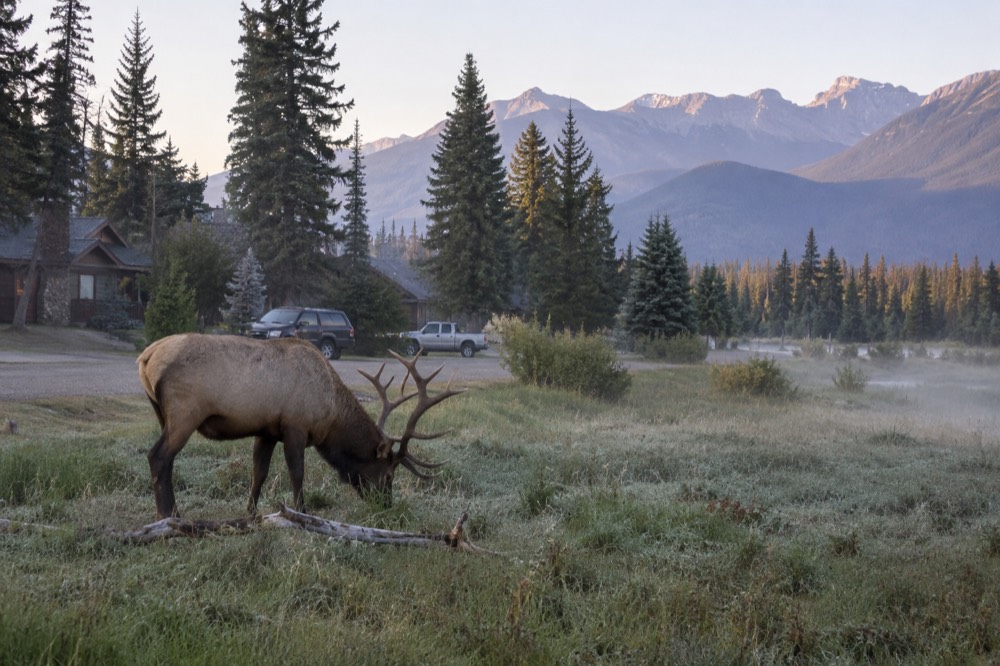
One summer caveat that matters for planning: June is the wettest month at 57.6 mm of precipitation, and afternoon storms are a normal mountain pattern rather than an anomaly. Book the weather-dependent products, cruises especially, early in your stay rather than on your last day, so a storm does not cost you the one thing you came for.
Are the shoulder seasons better than July and August?
May, June and September are better than peak summer for visitors who value quiet trails and lower prices over maximum warmth. September is the strongest shoulder month: 17.9 °C average highs, the full tour roster still running, and campgrounds and roads far less crowded. May is the weakest, with several operator seasons not yet open and snow lingering at elevation.
September deserves its reputation. The lake cruise runs to 11 October and the Ice Explorer to 12 October, so the first three weeks of September give you the complete summer roster at a third of the crowd. Larch colour begins turning late in the month at higher elevations. The trade is cooler nights, averaging 2.5 °C, and the first chance of snow returning: September's average snowfall is only 2.1 cm, but it is not zero.
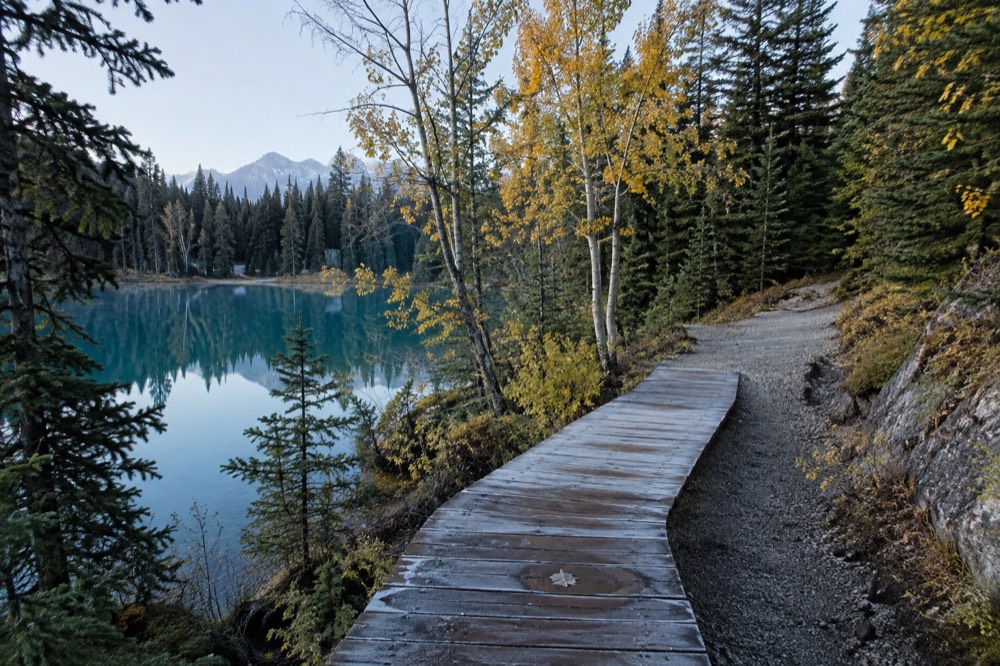
June sits in the middle. It is the wettest month, but it is also when the waterfalls are at their loudest and the wildlife tours start hitting their stride with young animals active. The evening or morning wildlife watch runs 3-hour departures year round from $68.57 with hotel pickup, and it is a good June product precisely because the long daylight pushes animals into the dawn and dusk windows.
May is the month to be honest about. The SkyTram opens 15 April and the Icefield Adventure 1 May, but the Maligne cruise does not start until 27 May, snow sits on the alpine trails, and the average low is 0.9 °C. If May is your only option, build the trip around the glacier, the hot springs before they close, and the wildlife, and leave the lake for another year.
What is Jasper like in winter?
Winter Jasper is cold and quiet: January averages a daily high of -3.2 °C and 21.2 cm of snow, and 41 days a year drop below -20 °C wind chill. The warm-weather tour roster shuts down almost entirely, replaced by snowshoe tours, winter wildlife drives and the best stargazing of the year. The Icefields Parkway itself stays open, with snow tires required from 1 November to 31 March.
The winter roster is smaller but real. The snowshoe tour with pickup runs 3 hours from $65.08 with free cancellation, the winter wildlife valley tour runs from $66.59, and the planetarium and telescope combo runs year round from $74.34. Jasper is the second largest dark-sky preserve in the world, designated by the Royal Astronomical Society of Canada in 2011, and winter's long nights are when that designation pays off. The SkyTram's astronomy experience with dinner options is the premium version, from $105.78.
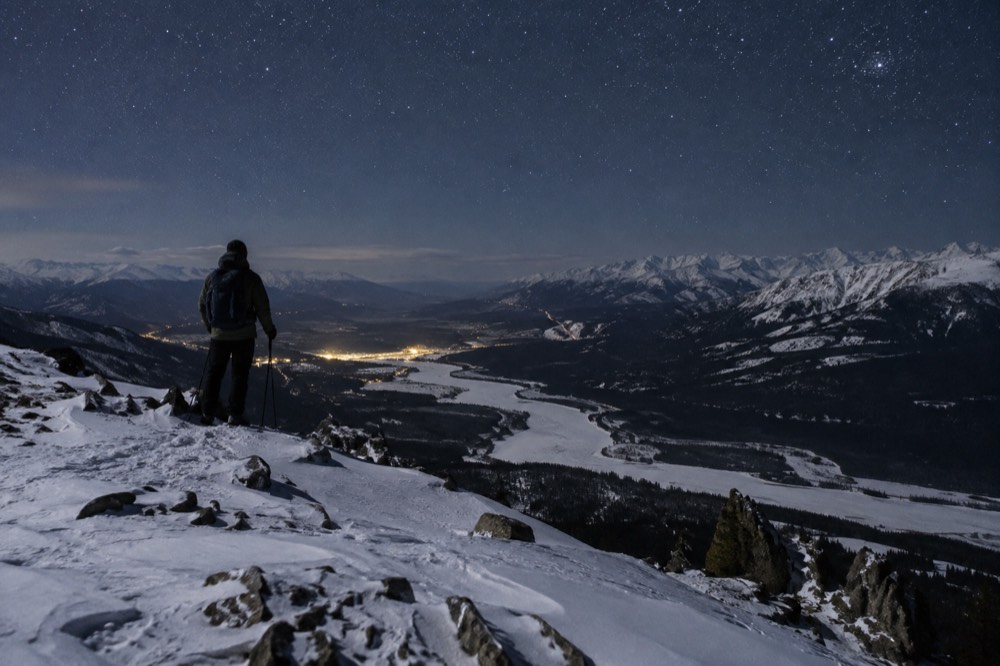
Two winter facts change itineraries. First, the Icefields Parkway does not close for the winter, but from 1 November to 31 March a vehicle on it must have snow tires or chains, there are no services along it, there is no cell coverage en route, it is not salted, and maintenance runs 7 am to 3:30 pm. Second, Miette Hot Springs closes fully to the public on 13 October and does not reopen until May 2027, so a winter hot-springs stop is off the table. Check road conditions at 511 Alberta before any winter drive; Parks Canada warns that navigation apps are not always accurate for the park.
When is the best time to see wildlife in Jasper?
Spring and autumn are the strongest wildlife seasons, with animals active at dawn and dusk and concentrated in the valley bottoms. Winter is surprisingly good along the Icefields Parkway, where Parks Canada names bighorn sheep, mountain goats, coyotes and deer as commonly sighted. A sighting is never guaranteed on any tour or in any month.
Parks Canada's own species list for the park includes elk, deer, moose, caribou, bighorn sheep, mountain goats, bears, coyotes, wolves, beavers, pine martens, lynx, porcupines, cougars, snowshoe hares and wolverines. The Maligne Valley is the classic viewing corridor, and the tours that work it, the wildlife and sightseeing tour with Maligne cruise and the valley tours with Spirit Island, are built around that geography rather than luck.
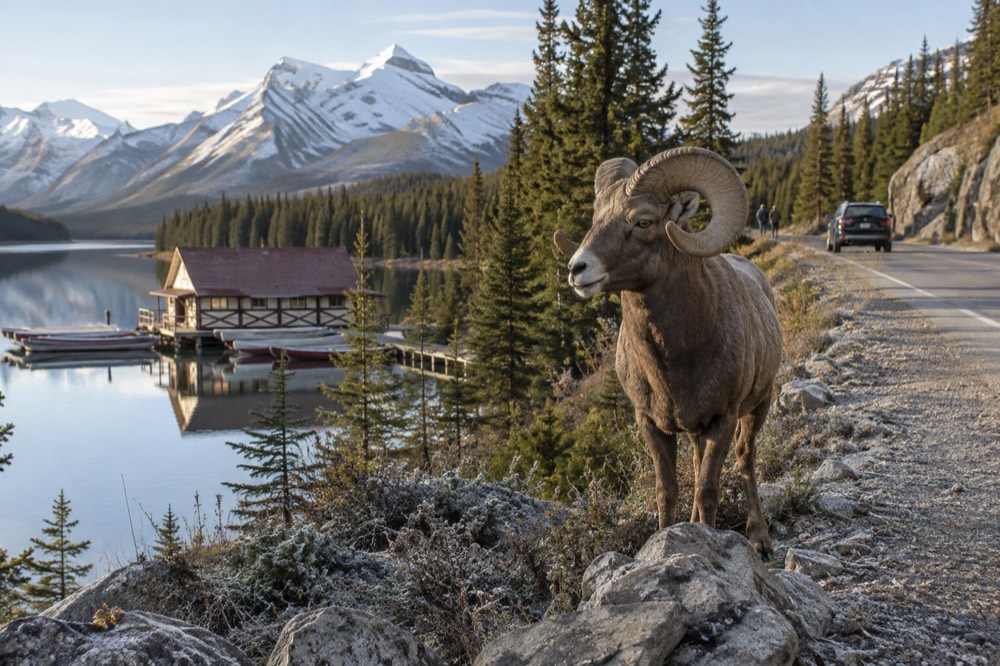
The rules matter as much as the timing. Stay 30 m, three bus lengths, away from elk, deer and moose, and 100 m, ten bus lengths, away from bears and other carnivores. Roadside wildlife viewing is a restricted activity year round: stay in your vehicle, pull over only where it is safe, and move on immediately if a jam develops. It is an offence to feed, entice or pursue animals, and pursuing with a camera counts as harassment. The full rules are on the Parks Canada wildlife safety page.
Season by season, the pattern is this. Spring brings animals down to the valley roads and meadows. Summer pushes them into dawn and dusk as day traffic builds. Autumn is the rut, when elk are visible, vocal and dangerous to approach. Winter concentrates sheep and goats along the parkway's roadside cliffs. The Jasper wildlife tours guide maps which products cover which corridors.
What about October and the dark-sky season?
October is Jasper's dark-sky month, with the Jasper Dark-Sky Festival running every October and the season's best stargazing, including Andromeda highest around midnight and the Geminids arriving late in the season. The lake cruise and Ice Explorer both close in the first half of October, so early October is the last window to combine the summer roster with dark-sky nights.
This is the month the two rosters overlap, and it is a genuinely underrated window. Book the first week of October and you can still take the cruise to Spirit Island, ride onto the Athabasca Glacier, and be back under a dark sky by nightfall. The SkyTram runs to 25 October. After the 11th and 12th the summer products close one by one, and the town shifts into festival mode.
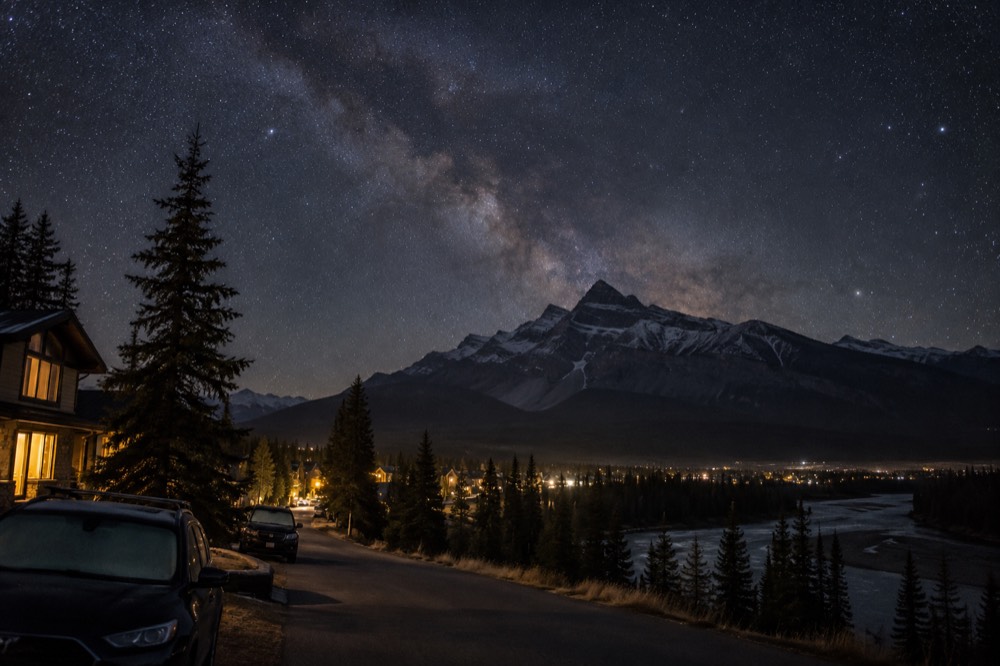
Parks Canada's own seasonal astronomy notes give the calendar: the dense centre of the Milky Way arches overhead July through September, the Perseids peak in mid-August, and Andromeda rises in the east by September and is highest around midnight in October. The Jasper dark-sky tours guide covers the planetarium, telescope and SkyTram astronomy products in detail.
How do the wildfire closures affect when to go?
The 2024 Jasper Wildfire, 32,722 hectares in final size and extinguished on 1 April 2025, still shapes two timing decisions: Cavell Road and Maligne Canyon are both closed for the 2026 season, and Parks Canada has set no reopening date for either. Otherwise the majority of the park is open, virtually all trails have reopened, and 100 percent of backcountry campgrounds are available.
Parks Canada's own summary is that the majority of Jasper National Park is now open and ready to explore, and virtually all of Jasper's trails have reopened since the wildfire. In 2026, 77 percent of the pre-wildfire frontcountry campground inventory and all of the backcountry inventory are available. The burn is visible along the Athabasca valley south of town, at the townsite's southwest edge and up the Maligne road corridor, and regrowth is under way.
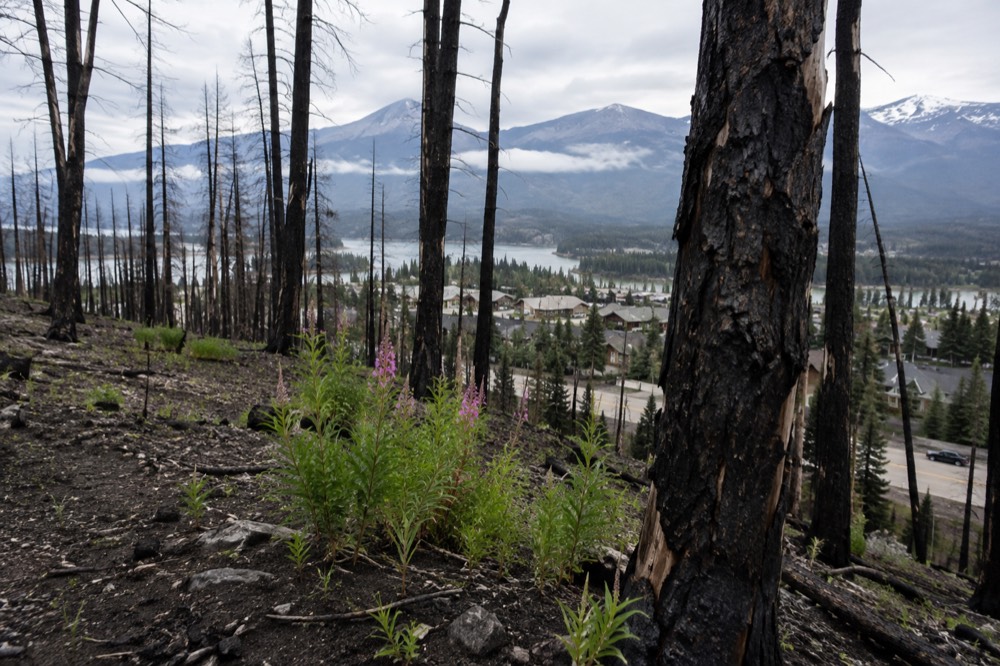
What this means for timing is specific and narrow. No Mount Edith Cavell or Path of the Glacier experience can run while the closure stands, and winter access to Maligne Canyon for recreation is prohibited, which rules out canyon ice walks regardless of what any listing says. Everything else on the tour roster operates in its normal season. Before planning around either closed area, check the Parks Canada park recovery page. The guide to what is open after the wildfire covers the full picture.
Do I need a park pass in every season?
Yes. A park pass is legally required to be inside Jasper National Park at any time of year, and the fee is charged per person: $12.25 CAD per adult per day, with a Family/Group rate of $24.50 CAD covering up to seven people in one vehicle. The Canada Strong Pass free-admission period ended on 7 September 2026 and regular fees apply now.
The pass is not seasonal and there is no free window left. Youth 17 and under enter free, and Canada Day, 1 July, is free although a pass is still required. A day pass is valid until 4 pm the next day and also admits you to Banff, Kootenay, Yoho, Mount Revelstoke, Glacier, Waterton Lakes and Elk Island. Whether any given tour builds the fee into its ticket is an operator-by-operator decision, so check each tour's inclusions list rather than assuming. Because Parks Canada raises fees annually, confirm the current figures on the Parks Canada fee page.
| Pass | Cost | Covers |
|---|---|---|
| Adult day pass | $12.25 CAD | One person, one day, valid to 4 pm next day |
| Senior day pass | $10.75 CAD | 65 and over |
| Youth 17 and under | Free | Does not cover camping, Miette or guided tours |
| Family/Group day pass | $24.50 CAD | Up to 7 people in one vehicle |
| Adult Discovery Pass | $83.50 CAD | Full year, more than 100 parks and sites |
| Family/Group Discovery Pass | $167.50 CAD | Full year, up to 7 people in one vehicle |
The Discovery Pass break-even sits at roughly seven days of park entry inside twelve months, computed from the two verified figures, so it only pays if Jasper is one stop on a bigger Canadian parks trip. The full park entry fee guide works through the arithmetic.
Common questions about the best time to visit Jasper
What is the best time to visit Jasper?
July and August for the full tour roster and the warmest weather, at 23 °C average daily highs. September for the same roster with far fewer people. Winter for snowshoe, wildlife and stargazing. There is no timed entry or shuttle system in Jasper, so the season you pick is about weather and tour availability only.
What is the rainy season in Jasper?
June is the wettest month at 57.6 mm of precipitation, followed by July at 52.2 mm and August at 50.8 mm. Summer rain mostly arrives as afternoon storms rather than all-day rain. Book weather-dependent tours early in your stay so a storm cannot cost you the one product you came for.
Can you do Jasper tours in winter?
Yes, but a different roster. Snowshoe tours, winter wildlife valley tours and the planetarium and telescope combo run through the cold months. The Maligne Lake cruise, Columbia Icefield Adventure, rafting and canoeing all close by mid-October. The Icefields Parkway stays open in winter, with snow tires or chains required from 1 November to 31 March.
When do the Maligne Lake cruise and Ice Explorer close for the season?
The Maligne Lake cruise runs 27 May to 11 October and the Columbia Icefield Adventure 1 May to 12 October, both weather dependent. The Jasper SkyTram runs 15 April to 25 October. Miette Hot Springs closes for the season on 12 October and reopens in May 2027.
Is September a good month for Jasper?
September is the strongest shoulder month: 17.9 °C average daily highs, the complete summer tour roster still running, and much thinner crowds than July and August. Nights average 2.5 °C and the first light snow of the season is possible, so pack layers.
Do I need a park pass in winter?
Yes, in every season. A park pass is legally required to be inside Jasper National Park, at $12.25 CAD per adult per day with a $24.50 CAD Family/Group rate covering up to seven people in one vehicle. Youth 17 and under enter free. The free-admission period under the Canada Strong Pass ended on 7 September 2026.