Which Is Nicer, Banff Or Jasper?
An honest comparison of Banff and Jasper National Parks: crowds, scenery, wildlife, entry fees and access, with verified figures to help you choose.
Which Is Nicer, Banff Or Jasper?
Neither, and that is the honest answer: the two parks reward different travellers. Jasper is larger, quieter and better for wildlife, dark skies and glaciers you can stand on. Banff is more developed, easier to reach and packs more headline sights into a shorter drive. The nicer park is the one matching your trip.
Anyone who tells you one park simply wins has usually only been to one of them. The two towns sit on either end of the Icefields Parkway, and they share the same mountain chain, the same wildlife and even the same entry pass. What differs is scale, crowds and what the trip asks of you.
Jasper National Park spans 11,228 square kilometres, making it the largest and most northerly of the Canadian Rocky Mountain national parks. Roughly 97 percent of it, a little over 10,000 square kilometres, is maintained in a natural state with limited infrastructure. That single fact shapes everything else: fewer roads, fewer people per viewpoint, longer distances between the things you came to see.
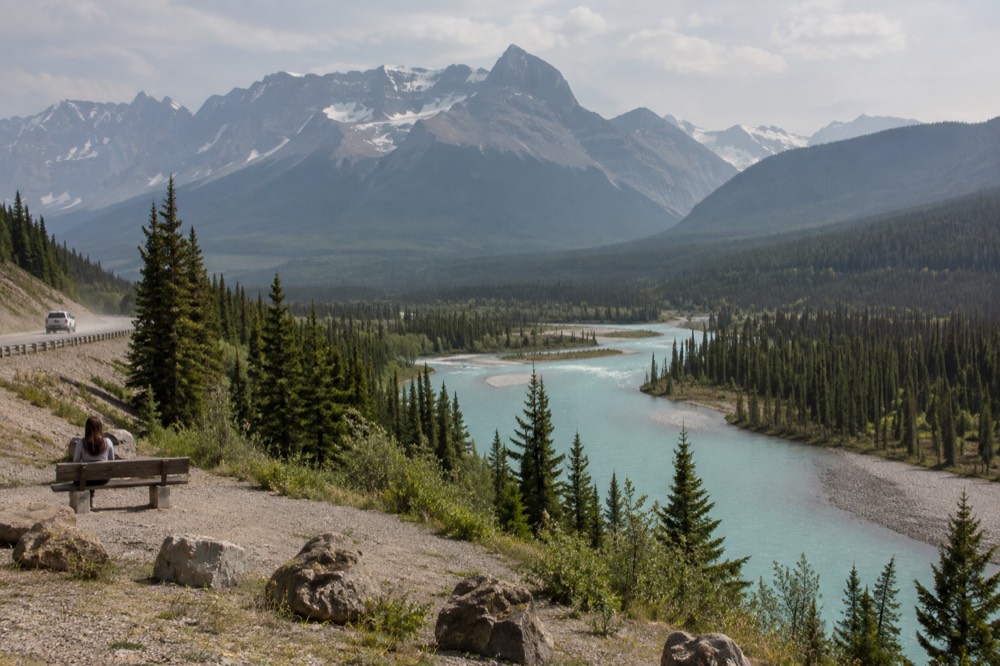
Banff, by contrast, concentrates its fame. Its marquee lakes and its townsite sit close together, which is exactly why Parks Canada runs a shuttle system there for Lake Louise and Moraine Lake. Jasper has no equivalent, and needs none. A useful starting point for anyone weighing the drive between them is our Banff to Jasper drive guide, which covers the 232 km Icefields Parkway that connects the two towns.
Here is the honest head-to-head, using figures Parks Canada publishes for both parks:
| Question | Banff | Jasper |
|---|---|---|
| Overall character | Developed, resort-town, high demand | Wilder, quieter, more spread out |
| Access system | Shuttle and reservation system for Lake Louise and Moraine Lake | No timed entry, no shuttle, pass only |
| Signature drive | Lake Louise area and Bow Valley | The Icefields Parkway, 232 km |
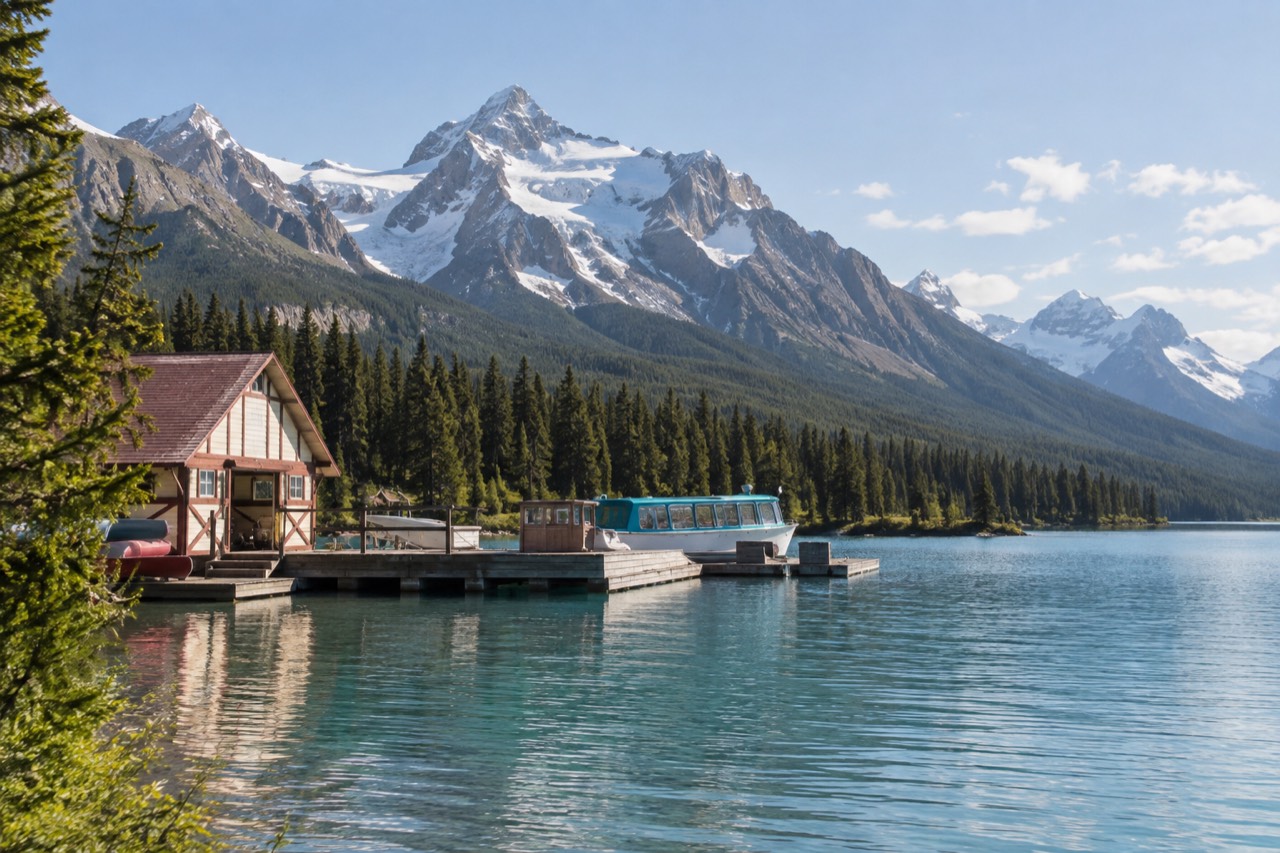
| Signature lake | Lake Louise and Moraine Lake | Maligne Lake, largest natural lake in the Canadian Rockies at 22.3 km long |
| Wildlife | Present, but roadside jams are common | Widely distributed, valley tours run daily |
| Dark skies | Limited | Second largest dark-sky preserve in the world |
| Glaciers | Viewed from afar | Athabasca Glacier, which you can stand on with a tour |
The pattern is consistent: Banff compresses, Jasper spreads. If your holiday is three days and you want maximum postcard per hour, Banff is built for that. If you have a week and want to feel the scale of the Rockies rather than the queue for a parking spot, Jasper is the stronger pick.
Those three tours are a good cross-section of what Jasper does best: a lake cruise to a place with no road, a wildlife-and-cruise combination day, and a small-group paddle on Pyramid Lake. None of that exists in quite the same form in Banff, and that difference is the heart of this comparison.
What does Jasper do better than Banff?
Jasper wins on scale, solitude and sky. It spans 11,228 square kilometres, the largest and most northerly of the Canadian Rocky Mountain parks, and roughly 97 percent of it is kept in a natural state. It is also the world's second largest dark-sky preserve at over 11,000 square kilometres, and its wildlife viewing needs no shuttle queue.
Start with the sky, because it is something Banff genuinely cannot match. On 26 March 2011 the Royal Astronomical Society of Canada designated Jasper a Dark-Sky Preserve, and at over 11,000 square kilometres it is the second largest on Earth. Tourism Jasper runs the Jasper Dark-Sky Festival every October, and the park's own seasonal astronomy notes that the dense centre of the Milky Way arches overhead from July through September. Banff has dark corners; Jasper has darkness at scale, a short drive from a town you can actually see it from.
Then there is the wildlife. Parks Canada's species list for Jasper includes elk, deer, moose, caribou, bighorn sheep, mountain goats, bears, coyotes, wolves, beavers, pine martens, lynx, porcupines, cougars, snowshoe hares and wolverines. No sighting is ever a guarantee anywhere, but Jasper's long valleys, especially the Maligne Valley, concentrate animals in places a tour van can reach in half an hour from town. The rules are the same park-wide: stay 30 m from elk, deer and moose, and 100 m from bears and other carnivores.
Jasper also holds the glaciers you can actually touch. The Columbia Icefield is the largest icefield in the Canadian Rockies, more than 300 square kilometres of ice, and the Athabasca Glacier spills from it right past the highway. Parks Canada calls it Canada's most accessible glacier, and several tours put boots on the ice. That is a category where Banff simply has no answer; its glaciers are viewed from lookouts, not stood on.
The honest caveat is the 2024 wildfire. The Jasper Wildfire Complex burned 32,722 hectares, reached the southwest corner of the townsite, and the initial rapid assessment identified 358 destroyed structures. Parks Canada's own summary is that 70 percent of the structures in town were saved, including all critical infrastructure, and that virtually all of Jasper's trails have now reopened. The burn is visible along the Athabasca valley south of town and in the Maligne Valley, and regrowth is under way. If you want the current picture before deciding, read is it safe to visit Jasper right now; the short version is that the park is open and most of it is working.
What does Banff do better than Jasper?
Banff wins on access and density of famous sights. Its fee schedule carries a Parks Canada shuttle for Lake Louise and Moraine Lake because demand is that high, while Jasper has neither and needs neither. Banff sits closer to Calgary, chains its headline lakes and villages together, and offers far more hotel and restaurant choice.
The shuttle line is not a throwaway. It is the clearest official signal of the difference between the parks: Banff's two most famous lakes draw enough traffic that Parks Canada had to build a reservation-and-transit system around them. Jasper's fee schedule has no equivalent section, and the 8 September 2026 Superintendent's bulletin confirms that a Park Pass is the only authorization required to travel anywhere in Jasper. If you find crowds energizing rather than draining, Banff delivers them alongside world-famous water.
Banff is also the easier logistics puzzle. Jasper is 370 km west of Edmonton and 404 km northwest of Calgary, while Banff town sits much closer to Calgary, which shortens arrival day dramatically. Jasper is 805 km northeast of Vancouver. Neither park publishes driving times, so plan in distances: Jasper is simply farther from the nearest major airport, and that distance is part of why it stays quieter.
Where Banff genuinely shines is concentration. Lake Louise, Moraine Lake, the Bow Valley Parkway and the townsite sit within a short drive of each other, and the town itself has a far larger hotel and dining base, rebuilt and grown over more than a century as a resort destination. Jasper's townsite is smaller, still recovering some of its accommodation inventory after the wildfire, and the park's sights are spread across long distances: Maligne Lake alone is a 90 minute drive from town.
The fairest framing is this: Banff is a better short trip, Jasper is a better long one. In three days, Banff's concentration wins. In six or seven, Jasper's spread becomes the advantage, because you are no longer racing between viewpoints and the distances start working for you. And the drive between them, covered in detail in the most scenic part of the Icefields Parkway, is arguably better than either town.
Which park is easier and cheaper to visit?
Jasper is easier in the ways that matter day to day. There is no timed entry, no reserved-access corridor and no mandatory shuttle anywhere in the park; a Park Pass is the only authorization you need. Entry costs $12.25 CAD per adult per day, or $24.50 CAD for a family of up to seven in one vehicle.
The fee itself is identical across the mountain parks, because a day pass bought at Jasper also admits you to Banff, Kootenay, Yoho, Mount Revelstoke, Glacier, Waterton Lakes and Elk Island, valid until 4 pm on the day after purchase. Parks Canada charges per person, but the Family/Group cap of $24.50 CAD covering up to seven people in one vehicle means any group of two paying adults or more effectively pays a flat vehicle rate. Youth 17 and under enter free. All figures are Canadian dollars, and Parks Canada raises them regularly, so check the official Parks Canada fee page before budgeting.
| Cost item | Figure (CAD) | Notes |
|---|---|---|
| Adult day pass | $12.25 | Per person, per day, all seven mountain parks |
| Senior day pass | $10.75 | 65 and over |
| Youth | Free | 17 and under |
| Family/Group day pass | $24.50 | Up to seven people, one vehicle |
| Adult Discovery Pass | $83.50 | Full year, breaks even at about 7 park days |
| Family Discovery Pass | $167.50 | Full year, same break-even |
The Discovery Pass math is worth knowing whichever park you choose: an adult pass at $83.50 equals 6.8 adult day passes, so roughly seven days of park entry inside twelve months is the crossover. One pass covers both Banff and Jasper, so a two-park trip counts toward the same total.
Access rules are where the two parks genuinely diverge. Jasper has no timed entry and no mandatory shuttle for any attraction, which means you wake up, buy a pass and drive where you like. Banff's Lake Louise and Moraine Lake corridor works differently, and its published fee schedule lists the shuttle as a paid service for exactly that reason. Neither system is better in the abstract; Banff's manages crowds Jasper does not have, and Jasper's absence of one is the quieter park showing up in the rulebook.
One more practical difference: winter driving. The Icefields Parkway between the two parks does not close for winter, but from 1 November to 31 March it requires snow tires or chains, has no services and no cell coverage en route. Check 511 Alberta before you drive it, and note that Parks Canada warns navigation apps are not always accurate in the park.
Which park is better for wildlife and scenery?
Jasper, on both counts, though no sighting is ever guaranteed. Its species list runs from elk and moose to wolves, lynx and wolverines, and the Icefields Parkway alone passes a 20 km stretch of woodland caribou winter habitat. For scenery, that same road is the 232 km spine of the Rockies, and both parks share it.
The wildlife argument for Jasper is structural, not just anecdotal. The Maligne Valley, Medicine Lake and the Athabasca valley give animals long corridors of habitat with a road through the middle, which is why morning and evening wildlife tours run there daily and why Parks Canada had to make roadside wildlife viewing a restricted activity year round. The rules are strict: stay in your vehicle, pull over only where safe, observe and move on. Banff has the same animals, but its higher traffic means the famous roadside jams form faster and last longer.
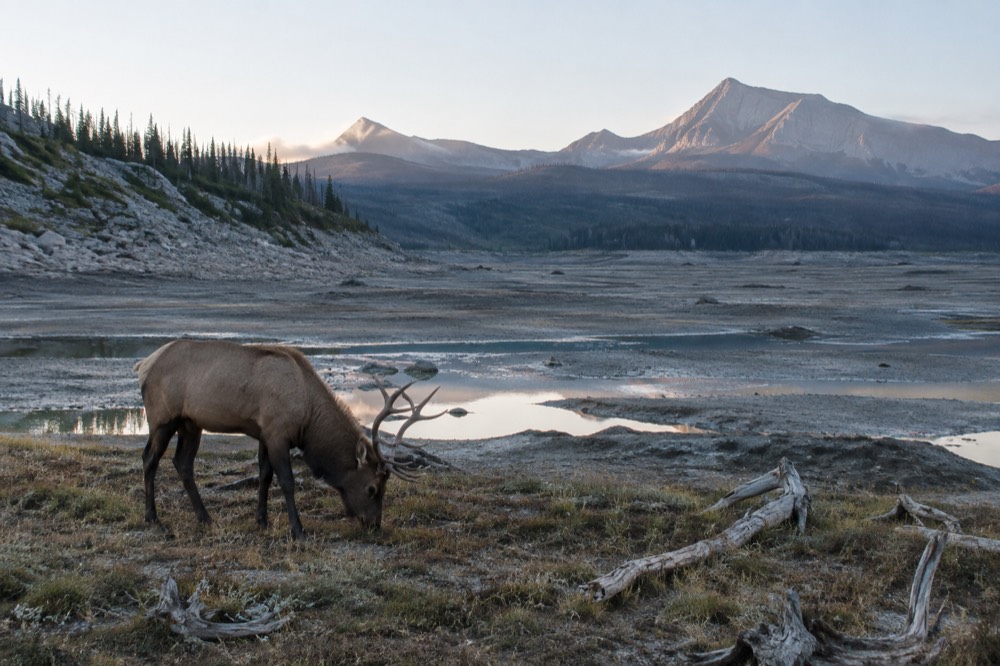
Medicine Lake is a good example of scenery Jasper holds that has no Banff equivalent. It has no visible outflow: the Maligne River pours in from the south and drains through sinkholes in the lake bed, resurfacing 16 kilometres downstream near Maligne Canyon. Parks Canada calls it one of the largest known sinking river systems in the Western Hemisphere, and states that this drainage was part of why the Rocky Mountain Parks World Heritage Site was created. In autumn the lake empties to a mudflat with scattered pools, a sight that resets every spring.
For scenery, the honest answer is that both parks sit inside the same UNESCO inscription. In 1990 the World Heritage Committee inscribed Jasper, Banff, Kootenay and Yoho together with three provincial parks as the Canadian Rocky Mountain Parks World Heritage Site. Banff's lakes are the more famous photographs; Jasper's glaciers, canyons and dark valleys are the more varied experience. Athabasca Falls, 23 metres high and among the most powerful falls in the mountain parks, is 30 km from Jasper on the Parkway, and Sunwapta Falls another 24 km beyond it.
If wildlife is your priority, the practical move in Jasper is a dedicated tour rather than hoping for luck from the car window. The morning and evening wildlife watch runs about 3 hours with hotel pickup, and the longer valley tours pair the searching with Medicine Lake and Maligne Lake. A quieter-water alternative is the guided canoe trip on Pyramid Lake, which puts you on the water at animal height in a small group.
So which park should you choose?
Choose Jasper for a quieter, wilder, longer trip built around glaciers, dark skies and wildlife. Choose Banff for a shorter, easier, more comfortable trip built around famous lakes. If you have five days or more, do both: the Icefields Parkway connects them, and most travellers who drive it rank the road itself above either town.
The decision really does come down to trip length and temperament. A first-time visitor with a long weekend flying into Calgary will see more, more easily, from Banff. The same visitor with a week will spend the first two days in Banff, then realize the best part of the trip is the 232 km of road in front of them. Parks Canada's own Icefields Parkway pages make the case: the route runs from Lake Louise to the Jasper townsite with no seasonal closure, and a valid park pass is the only paperwork it asks for.
Jasper's headline experiences also happen to be the ones that are hardest to replicate elsewhere. Maligne Lake is the largest natural lake in the Canadian Rockies, 22.3 km long, and Spirit Island sits 14 kilometres up-lake with no road or trail access; tour boats or non-motorized craft are the only means of reaching it. The cruise runs from late May to mid October, weather dependent, and Pursuit advises allowing at least 90 minutes for the drive out and arriving about an hour before departure.
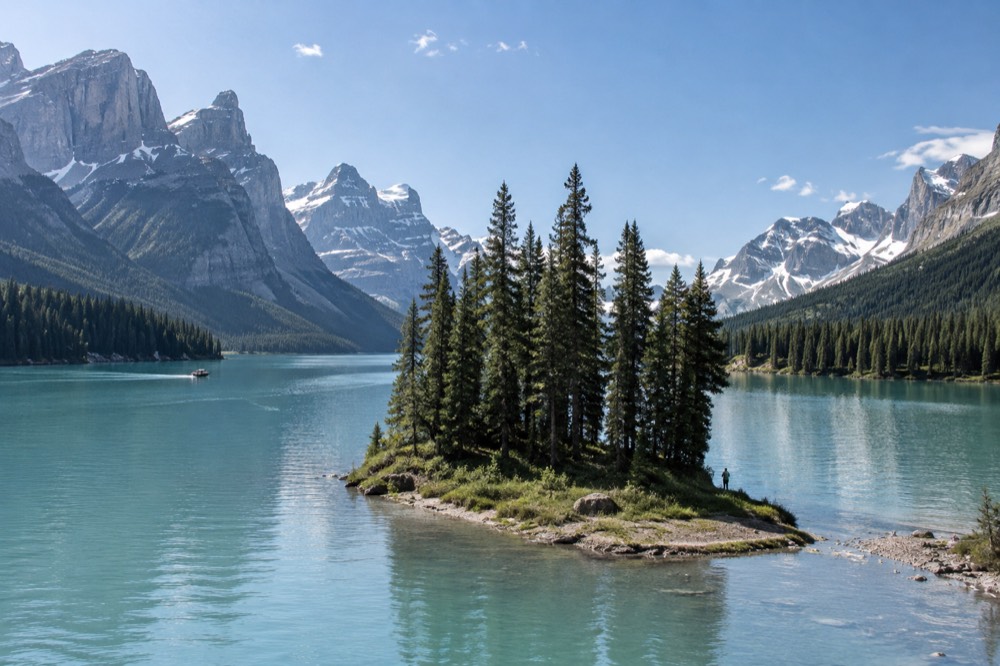
That cruise, 90 minutes on the water, rated 4.8 across 1,279 reviews and from $87.45, is the single best example of what Jasper does that Banff cannot: put you somewhere unreachable by road, in the middle of the largest park in the Canadian Rockies, without a reservation system or a shuttle between you and it. It is the kind of experience that makes the case for Jasper National Park Tours better than any argument about which park is nicer.
| If you want... | Pick | Why |
|---|---|---|
| Famous lake photographs | Banff | Lake Louise and Moraine Lake are the postcards |
| Standing on a glacier | Jasper | Athabasca Glacier tours put boots on ice |
| Dark skies and stargazing | Jasper | Second largest dark-sky preserve in the world |
| Shortest possible trip | Banff | Closer to Calgary, sights concentrated |
| Wildlife with fewer crowds | Jasper | Long valleys, daily guided tours, no jams |
| Both parks | Either, plus the Parkway | One pass covers both, 232 km between towns |
Whichever you choose, the same pass, the same rules and largely the same animals apply. Buy the pass, respect the 30 m and 100 m distances, and check road and fire conditions before you go, because both parks change through the season. The nicer park is the one that fits your dates, your energy and your tolerance for sharing a viewpoint, and now you have the numbers to decide which one that is.
Common questions about Banff versus Jasper
Which Is Nicer, Banff Or Jasper?
Neither is objectively nicer. Jasper is larger, quieter, better for wildlife, dark skies and walk-on glaciers; Banff is more developed, easier to reach and concentrates more famous sights into a shorter trip. Choose Jasper for a longer, wilder trip and Banff for a shorter, easier one, or drive the Icefields Parkway and do both.
Is Jasper cheaper to visit than Banff?
Entry costs are identical, because the same day pass covers Jasper, Banff, Kootenay, Yoho and four other mountain parks. Adults pay $12.25 CAD per day and a family of up to seven in one vehicle pays $24.50 CAD. The real cost difference is travel: Jasper is farther from Calgary, and its accommodation inventory is still recovering after the 2024 wildfire, so book early.
Does Jasper have a shuttle or timed entry like Banff?
No. Jasper has no timed entry system, no reserved-access corridor and no mandatory shuttle for any attraction. The only authorization required to travel anywhere in the park is a Park Pass. Banff runs a Parks Canada shuttle for Lake Louise and Moraine Lake because demand there is far higher.
Which park is better for seeing bears?
No park can promise a sighting, and none of ours will. Jasper's longer, quieter valleys, especially the Maligne Valley and the Athabasca valley, give wildlife more room and make guided wildlife tours productive. Wherever you go, stay 30 m from elk, deer and moose and 100 m from bears, and never leave your vehicle to approach an animal.
Can you visit both Banff and Jasper on one trip?
Yes, and it is the best answer of all if you have five days or more. The Icefields Parkway runs 232 km between Lake Louise and the Jasper townsite, stays open year round, and one park pass covers both parks. From 1 November to 31 March the Parkway requires snow tires or chains, and there are no services or cell coverage en route in winter.
Is Jasper still worth visiting after the 2024 wildfire?
Yes. The fire burned 32,722 hectares and destroyed 358 structures in town, but Parks Canada states that 70 percent of structures were saved, that virtually all trails have reopened and that the majority of the park is open and ready to explore. The burn is visible along the Athabasca valley and in the Maligne Valley, and regrowth is under way.