Valley of the Five Lakes: Jasper's Reopened Hike and How to Tour It
The Valley of the Five Lakes is the short, lake-dotted hike that Jasper guided day tours lean on, and it spent two years closed after the 2024 wildfire. It reopened in summer 2026 rebuilt, rerouted and busier than ever, and this guide covers what that means for a visitor deciding between hiking it alone and booking a tour.
Short answer
The Valley of the Five Lakes is a day-use trail east of the Jasper townsite that reopened in summer 2026 after post-wildfire realignment and resurfacing, drawing more than 800 walkers on opening day. A park pass is required, entry is charged per person at $12.25 CAD per adult with a $24.50 CAD family cap, and a guided nature walk starts from $63.38.
The Valley of the Five Lakes was the trail Jasper locals talked about most during the two summers it was closed. When Parks Canada reopened it in summer 2026 after realignment, resurfacing, new signage and new rest areas, more than 800 visitors walked it on opening day alone. That single number tells you two things: the trail matters to the park's recovery story, and it is no longer a quiet secret. It sits close to town, it is short enough to fit a half day, and it strings together five differently coloured lakes, which is why several guided Jasper day tours use it as their anchor stop.
This guide walks through the trail as it exists now: what it is, how to reach the trailhead, how hard the loop actually is, which tours include it, what the 2024 wildfire changed on the ground, when to go, what to carry, and what the whole day costs once the park pass is counted. Where a figure matters, it comes from Parks Canada or from the tour listings themselves, and where something changes week to week, this page points you to the official register rather than freezing a snapshot.
What is the Valley of the Five Lakes?
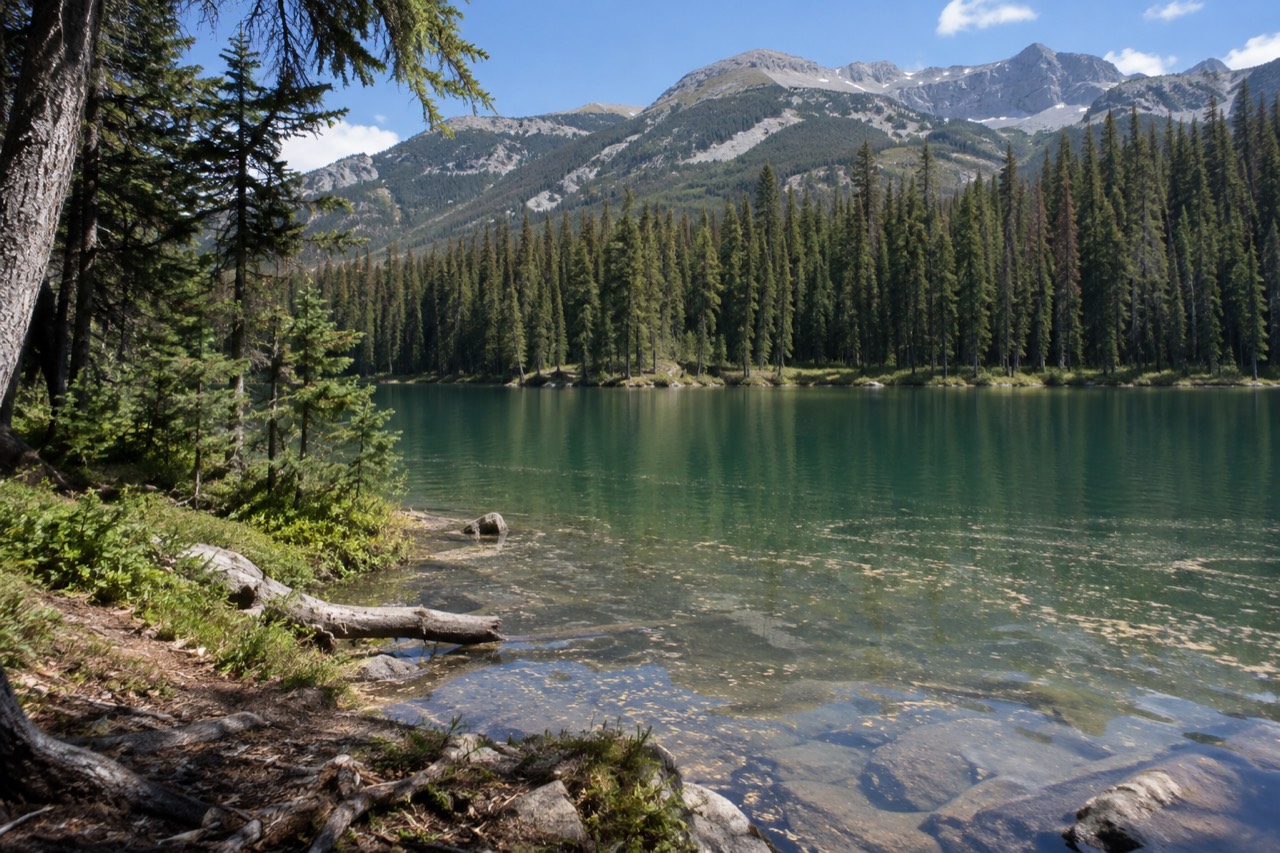
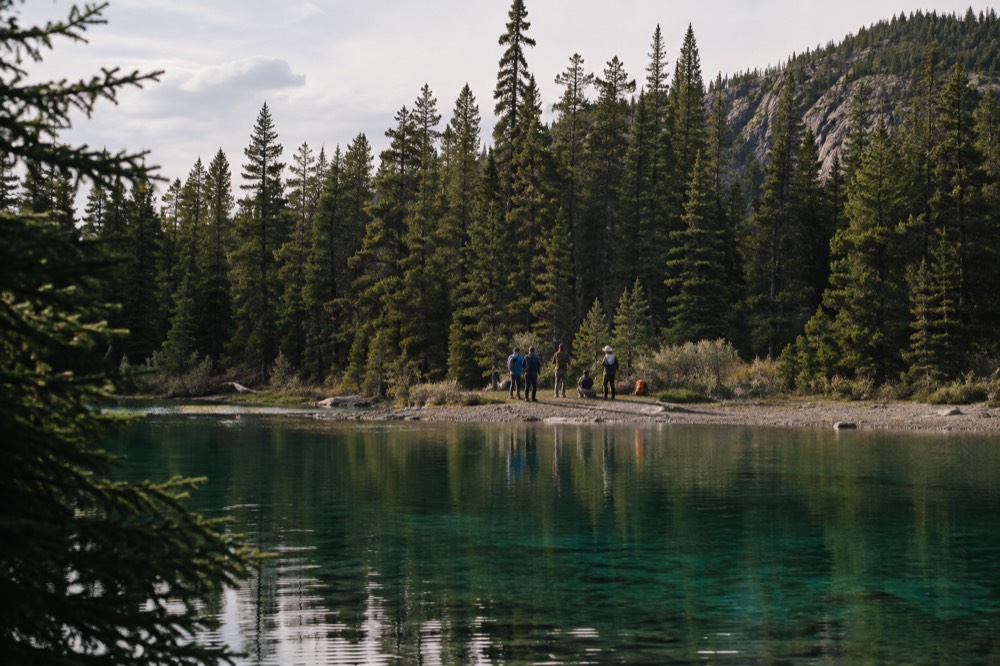
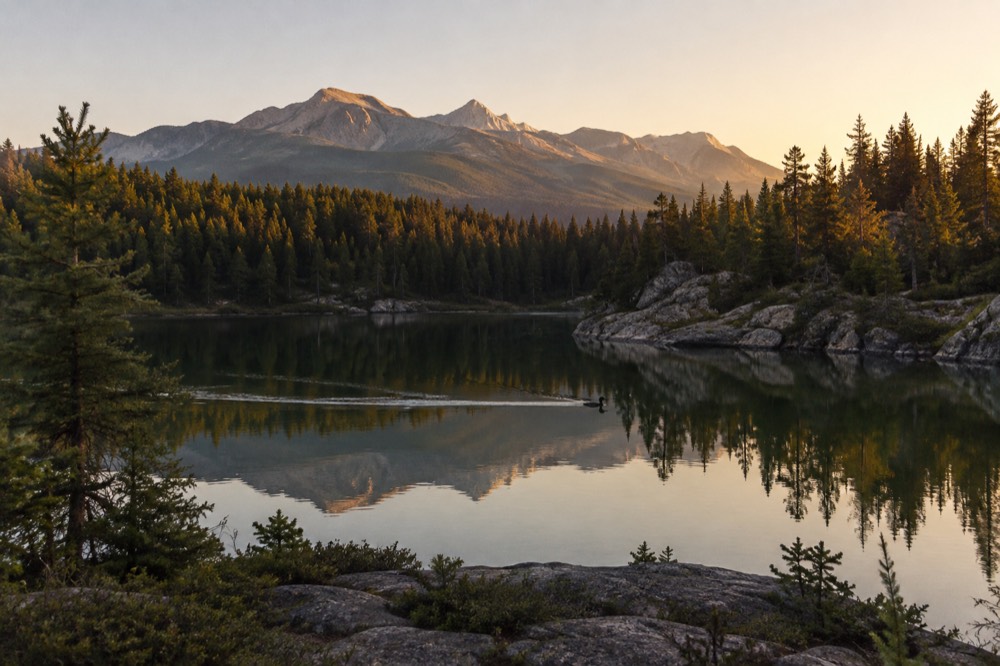
The Valley of the Five Lakes is a day-use hiking area a short drive from the Jasper townsite, built around a chain of five small lakes, each with a slightly different glacial tint, connected by a loop trail through forest and open rock. Parks Canada reopened it in summer 2026 after two years of post-wildfire reconstruction. It is the kind of hike a first-time visitor can finish in a morning.
The five lakes are the draw, and the reason the trail is named for them rather than for a peak or a pass. Glacial rock flour suspended in the water gives each lake its own shade, and the differences are visible within a single hour of walking. The trail between them rolls through lodgepole pine and spruce, crosses open bedrock, and touches shoreline at several points, so the water is never far away. Parks Canada lists it plainly on the What's Open register as one of the park's open trails, and the reopening was part of a wider summer 2026 wave that also put the Wabasso Lake trail and the Curator trail back on the map.
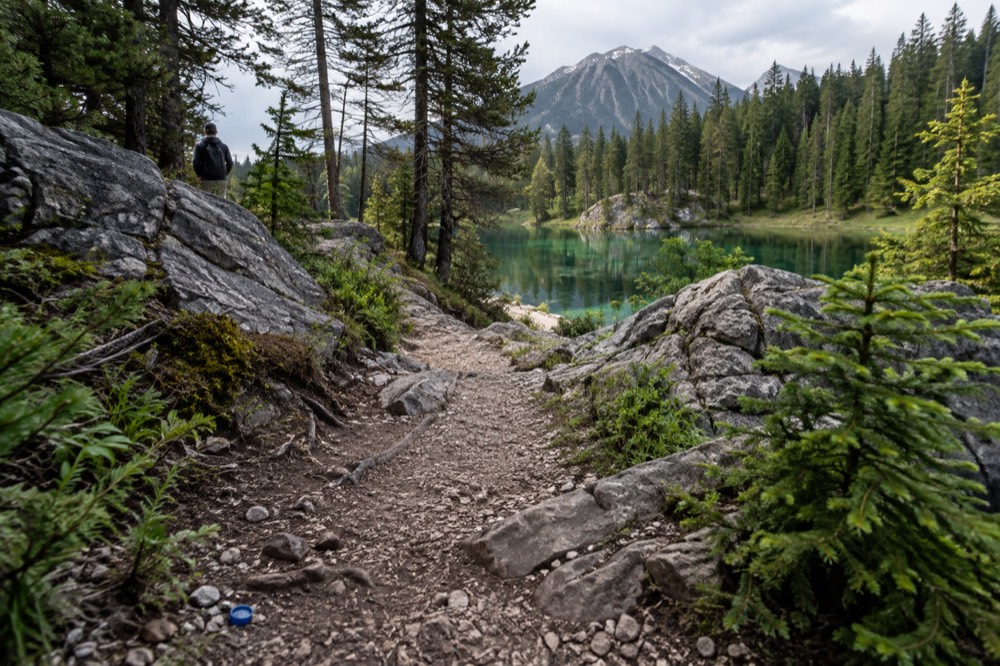
What makes the trail worth a page of its own is its role in the park's recovery. In the words of Parks Canada's own recovery page, "virtually all of Jasper's trails have now reopened since the 2024 wildfire," and the majority of Jasper National Park is open and ready to explore. The Valley of the Five Lakes is the clearest single example: it came back realigned, resurfaced, with new signage and new rest areas, and it came back popular. If you are planning around the fire's aftermath, this is the trail that shows what recovery looks like on the ground, with regrowth already under way along the route.
It also has a practical role in how tours are built. Because the loop is short, close to town and reliably scenic, it is the hike that interpretive and nature-focused operators slot into half-day itineraries, either as the main event or as a warm-up before a wildlife drive. That is why deciding whether the trail is "worth it" is really a decision between going alone and joining one of a small number of tours that include it.
How do you get to the Valley of the Five Lakes trailhead?
The trailhead sits a short drive east of the Jasper townsite off Highway 93A, the old parallel route to the Icefields Parkway, and the trail is a day-use area with its own parking, picnic spots and lakeshore access points. There is no shuttle, no reservation and no timed entry for it. The only authorization you need to be there is a valid park pass, displayed on your dash.
That last sentence deserves emphasis, because it is the single most common point of confusion for visitors arriving from Banff. Jasper has no timed-entry corridors, no reserved-access windows and no mandatory shuttles for any attraction. Parks Canada's Superintendent's bulletin on entry and travel names a Park Pass as the only authorization required to travel anywhere in the park. Banff runs shuttle reservations for Lake Louise and Moraine Lake; Jasper does not, and the Valley of the Five Lakes is a pure drive-up trailhead.
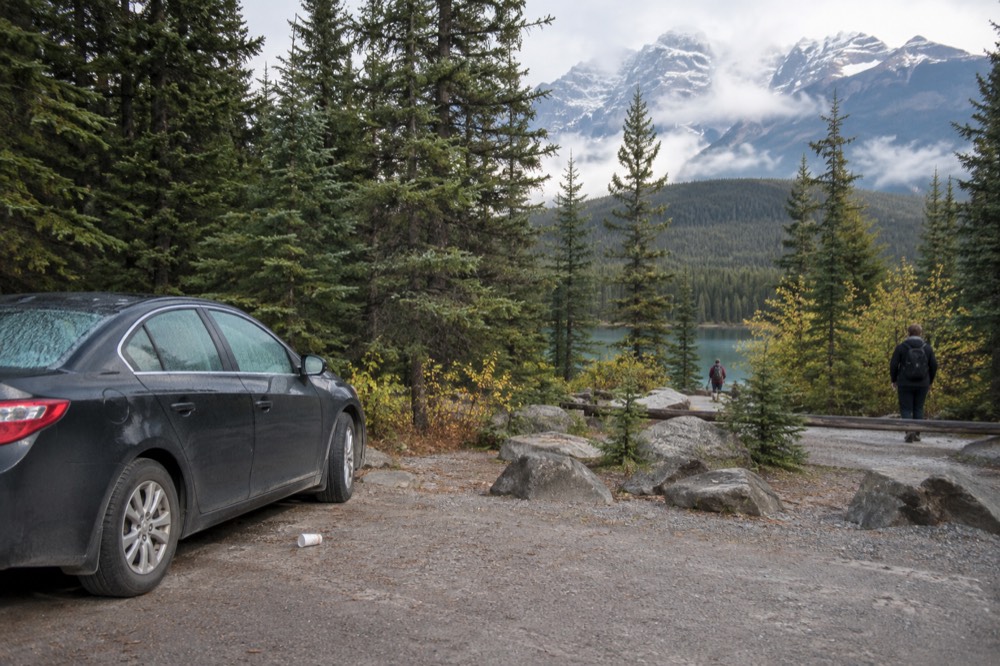
The driving itself is straightforward, but seasonal conditions are not guaranteed, so check before you go. Parks Canada publishes its road restrictions and seasonal closures table as a tentative plan whose dates may change without notice, and it explicitly warns that navigation apps are not always accurate for Jasper National Park. The reliable sources are 511 Alberta for live road conditions and Parks Canada's Jasper road restrictions page for seasonal closures. Highway 93A itself has a standing restriction on vehicles over 4,550 kg gross weight, though buses and RVs are permitted regardless of weight, and a stretch of it is expected to be accessible from the south entrance only, with no through travel, from mid-September to mid-November 2026 for roadwork.
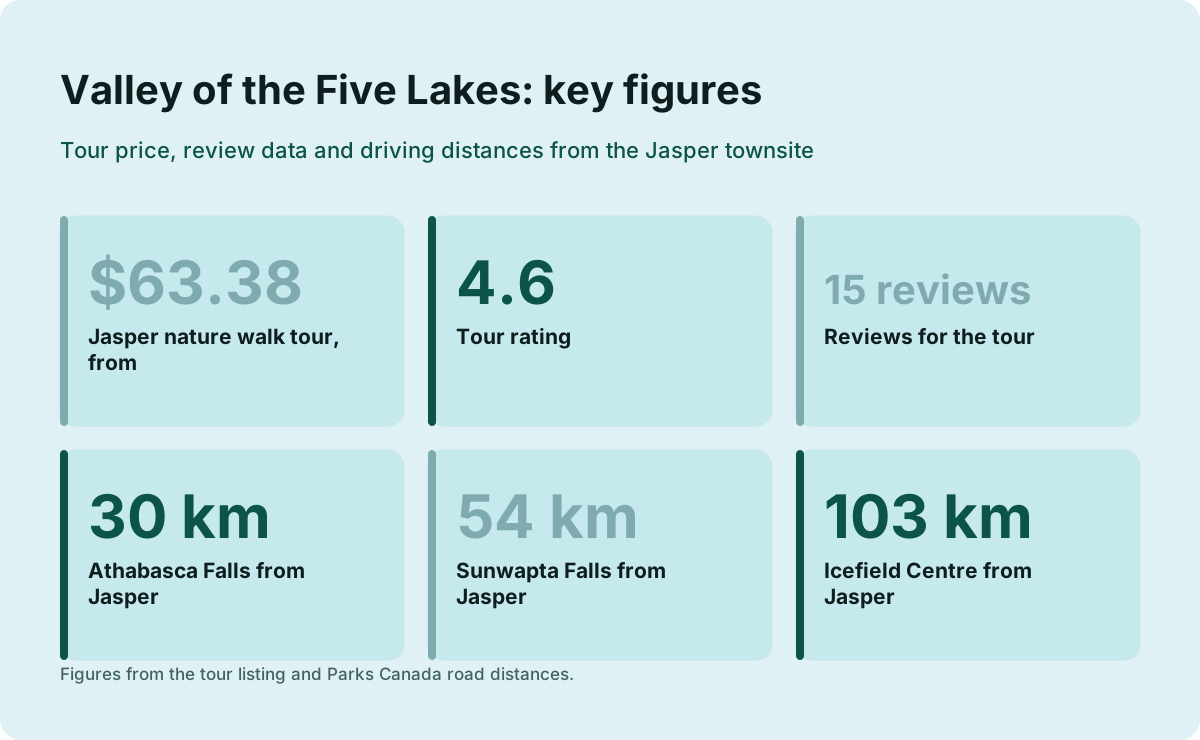
If your day is bigger than one hike, the trailhead's position makes it pair naturally with the parkway corridor. Athabasca Falls is 30 km from Jasper on the Icefields Parkway and Sunwapta Falls is 54 km, both open as day-use areas, and the Icefield Centre sits 103 km south of town. A morning at the five lakes and an afternoon driving south toward the falls is one of the most natural single-day shapes a Jasper itinerary can take. For the full picture on that corridor, read our Icefields Parkway tours planning guide.
If you would rather have the whole day handled, these are the three tours on this site's roster that fit the same short-hike-plus-big-scenery pattern:
Is the Valley of the Five Lakes hike hard?
No, the loop is a moderate half-day walk rather than a mountain hike, with rolling forest terrain, short climbs and well-built tread, which is exactly why guided operators use it for mixed groups and families. It is not a wilderness route: it is a day-use trail with rest areas, signage rebuilt in 2026 and lakeshore exits along the way. The honest difficulty is heat and footing in midsummer, not elevation or exposure.
Because Parks Canada does not publish a trail-length or elevation figure for it in the sources behind this site, this page will not invent one; the trail's own listing on any tour that includes it, or the Parks Canada trail conditions page, is where the current numbers live. What the verified record does establish is the character of the trail: it was rebuilt in summer 2026 with realignment, resurfacing, new signage and new rest areas, and it reopened to more than 800 walkers on its first day. Trails rebuilt to that standard, with rest areas and fresh surfacing, are built for general use, not for hikers carrying rope.
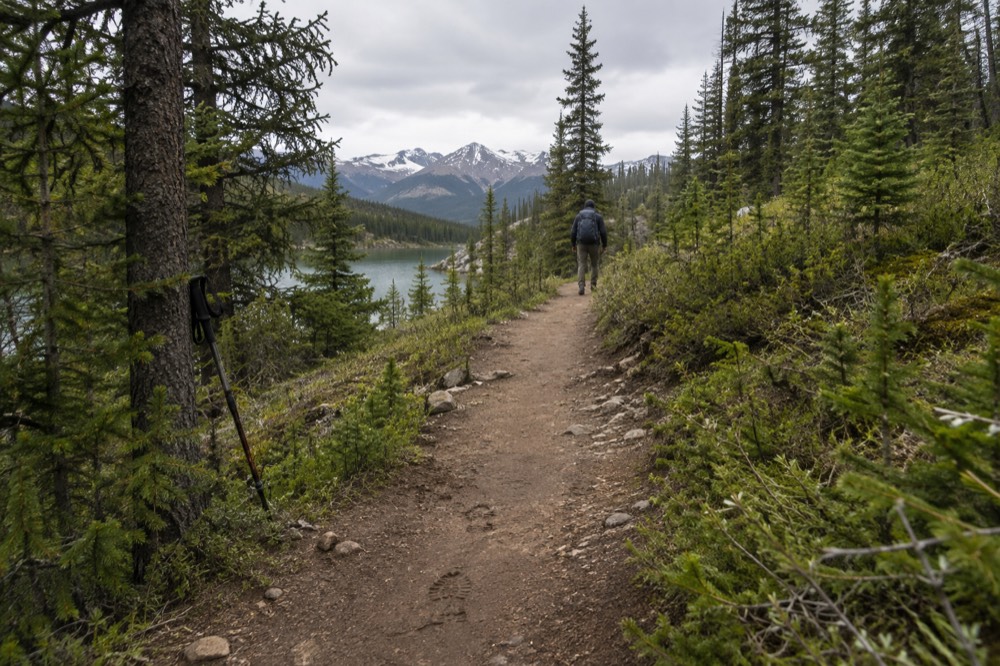
Two things genuinely affect how the walk feels. The first is weather. Jasper's July and August daily highs average 23.4 and 23.0 degrees, and more than 50 mm of rain falls in each of those months, so a hot exposed stretch can follow a muddy one within the same hour. The second is wildlife. This is elk, deer and bear country, and Parks Canada's rules apply on any trail: travel in groups, make noise, remove headphones, carry bear spray and know how to use it, and back away the way you came if you meet an animal. Stay 30 m from elk, deer and moose, and 100 m from bears and other carnivores. A sighting is never a guarantee, and no honest page will promise you one; what the rules guarantee is the distance you must keep if a sighting happens.
For current trail condition reports, the authority is the Parks Canada Jasper trail conditions page, which carries the live status of every trail in the park. The What's Open register lists the Valley of the Five Lakes among the open trails, alongside Old Fort Point, the Whistlers, Wilcox Pass, Sulphur Skyline and the Tonquin Valley via Portal Creek, among others.
Which tours actually include the Valley of the Five Lakes?
The trail appears on Jasper day tours as a guided interpretive walk, and the clearest match on this roster is the Ultimate Jasper Nature Walk, a three-hour guided hike rated 4.6 across 15 reviews, from $63.38, with free cancellation. Its listing confirms the Jasper townsite and a three-hour format built around an interpretive nature walk. Longer sightseeing tours in the park generally pair a short walk with wildlife drives instead of committing a full loop.
The nature walk is the tour to book if the five lakes themselves are the point. Three hours with a guide turns the trail from a pretty walk into an explanation: why the lakes hold different colours, what the regrowing understory is, how the 2024 fire moved through this valley, and which animals use the corridor. The tour's listing carries the current price, group size and season, and the free-cancellation terms make it a low-risk first booking for a trip that is still taking shape.
The other tours worth weighing are not lake tours at all, and that is the honest comparison. If your instinct is "short hike plus something big," the glacier corridor delivers the something big: the Columbia Icefield is the largest icefield in the Canadian Rockies at more than 300 square kilometres of ice, and the Athabasca Glacier across from the Icefield Centre is what Parks Canada calls Canada's most accessible glacier. A guided icefield tour from Jasper runs 7 hours 15 minutes, from $248.08, rated 4.6 across 213 reviews, with stops confirmed at Athabasca Glacier, the Columbia Icefield Skywalk and Athabasca Falls. You can compare it directly with the Ice Explorer and Skywalk combo ticket on its own listing, or read our broader Columbia Icefield tours guide for the full decision.
The third shape is the townsite-and-food day, which suits anyone whose legs are willing but whose group wants a softer pace. The half-day Jasper culture food tour runs about three hours in town, rated 5 across 399 reviews and from $119.24, with the Jasper Park Information Centre among its confirmed stops. It is not a trail tour, but it fills the same half-day slot, and for a couple or family splitting up for a morning, one person on the lakes loop and one on the food tour is a plan that works.
What will you actually see on the loop?
Five lakes in shifting glacial colours, regenerating forest that shows the 2024 wildfire honestly, bedrock and pine along the connecting tread, and the animals that use the valley: elk, deer, moose and bears all live in Jasper, and the rules on distance, 30 m from elk, deer and moose and 100 m from bears and carnivores, apply the whole way round. The trail is a recovery story as much as a scenery walk, and both halves are visible at once.
The fire's geography is documented precisely enough to describe without guessing. The 2024 Jasper Wildfire started at 7:02 pm on 22 July 2024 near the Jasper Transfer Station, merged overnight in wind gusts up to 87 km/h, ran north up the Athabasca valley, and reached the southwest corner of the townsite within 48 hours. Its final size was 32,722 hectares with a 278.03 km perimeter, declared extinguished on 1 April 2025. The burn is visible along the Athabasca valley south of town, around the townsite's southwest edge and up the Maligne road corridor, and Parks Canada describes a regenerating landscape along the reopened Valley of the Five Lakes trail, with whitebark pine restoration planting under way. More of these guides are collected on Jasper National Park Tours.
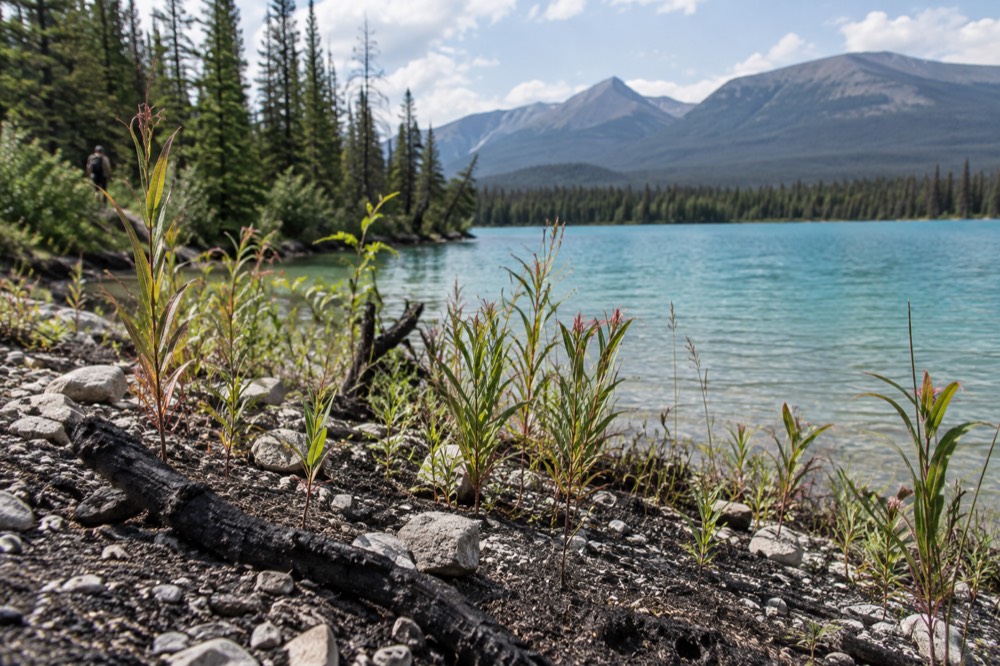
What that means on the trail is a landscape in two registers. The lakes are what they always were: cold, glacially fed, and differently tinted by rock flour. The forest around them is in its early regrowth, which is not a euphemism for devastation. Parks Canada's own framing is that fire-damaged slopes regenerate, that hazard trees stay unstable for several years after a fire, and that native species, including the black army cutworm moth whose larvae thrive in recently burned ground, have already appeared in numbers. Walking the loop in 2026 means walking through a documented case study in how a Rocky Mountain park comes back, with the regrowth green at knee height in the burned sections and mature forest standing where the fire did not reach.
The wildlife half of the walk needs the same honesty. The park's confirmed mammal list includes elk, deer, moose, caribou, bighorn sheep, mountain goats, bears, coyotes, wolves, beavers, pine martens, lynx, porcupines, cougars, snowshoe hares and wolverines, and roadside wildlife viewing is a restricted activity year round: stay in your vehicle, pull over only where it is safe, and move on if a jam develops. On the trail itself, no operator can promise an animal, and any tour that does should be read with suspicion. If wildlife is your main goal, our guide on the best places to see wildlife in Jasper covers the viewing rules and the honest odds in more depth.
How does the five lakes hike fit a Jasper itinerary?
The loop works best as a morning or late-afternoon block, because it is short, close to town and pairs cleanly with a bigger afternoon: a wildlife tour, a Maligne Valley drive, or the glacier corridor south on the Icefields Parkway. Visitors with one full day commonly walk the lakes early, then spend the afternoon at Athabasca Falls, 30 km from Jasper. Two-day visitors can split the halves.
The single-day version looks like this: walk the lakes in the cool hours of the morning, when the water is calmest and the parking is emptiest, then drive south. The Icefields Parkway is 232 km end to end and does not close for the winter, but from 1 November to 31 March snow tires or chains are required, there are no services along it in winter, and there is no cell coverage en route. In summer the corridor is a straightforward day drive with Athabasca Falls, Sunwapta Falls and the Icefield Centre strung along it at 30, 54 and 103 km from town respectively.
If you want the glacier day handled rather than self-driven, the 7-hour 15-minute guided icefield tour is the strongest single booking on the roster for that corridor, rated 4.6 across 213 reviews, from $248.08, with free cancellation and confirmed stops at Athabasca Glacier, the Skywalk and Athabasca Falls. It is the tour this page names as its related pick, because it is the natural upgrade for a reader who has decided the five lakes loop is a half-day and wants the other half to be spectacular. Check availability through the live listing before locking your date, since glacier seasons are published as weather dependent: the Columbia Icefield Adventure ran 1 May to 12 October in 2026.
For a two-day plan, day one holds the lakes loop plus a wildlife tour: the morning or evening wildlife watch runs about 3 hours from $68.57 with hotel pickup, rated 4.6 across 1,089 reviews, with Pyramid Lake and the Whistlers summit among its confirmed stops. Day two holds the icefield corridor or the Maligne Valley, where the lake cruise runs 1 hour 30 minutes from $87.45, rated 4.8 across 1,279 reviews. Our things to do in Jasper National Park guide lays out the full menu if you are building a longer stay.
When is the best time of year to hike it?
Summer and early autumn are the reliable windows: July and August average daily highs of 23.4 and 23.0 degrees with the trail fully open, and September cools to a 17.9-degree average high with only 2.1 cm of snow, which many locals consider the best walking month. In winter the trail becomes a snowshoe outing rather than a walk, with January averaging a daily high of -3.2 degrees.
The climate record for Jasper, from Environment and Climate Change Canada's 1991 to 2020 normals, gives the honest picture. Rain peaks in June at 57.6 mm and stays above 50 mm through July and August, so afternoon storms are a planning fact, not a surprise. Snow falls in every month except June through August, and the deep winter is real: January averages a daily low of -14.4 degrees, and the townsite records 41.1 days per year with wind chill below -20. Days with humidex at 30 or above run just 7.5 per year, almost all in July and August, so summer heat is rarely the limiting factor that winter cold is.
| Month | Daily high | Daily low | Rainfall | Snowfall | Trail character |
|---|---|---|---|---|---|
| May | 16.4 °C | 0.9 °C | 32.5 mm | 4.7 cm | Muddy, quiet, spring melt |
| June | 20.0 °C | 5.2 °C | 52.7 mm | 0.0 cm | Green, wet afternoons |
| July | 23.4 °C | 7.4 °C | 51.5 mm | 0.0 cm | Peak season, busiest |
| August | 23.0 °C | 6.1 °C | 58.8 mm | 0.0 cm | Warm lakes, storm risk |
| September | 17.9 °C | 2.5 °C | 32.7 mm | 2.1 cm | Cool, golden, quieter |
| January | -3.2 °C | -14.4 °C | 2.0 mm | 21.2 cm | Snowshoe conditions |
Winter deserves a note, because it changes the tour question rather than closing it. Winter access to Maligne Canyon for winter recreation is prohibited under a standing closure, so the canyon ice walk is not a bookable option this season, but the five lakes trail has no such closure on the register. A snowshoe tour with hotel pickup exists on the roster, from $65.08 for 3 hours with free cancellation, and the winter wildlife valley tour runs from $66.59. For the full cold-season picture, see our Jasper winter tours guide.
What should you bring and wear?
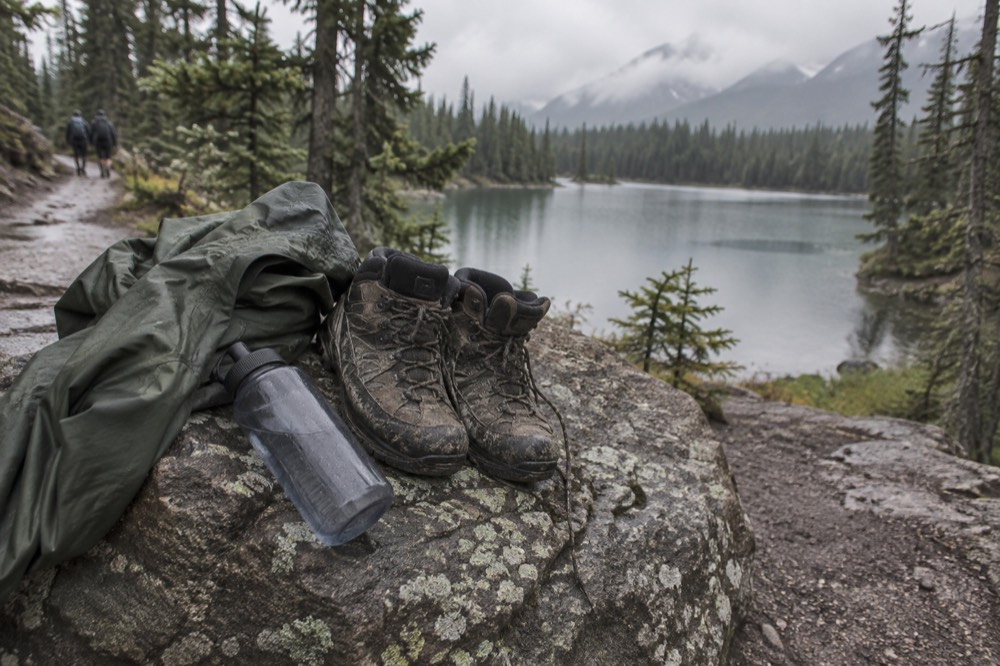
Sturdy walking shoes, layers for a 10-degree temperature swing, rain protection for summer afternoons, bear spray carried and known, water, and a printed park pass displayed on the dash are the essentials. July and August swing between daily highs of 23 degrees and overnight lows near 6 degrees, and more than 50 mm of rain falls in each of those months. Dress for the low, not the high.
Bear spray is not optional advice here. Parks Canada's own trail guidance is to travel in groups, make noise, remove headphones and carry bear spray knowing how to use it, and to report aggressive encounters to Parks Canada Dispatch on 780-852-6155. It is an offence to entice, pet, harass or feed wild animals, and pursuing an animal with a camera counts as harassment. Drones are prohibited in the park, with fines up to $25,000 CAD. None of this makes the trail dangerous; it makes it a Rocky Mountain trail, with the standard kit list that implies.
| Item | Why it matters on this trail |
|---|---|
| Broken-in walking shoes | Resurfaced tread but rooty, rocky sections between lakes |
| Layers, morning to afternoon | July swings from about 7 to 23 degrees across the day |
| Rain shell | 51 to 59 mm of rain falls in each of July and August |
| Bear spray, on your hip | Bears live in the valley; rules require 100 m distance |
| Printed park pass on the dash | Legally required to be in the park; passes must be displayed |
| Water and snacks | No services at the trailhead beyond the day-use facilities |
If a guided glacier or icefield day is also on your list, the packing question changes shape, and our what to wear on a Jasper glacier tour guide covers that wardrobe separately. The short version: the icefield corridor runs its own weather, and the same summer day can hand you 23 degrees in town and near-freezing wind on the glacier, 103 km south.
How much does a Valley of the Five Lakes day cost?
The trail itself carries no separate fee, but a park pass is legally required to be inside Jasper National Park, and entry is charged per person: $12.25 CAD per adult per day, $10.75 for seniors, free for youth 17 and under, with a Family/Group daily rate of $24.50 CAD covering up to seven people in one vehicle. A guided nature walk starts from $63.38. Those are Canadian dollars, and Parks Canada raises fees annually.
The pass is the part visitors most often get wrong, so it is worth being precise. Travel within Jasper National Park is a designated activity requiring authorization in the form of a Park Pass, and entering without one is an offence under the Canada National Parks Act with a maximum penalty of $25,000 CAD. Passes are sold at the park gates, at information centres and campgrounds, and at automated entry pass machines in Jasper outside the visitor information centre at 500 Connaught Drive and in Wapiti winter campground. The pass must be printed and displayed prominently on the dash. There are three staffed gates: West Gate 22 km west on Highway 16, South Gate 6 km south on the Icefields Parkway, and East Gate 48 km east on Highway 16.
| Cost item | Amount (CAD) | Notes |
|---|---|---|
| Adult day pass | $12.25 | Charged per person, per day |
| Senior day pass | $10.75 | Age 65 and over |
| Youth day pass | Free | 17 and under, since 1 January 2018 |
| Family/Group day pass | $24.50 | Up to seven people, one vehicle |
| Adult Discovery Pass | $83.50 | Full year, 100+ parks and sites |
| Family Discovery Pass | $167.50 | Break-even at about 7 park days |
| Guided nature walk | from $63.38 | Three hours, free cancellation |
Two planning facts sharpen the arithmetic. First, the Family/Group daily rate caps at $24.50 for up to seven people in one vehicle, and since two adults already pay $24.50, any group of two or more paying adults effectively pays a per-vehicle rate. Second, a day pass is valid until 4 pm the day after purchase and also admits you to Banff, Kootenay, Yoho, Mount Revelstoke, Glacier, Waterton Lakes and Elk Island national parks, so a pass bought for Jasper covers a Banff leg of the same trip. The Discovery Pass breaks even at roughly seven days of park entry inside twelve months, whether you are one adult or a carload. Current fees are on the Parks Canada Jasper fee page, and the free-admission window that ran through the summer has ended, so regular fees apply now.
One caution on tour inclusions: whether a guided tour builds the commercial group entry charge, which Parks Canada sets at $10.42 CAD per person, into its ticket is an operator-by-operator decision. Parks Canada publishes no rule either way, and this site does not generalise. Each tour's own inclusions list is the only authority for that tour, so read it before assuming your ticket covers entry.
If you are still weighing the tour question, these three are the picks this page would put in front of a reader choosing between a self-guided loop and a booked day:
Common questions about the Valley of the Five Lakes
What is the Valley of the Five Lakes?
A day-use trail area a short drive from the Jasper townsite, built around five small glacially tinted lakes connected by a loop through forest and open rock. It reopened in summer 2026 after post-wildfire reconstruction, and more than 800 people walked it on opening day.
Is the Valley of the Five Lakes hike hard?
No. It is a moderate half-day walk on rolling, resurfaced tread with rebuilt rest areas and signage, suitable for families and mixed groups. The real challenges are midsummer heat, rain and wildlife-aware behaviour, not elevation or exposure.
Do you need a park pass for the Valley of the Five Lakes?
Yes. A pass is legally required to be anywhere inside Jasper National Park. Entry is charged per person at $12.25 CAD per adult per day, with a Family/Group rate of $24.50 CAD covering up to seven people in one vehicle, and the pass must be printed and displayed on the dash.
Which tours include the Valley of the Five Lakes?
The clearest roster match is the Ultimate Jasper Nature Walk, a three-hour interpretive hike from $63.38 with free cancellation, rated 4.6 across 15 reviews. Longer sightseeing tours pair short walks with wildlife drives rather than committing a full loop.
When is the best time of year to hike it?
July through September. July and August average daily highs of 23.4 and 23.0 degrees, and September cools to 17.9 with only 2.1 cm of snow. Winter turns the trail into a snowshoe outing, with January averaging a daily low of -14.4 degrees.
Can you see the wildfire burn from the trail?
Yes, honestly. The 2024 fire ran north up the Athabasca valley and the regenerating landscape is visible along the reopened trail, with whitebark pine restoration planting under way. Parks Canada describes the majority of the park as open and ready to explore, and regrowth is already green at ground level.